
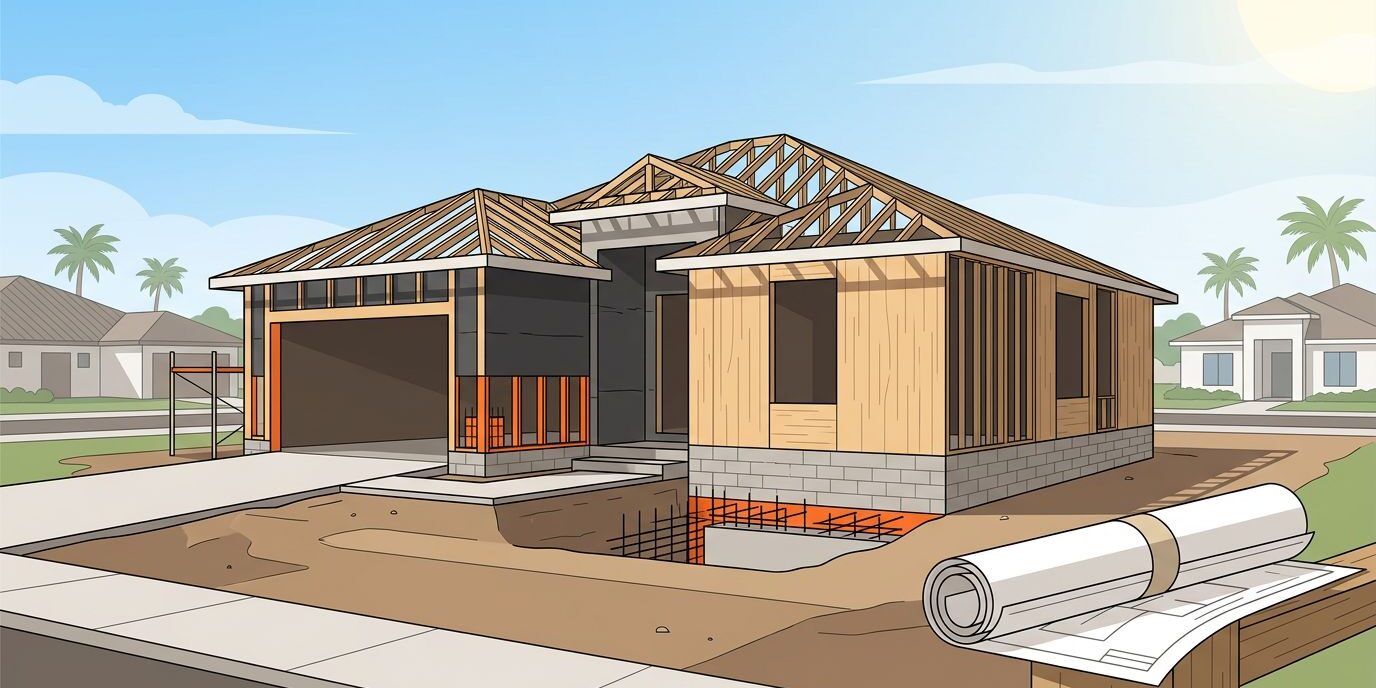
Building new construction homes in Fort Myers can look simple when you first see a floor plan. The harder decisions come before construction starts: the lot, flood requirements, selections, allowances, and final budget.
A search for real estate in Fort Myers should offer more than a list of available properties. It should help you understand what you’re paying for, how the build is managed, and which questions protect your investment. We build affordable homes in Fort Myers Florida and throughout Southwest Florida, and we know that quality, timing, and clear communication matter as much as the finished design.
Key Takeaways
- Fort Myers new construction prices vary widely, and the advertised base price may not include the lot, site work, permits, utilities, upgrades, landscaping, or closing costs.
- Choose the lot and location before finalizing a floor plan, and confirm flood zone, drainage, jurisdiction, utilities, insurance, HOA fees, and future development plans.
- Compare builders, communities, home plans, included features, incentives, allowances, and written contracts instead of relying only on starting prices or price per square foot.
- Keep financing, selections, inspections, permits, change orders, deadlines, and construction responsibilities documented throughout the home buying process.
- Before closing, complete independent or phase inspections, verify the Certificate of Occupancy, conduct a detailed final walk-through, and review warranty coverage and claim procedures.
What New Home Fort Myers Prices Really Show
Fort Myers new construction is not one price tier. Current online listings for new construction homes range from the high-$100,000s to luxury properties above $3 million. A current Homes.com market snapshot reports an average new-home price of $422,244. It lists a $349,990 median for single family homes and an average of about $223 per square foot.
Those figures provide useful direction in the local housing market, not a guaranteed quote. Townhomes and smaller homes can sit near the lower end, while larger homes, luxury homes, premium lots, and waterfront homes increase the total quickly.
Use Price per Square Foot Carefully
Price per square foot helps compare homes with similar sizes and configurations. Reviewing similar home floor plans also makes comparisons more useful, but the number doesn’t tell the full story.
A home priced at $223 per square foot may include a better lot, larger garage, or upgraded finishes. It may also offer stronger storm protection or on-site amenities.
The number can also change based on how the builder calculates living area. Garages, porches, storage, covered patios, and total construction area aren’t always counted the same way. Ask for both living area and total area before comparing floor plans.
A smaller home with fewer upgrades may cost more per square foot than a larger home. That doesn’t automatically make it a poor value.
Separate the Base Price From the Real Budget
The advertised starting price is only the first part of your budget. A complete purchase budget may include the lot, site preparation, utility connections, permits, and landscaping. It may also cover appliances, window treatments, driveway work, closing costs, and design upgrades.
Financing and closing costs can add around 2% to 3% in some local estimates. Your lender will provide the figures that apply to your loan. We recommend requesting a written cost summary before signing anything.
Ask these questions early:
- Which appliances, fixtures, flooring, and countertops are included?
- Are impact windows, storm shutters, or other storm features standard?
- Who pays for permits, utility connections, surveys, and engineering?
- Can the price change after the contract is signed?
- What happens if the lot needs additional fill or drainage work?
Clear answers protect your budget and prevent expensive surprises.
Choose the Lot and Location Before the Floor Plan
A floor plan matters, but the lot controls many practical details when buying new construction homes. Location affects insurance, taxes, utilities, commute times, drainage, HOA fees, and future resale demand. On the Gulf Coast, lot position and flood exposure can affect the suitability and ownership costs of luxury homes and waterfront homes.
Compare Fort Myers and Nearby Areas
Buyers looking for homes in Fort Myers often compare Lehigh Acres, North Fort Myers, Cape Coral, Estero, Bonita Springs, and Babcock Ranch. Each area offers a different balance of land cost, community features, travel time, and available inventory. Bonita Springs and Babcock Ranch may differ in land cost, amenities, travel time, and available inventory.
Master planned communities may offer pools, walking paths, golf, pickleball courts, fitness areas, waterfront access, and gathering spaces. These community amenities can improve daily life, but they may also bring HOA fees, amenity fees, or additional community assessments.
Review the rules carefully in master planned communities and gated communities before choosing one. Check rental restrictions, age requirements in active adult communities, pet policies, parking rules, and plans for future development. Investors should also compare expected rent with insurance, taxes, maintenance, vacancy, and property management costs.
Check Flood and Lot Conditions Early
Flood and drainage questions need answers before you choose a plan. Lee County requires permits for new residential construction, and properties in flood hazard areas may need additional documentation and engineering review. The Lee County residential building guide explains the permit requirements for new homes and related residential work.
A home inside a regulatory floodway may also require a No-Rise or No-Impact Certification. That document must be prepared, signed, and sealed by a Florida-licensed engineer when the project could affect flood elevations.
The jurisdiction matters, too. A lot in Fort Myers Florida follows city permitting procedures, while a lot in unincorporated Lee County follows county procedures. Confirm the parcel’s jurisdiction, flood zone, drainage requirements, and utility access before you finalize your construction contract.
Compare Builders, Communities, and Home Plans
The right new home builders are those whose plans, pricing, communication, warranty, and community amenities match your needs. Large builders may offer many communities and standardized packages. Local builders may provide more attention to lot conditions and personal selections.
Know Which Builders Serve the Market
Buyers may encounter Pulte Homes, Toll Brothers, D.R. Horton, Lennar, LGI Homes, Neal Communities, Taylor Morrison, and AR Homes in Fort Myers, Bonita Springs, and nearby builder communities. Availability of new construction homes, pricing, incentives, and included features can change by community and with the housing market. Compare current written pricing and incentives from Pulte Homes, Toll Brothers, and D.R. Horton instead of relying on old advertisements.
Lennar announced Orange River Townhomes in Fort Myers, along with Cielo Mar Townhomes in North Fort Myers and Palmetta Pines Townhomes in northeast Cape Coral. The announced plans for those Lennar homes ranged from 1,343 to 1,392 square feet, with three bedrooms and two bathrooms. Starting prices were advertised in the $200,000s.
That type of starting price helps identify an entry point, but it isn’t the final purchase price. Ask for the base plan, included features, lot premium, HOA costs, and available promotions together.
Match the Plan to Your Future Needs
Available home floor plans should suit different lifestyles and budgets. Options may include one- to four-bedroom single family homes and duplexes. The Gulfstream Cottage, for example, includes three bedrooms, two bathrooms, a one-car garage, 1,055 square feet of living area, and 1,405 square feet of total area.
The Magnolia offers three bedrooms, two bathrooms, a den, and a two-car garage, with 1,562 square feet of living area and 2,236 square feet of total area. Buyers who need rental income or separate living space can also review duplex models such as Poseidon, Tropical Tide, Apollo, and Zeus.
For an investor, a duplex purchase requires more than a floor plan comparison. Review zoning, parking, insurance, projected rent, maintenance, and the cost of managing two units. For a growing family, a den, storage area, larger garage, or flexible bedroom can be more valuable than a lower starting price.
Open floor plans, high ceilings, granite countertops, stainless steel appliances, and ceramic flooring may be included in some home packages. Review available design options and confirm the current standard features sheet. The same finish may be standard in one community and an upgrade in another.
Ask new home builders to verify current packages, including standard features offered by Pulte Homes, Toll Brothers, and D.R. Horton.
Features that support an energy efficient home vary by builder, including insulation, windows, HVAC efficiency, lighting, and water fixtures. Smart home technology, including thermostats and installed controls, also varies by builder. Get each item in writing before construction begins.
The New Construction Buying Process
A new build moves through several stages. For new construction homes, the home buying process is easier with written decisions, costs, and deadlines.
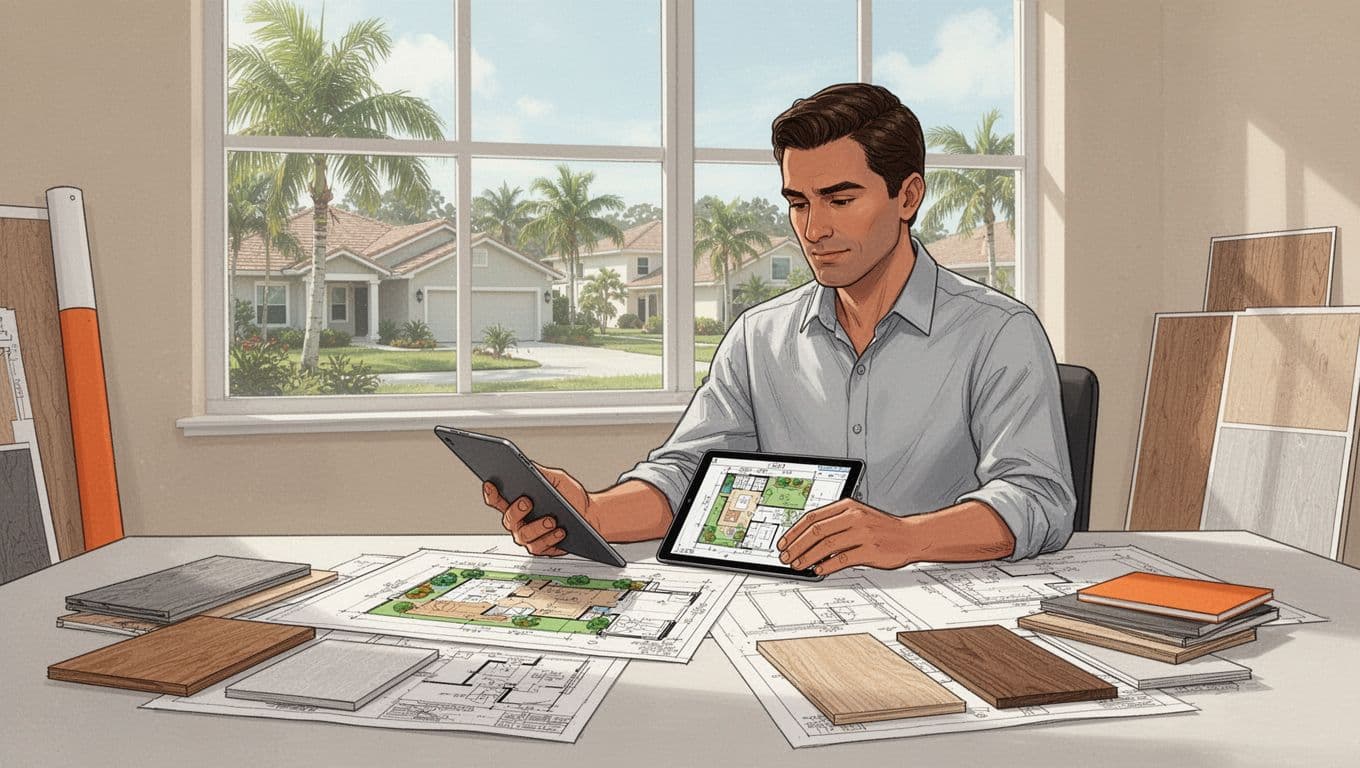
Start With Financing and a Written Scope
Begin with a realistic preapproval, not the maximum amount a lender says you can borrow. Leave room for insurance, taxes, HOA fees, furniture, maintenance, and changes after closing.
Next, choose the lot and plan. Your contract should identify the home design, square footage, included finishes, allowances, estimated completion schedule, payment stages, change-order process, and cancellation terms.
Regardless of whether you work with Pulte Homes, Toll Brothers, or D.R. Horton, verify the contract’s responsibilities and change-order terms.
Selections often include flooring, paint, cabinets, countertops, fixtures, appliances, doors, lighting, and bathroom finishes. Make decisions by the builder’s deadlines. Late changes can affect both cost and timing.
We recommend keeping a single file for the contract, selections, invoices, drawings, inspection reports, and communication. Good records make questions easier to answer throughout the home buying process.
Permits, Inspections, and Certificate of Occupancy
The builder or designated contractor usually manages permit applications, inspections, and construction scheduling. If you own the lot, confirm in writing who handles each permit and inspection. That responsibility should never be assumed.
For homes inside the city, the Fort Myers permitting and inspections page provides access to the city’s online permitting system. County projects follow Lee County procedures, including flood-related review where required.
Inspections take place during different construction stages. Some buyers hire an independent inspector to review the foundation, framing, electrical, plumbing, roof, HVAC, and final finishes. A new construction inspection guide can help you understand the value of phase inspections and warranty evaluations.
Before closing, the home must pass required inspections and receive its Certificate of Occupancy. You should also complete a final walk-through and confirm that agreed repairs are finished.
Warranties, Inspections, and Handover
A new home should come with clear support after closing. Warranty protection varies by builder, so the written contract and warranty booklet matter more than a sales conversation.
Get Warranty Coverage in Writing
Many warranty programs separate coverage into workmanship, systems, and structural protection. Some builder materials describe a structural warranty lasting up to 10 years, but terms, exclusions, and claim procedures vary.
Review each builder’s current warranty booklet, including materials from Pulte Homes, Toll Brothers, and D.R. Horton.
Ask how long the roof, plumbing, electrical, HVAC, appliances, windows, doors, finishes, and structure are covered. Confirm whether storm damage, drainage issues, normal wear, owner maintenance, and manufacturer defects are handled separately.
Before you sign, find out:
- Who receives warranty claims?
- How quickly must a problem be reported?
- Are emergency repairs handled after business hours?
- Can the warranty transfer to a future owner?
- What documentation is required?
A structural warranty is useful only when you verify its exclusions, transfer terms, reporting deadlines, claim procedures, and documentation requirements.
Complete a Detailed Final Walk-Through
Bring your contract and selections list to the final walk-through. Test doors and windows, faucets, toilets, outlets, lights, appliances, garage doors, smoke detectors, HVAC controls, and drainage around the home.
Look closely at flooring, cabinets, countertops, paint, trim, tile, caulking, and screens. Photograph unfinished work and record each item that needs attention. The goal isn’t to find fault with a new home. It’s to make sure the finished home matches what you purchased.
We take the handover seriously. A well-planned build, organized schedule, responsive team, and prompt warranty support give homeowners confidence after move-in.
Frequently Asked Questions
How much do new construction homes in Fort Myers cost?
New construction prices range from entry-level townhomes and smaller homes to luxury properties above $3 million. The final cost depends on the plan, lot, upgrades, site conditions, community fees, permits, and closing expenses.
What should I check before choosing a lot?
Confirm the parcel’s jurisdiction, flood zone, drainage requirements, utility access, insurance considerations, HOA fees, and any lot premiums. A lot’s conditions can affect both construction costs and long-term ownership expenses.
What is usually included in a new home purchase?
Included features vary by builder and community, so review the current standard features sheet and contract. Ask specifically about appliances, flooring, countertops, windows, storm protection, landscaping, driveway work, and design upgrades.
Should I hire an independent inspector for a new construction home?
An independent inspector can review key stages such as the foundation, framing, electrical, plumbing, roof, HVAC, and final finishes. Phase inspections may identify issues before they become harder or more expensive to correct.
What should I review before closing on the home?
Complete a final walk-through, confirm that required inspections are complete, verify the Certificate of Occupancy, and document unfinished work or repairs. You should also review the builder’s warranty coverage, exclusions, reporting deadlines, and claim procedures.
Conclusion
Building a new home in Fort Myers is a major purchase, especially across Southwest Florida and the Gulf Coast. Before construction begins, review the lot, flood conditions, total cost, included features, permits, inspections, and warranty. Buyers comparing Fort Myers with Bonita Springs should apply the same checks to each property.
The strongest choice isn’t always the lowest advertised price. It’s the home that fits your budget, location, lifestyle, and future plans without hidden surprises. Apply the same written-document review when comparing Pulte Homes, Toll Brothers, and D.R. Horton. If you’re ready to compare plans or discuss your lot, schedule a new home construction consultation with Nathan’s Homes.