

After permitted work is complete, required inspections must pass and deficiencies must be corrected before final approval. The local building authority then issues the certificate, though requirements and sequencing vary by location.
Keep occupancy approval separate from your builder’s punch list and closing checklist, since contractual work may still need attention. A dependable finish starts with understanding the approval process before the keys change hands.
Key Takeaways
- Required inspections happen throughout construction, including work that will later be covered by concrete or drywall.
- Final approval depends on completed work, passed inspections, supporting documents, and resolved deficiencies.
- An occupancy certificate doesn’t automatically mean every finish, selection, or contractual obligation is complete.
What a Certificate of Occupancy Approves
A CO documents approval to use a building for its authorized purpose. For a new home, that means residential occupancy under local building requirements.
A building permit authorizes construction, while zoning approval covers permitted use, setbacks, and development restrictions. Occupancy approval follows required construction approvals.
The general contractor typically coordinates the application and inspections. The local building authority issues the approval. In Texas, that may be a city or county authority, depending on the property’s location.
New construction commonly requires approval. A change in use, a major renovation, or some ownership changes may also trigger it. Renovation work may qualify when it reconfigures exit stairways, changes unit counts or layouts, or replaces central HVAC with individual systems.
Triggers and requirements vary by jurisdiction and project. A single-family home doesn’t follow the same occupancy process everywhere.
What Happens Before the Final Inspection
Construction Passes Its Earlier Checkpoints
Final inspection follows earlier permitted work and is one checkpoint in a longer construction process. Required inspections may include foundation preparation, framing, rough plumbing, electrical, HVAC, and insulation.
Some inspections and approvals must happen before work becomes concealed. A stage-specific building inspection before concrete is poured or drywall is installed lets reviewers assess components while they’re visible.
The required inspection tickets depend on the permit, design, construction method, and inspection provider. There isn’t one inspection count or sequence for every new home.
We recommend arranging independent inspection access in the construction contract. Pre-pour, pre-drywall, and final reviews give you opportunities to identify concerns at different stages.
Utilities, Site Work, and Records Come Together
Near completion, the builder coordinates remaining trade work, utility connections, testing, and records for closeout. Grading, drainage, access, and required exterior improvements also affect readiness.
For Florida projects, the approval package may include energy-testing results, engineering documents, elevation records, or septic and well approvals when applicable. The exact documents follow the property’s permit requirements.
Utility readiness deserves separate attention. Approved construction doesn’t automatically resolve every customer-account or provider-side service issue.
We recommend keeping permits, approved plans, inspection results, and signed changes together. Missing paperwork can delay closeout even when the house appears ready.
What Inspectors Check Before Occupancy
Building Systems and Life Safety
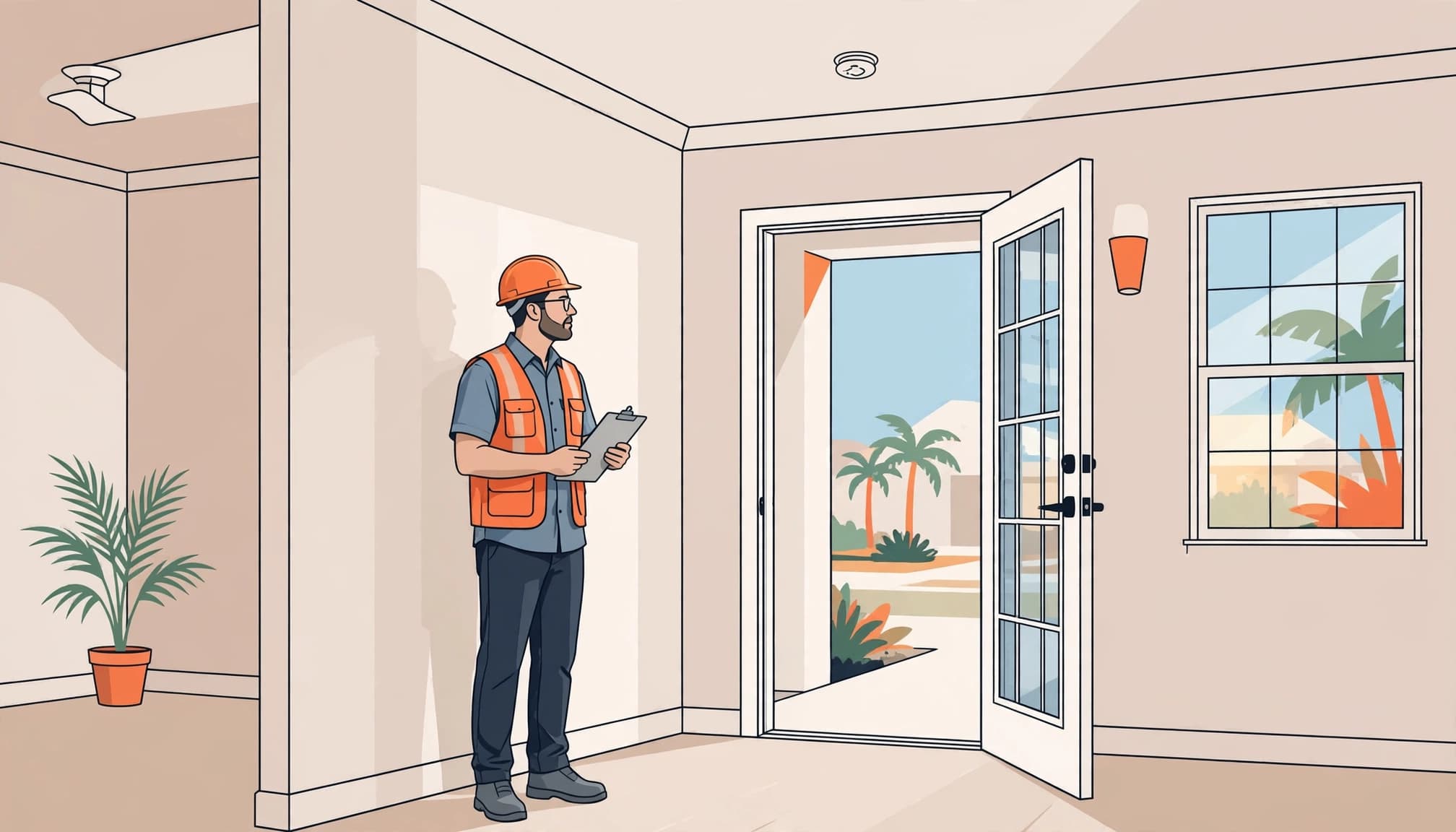
Final inspections check applicable building code requirements against approved plans. Inspectors review completed work within their assigned scopes, including electrical, plumbing, mechanical, and building components.
Life safety concerns include blocked exits, windows that won’t open where emergency escape is required, unsafe stairs, and missing protective covers. Required smoke alarms and carbon monoxide alarms must be installed correctly.
Drainage and applicable accessibility requirements can also affect approval. Commercial or multifamily projects may require exit signage and additional fire-safety reviews.
Requirements depend on the building’s occupancy classification. A detached home won’t have every requirement that applies to an apartment building or commercial space.
Corrections and Reinspection
When an inspector identifies a deficiency, the responsible trade completes the correction. The project then receives the required reinspection or documented review.
A plumbing leak, incomplete electrical work, inadequate drainage, or missing approval can hold up issuance. A clean, furnished-looking home can still have an unresolved inspection item.
We recommend tracking each correction by location, responsible trade, and completion status. That keeps the remaining work clear.
Municipal inspections address code compliance. An independent inspection can also identify workmanship, operating, finish, and incomplete-work concerns. These reviews support different needs and don’t replace each other.
How the Final Certificate Gets Issued
Once construction reaches the required stage, closeout generally follows this sequence:
- The contractor submits the certificate of occupancy application and required supporting records.
- Required departments complete final reviews and inspections.
- Trades correct deficiencies and obtain any necessary reinspections.
- The local building authority completes its review, grants final approval, and issues the document.
The document may list the address, square footage, occupancy classification, occupant count where applicable, records of inspections, issue date, signatures, and conditions.
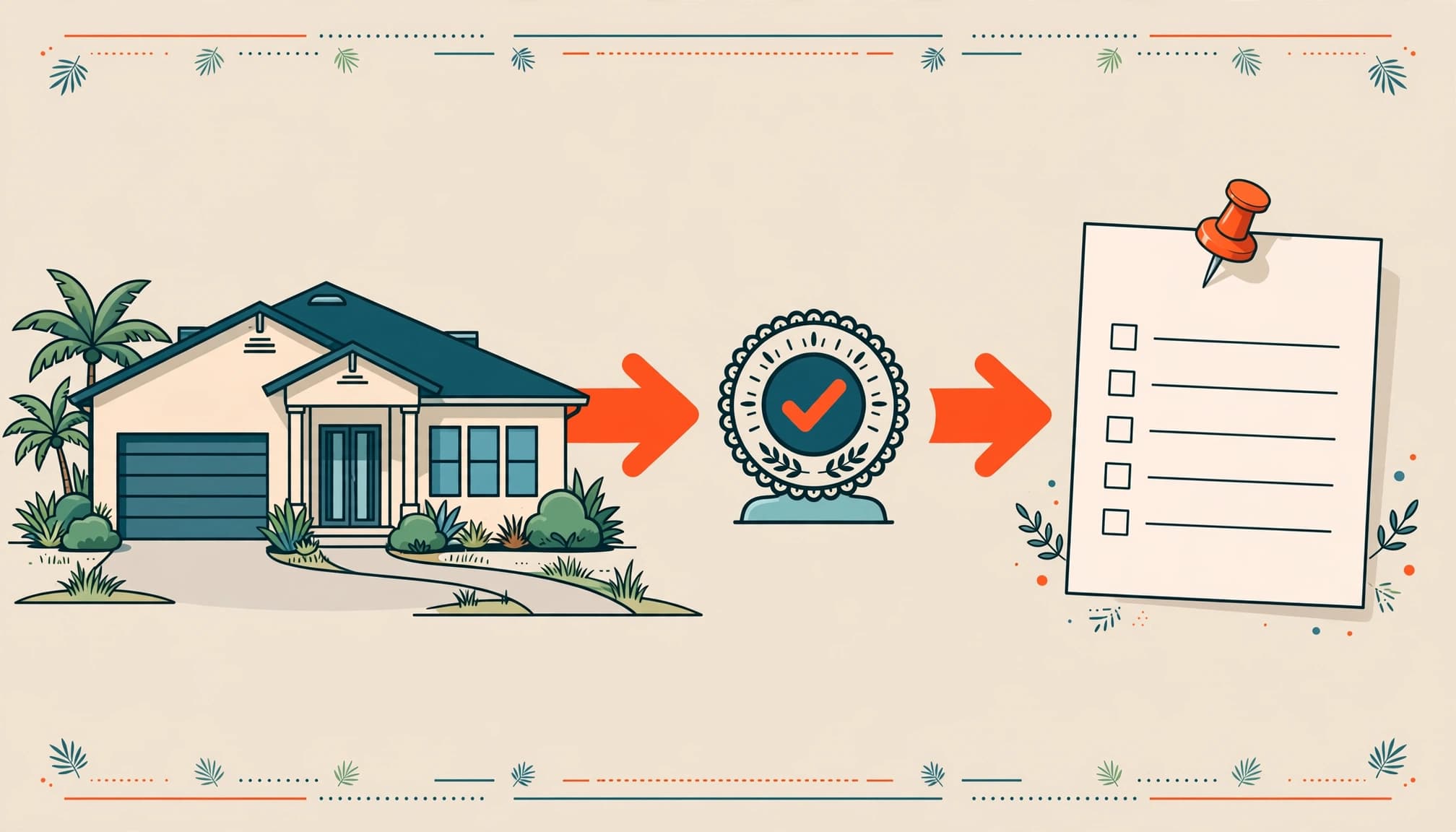
Passing the last field inspection doesn’t always mean the document is available immediately. Departmental sign-offs and remaining closeout work may take additional time.
Application fees and inspection fees, along with reinspection charges, depend on local requirements. There isn’t a nationwide rate or turnaround time. For perspective, Garland’s occupancy application guidance allows up to six to eight weeks for its business occupancy process. That isn’t a standard timeline for a Florida home.
Temporary Occupancy Has Written Limits
A temporary certificate of occupancy (TCO) may authorize occupancy while approved remaining work is completed. The building authority must affirmatively approve the TCO and provide written conditions.
The permitted occupancy and remaining work depend on those conditions. A TCO doesn’t excuse unresolved safety hazards or automatically authorize occupancy throughout the property.
Procore reports, as general context, that a TCO often lasts about 90 days, usually without routine renewal. It also reports that Evanston, Illinois, requires applications every 30 days and charges $125 in fees. These durations aren’t universal rules, and local government code determines the requirements.
Local rules can differ substantially. The Los Angeles occupancy code allows a temporary certificate of occupancy for up to six months and permits additional temporary certificates.
A temporary certificate authorizes occupancy under its written conditions. It doesn’t change the builder’s contractual completion obligations.
Local Rules Change the Requirement
National explanations can confuse readers because local requirements and the sequence of inspections and approvals vary by jurisdiction. A renovation or change in use may also trigger approval under local rules.
Chicago’s certificate requirements cover work involving four or more dwelling or sleeping units and larger nonresidential projects. They also cover certain occupancy changes and assembly, educational, institutional, and hazardous uses. A single-family home ordinarily doesn’t require a CO solely because it’s a single-family home.
Milwaukee generally exempts one- and two-family homes, while requiring certificates for uses that include parking structures, parking lots, and commercial storage buildings.
Where approval is required, moving in early can bring serious consequences. Milwaukee’s occupancy guidance warns of fines ranging from $150 to $5,000 per day and an order to vacate under section 200-19.
Garland requires a new business certificate when ownership or business use changes, or when a business expands into additional or adjoining space.
For Florida homeowners, the property’s jurisdiction determines the process. Check the local requirements and approval sequence for the property. A rule for a Chicago house or Texas business isn’t a substitute for the approvals attached to a Florida residential permit.
Before Closing, Separate Approval From Completion
Review the Home Against the Contract
A CO confirms authorization to occupy under local rules, but it doesn’t confirm that every promised feature has been delivered. Your plans, specifications, selections, signed change orders, and written completion standards still matter.
During the final walk-through, review cabinets, flooring, paint, doors, screens, appliances, plumbing fixtures, and promised exterior work. Check drainage, landscaping, and utility operation when those items are part of the contract.
We recommend documenting unresolved items with photographs, locations, requested corrections, and completion dates. Schedule the walk-through early enough to allow repairs and any needed reinspection.
For a newly built rental or investment property, keep occupancy approval in the records before residents move in.
Match Final Payment to Written Obligations
Payment timing and final payment conditions depend on the written contract and applicable law. Occupancy approval alone doesn’t establish that all conditions for final payment have been met.
Procore’s construction closeout explanation describes retainage of 5% to 10% as one example. It compares occupancy approval with the certificate of substantial completion in AIA-style contracts. That retainage range isn’t a universal rule for every private home purchase.
For closeout, collect occupancy approval, final permit records, warranties, manuals, equipment information, keys, remotes, and required lien releases. Keep written commitments for work scheduled after closing.
We recommend saving the handover package in both a digital folder and a physical file for your closeout records.
Frequently Asked Questions
Does a CO Mean the Home Is Fully Complete?
A certificate of occupancy confirms that the home is approved for occupancy under the local process. It doesn’t establish that every selection, cosmetic correction, exterior detail, or contractual obligation is complete. Your written agreement sets those completion standards.
Can a New Home Be Occupied Before Approval?
Where approval is required, moving in without it can trigger enforcement. A written TCO may authorize limited occupancy, but a scheduled inspection, verbal assurance, or completed walk-through doesn’t provide that approval.
How Long After Final Inspections Is the Certificate Issued?
There isn’t one national deadline. Local review and processing affect issuance, along with completed inspection records, required departmental approvals, supporting documents, and resolved deficiencies. Passing inspections is important, but remaining administrative work can affect the release date.
A Clear Finish Before the Keys
A certificate of occupancy confirms approval, but a dependable handover also requires completed contract work and organized records. We recommend treating the CO as approval, with completion and closing as separate responsibilities.
For a new home in Lee, Charlotte, or Highlands County, discuss your construction plans with our team. Clear scope, inspection access, and written completion standards help protect your budget and expectations before construction begins.