
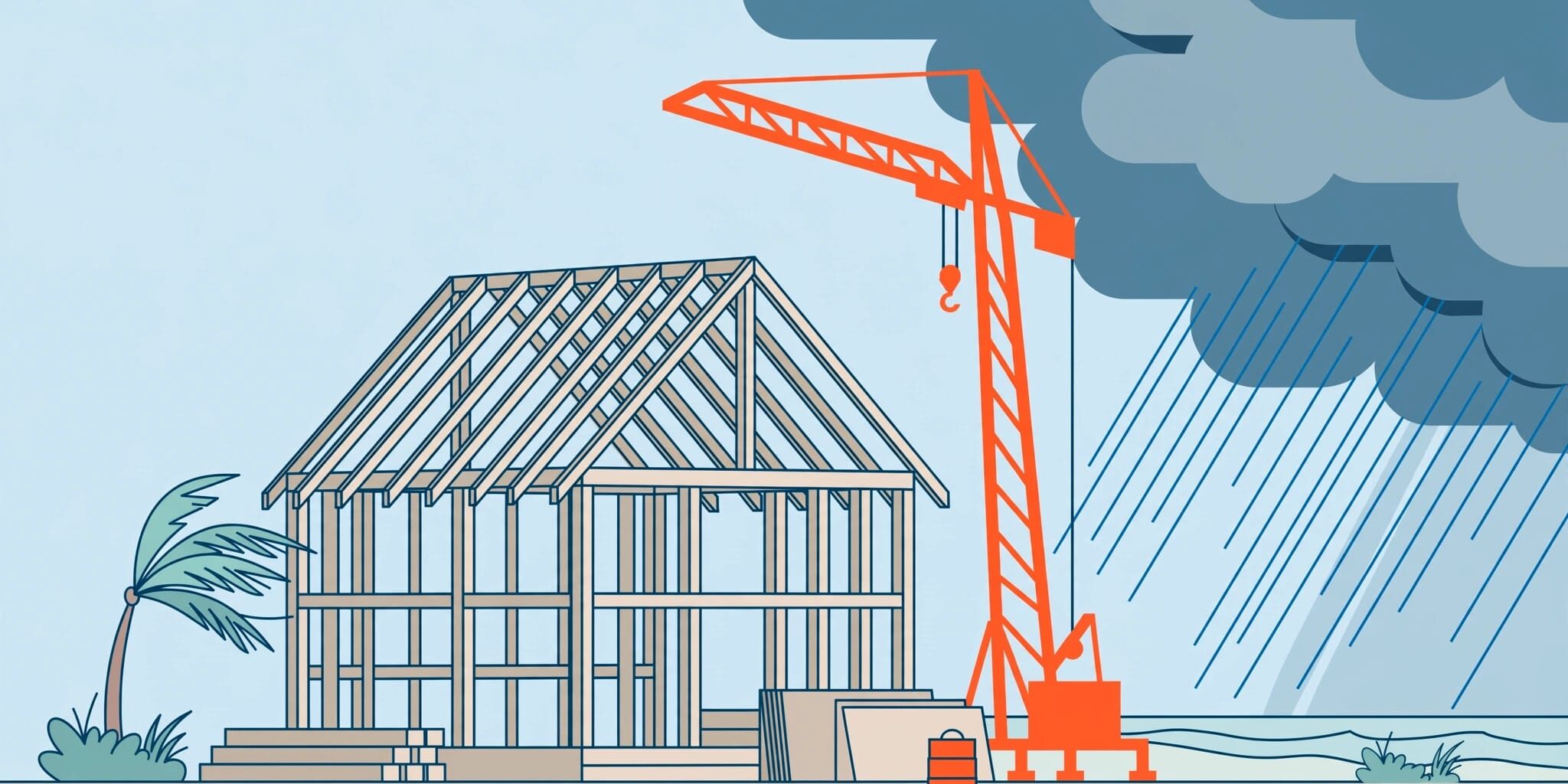
Florida builders risk insurance protects the money invested in a home under construction. Builder’s risk insurance, also called course of construction insurance, provides temporary property coverage.
An affordable build needs more than a competitive premium. Your coverage amount, storm deductible, and policy dates all affect the full construction budget.
We recommend starting with the home you’re building, how you’ll use it, and the protection already included in your construction agreement.
Key Takeaways
- Choose coverage for your project type. An owner-occupied home may qualify for a homeowners-form option, while an investment build may need standalone builders risk.
- Compare premiums using the same construction value, policy period, and deductibles. A lower price can leave more of your money exposed after a storm.
- Treat wind and flood as separate coverage decisions. Plan the transition to permanent property insurance before the construction policy’s protection ends.
What Florida Builders Risk Insurance Protects
Builders risk is property insurance for a construction project. Coverage may include fire, lightning, wind, theft and vandalism, depending on the policy form, exclusions, and endorsements.
We recommend a proposal that clearly identifies the home, construction value, and project period. A general description such as “construction coverage” doesn’t explain which property is included or how much protection is available.
Check the policy wording for exclusions such as faulty workmanship. Endorsements or policy forms may address debris removal and soft costs, subject to availability, limits, and terms.
Materials and Construction Locations
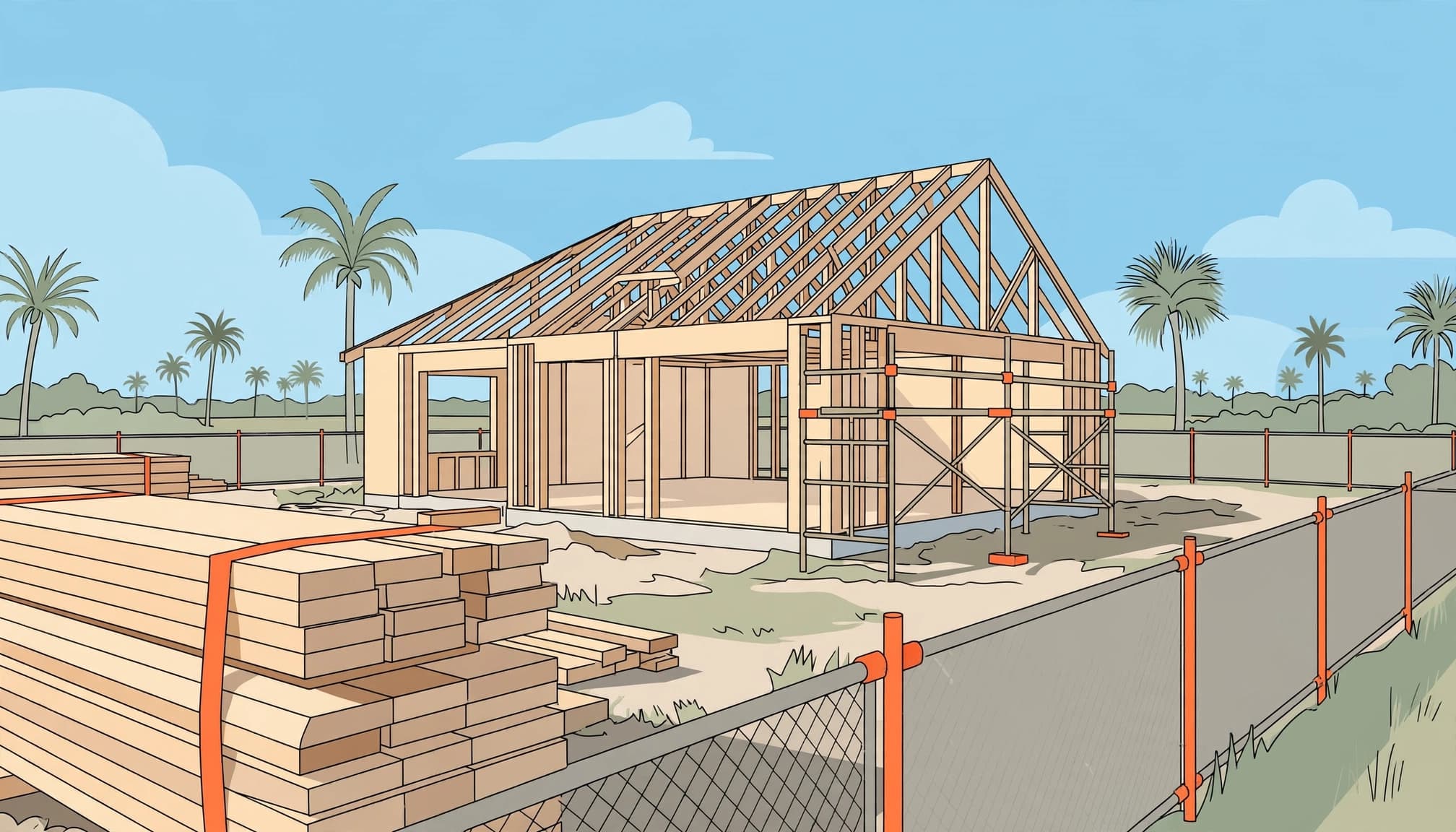
Materials don’t always move directly from a supplier into the finished home. They may remain at the job site, travel between locations, or wait in storage.
Coverage for materials in transit and off-site storage can differ from job-site coverage. Transit protection, off-site storage, and temporary structures can have their own limits and conditions.
For a new home, that detail matters when cabinets, windows, roofing, or other materials arrive before installation. The project budget should account for their value without assuming every location receives identical protection.
Construction Value and Policy Limits
The amount insured should reflect the construction exposure, rather than the property’s sales price or mortgage balance. Land doesn’t need rebuilding.
Plans, specifications, labor, materials, and updated construction costs provide a stronger starting point. Major upgrades and written change orders can increase that value during the build.
We recommend keeping the policy limit aligned with the approved scope and current construction costs. A policy based on an earlier, smaller plan can leave a gap between the insured amount and the actual project.
Which Policy Fits Your New Home Build?
The right policy starts with who owns the project and how the completed home will be used. Personal occupancy, rental use, and development for sale aren’t interchangeable.
A Home Intended for Personal Occupancy
Some homeowners policy forms can accommodate a dwelling under construction when issued in the intended owner-occupant’s name. ISO form guidance includes that possibility for forms such as HO 00 03 and HO 00 05.
That provides a possible route for someone building a primary residence. It doesn’t mean every homeowners insurer offers construction-stage coverage.
A construction-specific endorsement can also have narrower terms than a standalone builders risk policy. For example, the HO 06 07 endorsement provides limited theft protection for certain property and materials, with its own termination conditions.
An Investment, Rental, or Commercial Project
A house built for resale or rental doesn’t fit the intended owner-occupant route described above. Standalone builders risk provides a separate option for these projects.
US Assure’s online builders risk application supports residential and commercial projects valued up to $75 million. Applications go through licensed property-and-casualty agents.
That figure describes program capacity, not automatic approval. Larger projects and certain requested coverages require underwriting review. We recommend matching the coverage proposal to the intended use at completion, including rental occupancy or a planned sale.
What Florida Builders Risk Insurance Costs
Bridgeway Insurance and NextGuard Insurance publish Florida estimates of roughly $1.20 to $4.50 per $100 of project value. They base the estimates on insurable construction value, not a statewide rate schedule.
The county, construction details, project duration, and selected protection all affect the final premium. Coastal exposure can also change the available terms.
A $500,000 Construction-Value Calculation
Applying those published estimates to a $500,000 project produces the following arithmetic.
| Published Rate per $100 | Calculation | Indicated Premium |
|---|---|---|
| $1.20 | 5,000 × $1.20 | $6,000 |
| $4.50 | 5,000 × $4.50 | $22,500 |
These figures illustrate the rate calculation before duration adjustments, fees, taxes, or endorsements. They aren’t quotes for a particular address.
The wide difference is why we recommend pricing the actual home early. A statewide estimate cannot establish what your parcel or construction plan will cost to insure.
Comparing Quotes on Equal Terms
A useful comparison keeps the construction value, coverage period, and deductible basis consistent. Otherwise, a cheaper proposal may simply insure less property or leave a larger out-of-pocket amount.
The quoted period matters, too. A short construction term and a longer project term aren’t equal purchases.
Keep the premium separate from your deductible reserve. Paying for the policy doesn’t remove the need for cash after a covered loss. That reserve belongs beside financing costs, site work, and other construction expenses.
Florida Hurricane Deductibles and Flood Protection
Florida storm protection needs a clear dollar calculation. The percentage printed on a proposal can look manageable until it’s applied to the insured value.
What a Percentage Deductible Means
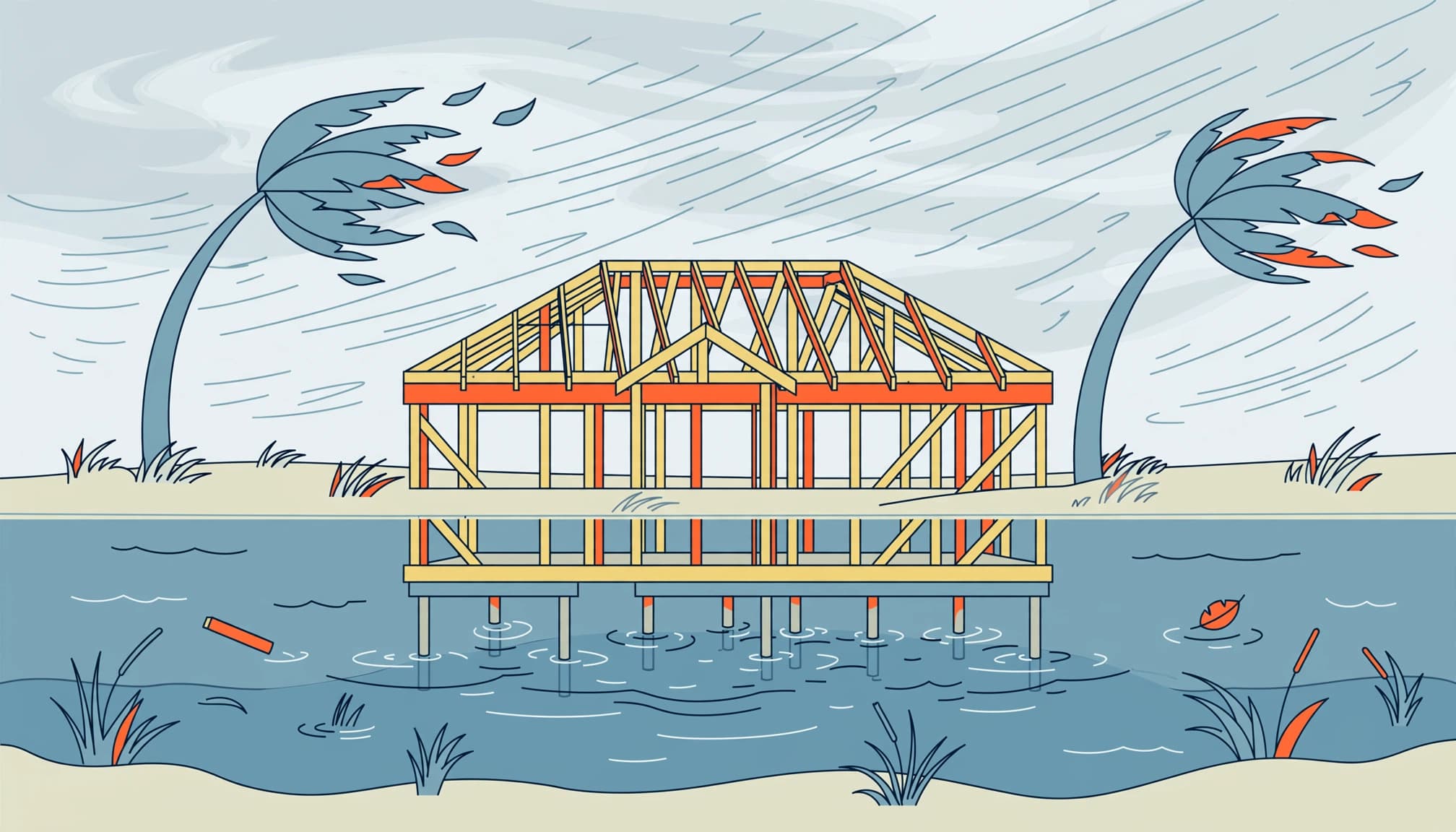
Agency sources report named-storm deductibles of 2% to 5% as a common coastal-market range. Those percentages aren’t guaranteed statewide terms.
The proposal’s wording and calculation basis determine how a named-storm deductible or hurricane deductible applies.
On a $500,000 insured value, 2% equals $10,000 and 5% equals $25,000. With a 5% deductible calculated on that value, the first $25,000 of an applicable hurricane loss is your responsibility.
A percentage deductible based on insured value isn’t calculated from the repair bill. A smaller loss doesn’t shrink that deductible.
Miami-Dade and Broward are Florida’s High-Velocity Hurricane Zone counties. Monroe also has substantial coastal exposure, but it isn’t part of that two-county designation. The insured construction value should reflect the cost of rebuilding to applicable code.
Flood Protection During Construction
Wind coverage doesn’t establish protection for flood damage. Some builders risk programs offer flood options, while separate NFIP or private flood insurance provides another route.
The US Assure builders risk program includes wind and flood options, subject to underwriting and policy terms.
FEMA’s NFIP construction coverage rules allow eligible buildings under construction, with important restrictions. An unwalled or unroofed building can become ineligible when work stops for more than 90 days or applicable floor-elevation requirements aren’t met.
NFIP construction materials coverage also requires materials to be inside an enclosed building on or adjacent to the premises.
Coordinating Insurance With the Construction Schedule
Set insurance dates as part of the construction schedule, before work and material deliveries create financial exposure.
A project-specific policy has an effective date, expiration date, and termination provisions. Depending on the form and policy terms, completion, occupancy, a certificate of occupancy, or a scheduled date may affect when coverage ends. Delays can extend the build and may require an extension fee or additional underwriting.
The homeowners-form option has its own limits. The HO 06 07 endorsement ends at completion and occupancy or on its scheduled termination date, whichever comes first.
Permanent homeowners or landlord coverage needs an effective date that fits the finished property’s use. Arrange that transition before construction protection ends, rather than treating insurance as a closing-day task.
Keep the bound replacement policy, payment records, and coverage evidence with your construction documents. Provide proof promptly to the mortgage servicer. Ending existing coverage before replacement protection takes effect can leave a gap and may lead to lender-placed insurance.
For projects in Lee, Charlotte, or Highlands County, you can discuss your construction plans with our team as you organize scope, budget, and timing.
Frequently Asked Questions
Is Builders Risk Legally Required in Florida?
Florida doesn’t impose one statewide builders risk requirement on every private new-home project. A lender requirement or construction contract can still make coverage a condition of proceeding.
The agreement determines which party is responsible for arranging and paying for the required protection. Builders risk is property coverage, so it doesn’t replace general liability or workers’ compensation coverage. Whether those separate protections are required depends on the project, contracts, and applicable terms.
We recommend putting that responsibility in writing alongside payment and construction terms. Clear responsibility helps avoid duplicate spending or an uninsured project.
Can Builders Risk Cover a Renovation?
Renovation is an eligible project category in the US Assure program. Coverage needs differ because an existing building is involved alongside new work.
A useful proposal separates the existing structure’s value from the renovation value. It also identifies occupancy during construction and the planned use afterward.
A substantial remodel shouldn’t be treated as the same insurance purchase as a ground-up home. The starting property, construction exposure, and coverage needed at completion are different.
Does Builders Risk Replace a Builder Warranty?
Builders risk and a builder warranty address different responsibilities. Construction-stage property protection doesn’t establish the builder’s warranty obligations.
For qualifying Florida new homes, the statutory one-year builder warranty addresses certain construction defects involving material Building Code violations. It isn’t a general maintenance plan.
We recommend keeping insurance records and warranty documents in separate sections of your project file. Each has its own terms, dates, and claim process. A clear record helps you direct a concern to the appropriate party.
Build Insurance Into the Full Project Budget
A dependable construction budget includes the premium, a realistic deductible reserve, and coverage suited to the actual home. The lowest quote alone doesn’t establish the strongest value.
We recommend coordinating the insurance decision with your contract, financing, and completion schedule. Clear coverage and clear responsibility help protect the investment you’re making before the home is ready to live in.