

A lot can meet local zoning requirements and still have private rules that limit your building plans. Florida deed restrictions can affect your home design, outdoor improvements, and how you use the finished property.
Review those rules before committing to a floor plan or construction price. Early document review can protect your budget while changes are still affordable.
Start with the recorded documents for your exact parcel.
What Florida Deed Restrictions Mean for Your Lot
Deed restrictions are private property rules, also called restrictive covenants or CC&Rs. They’re recorded in county public records and may stay attached to the land after a sale.

Private Rules Can Bind Future Owners
Developers and previous owners commonly create restrictions. An HOA may administer them and, when authorized, adopt or amend community requirements.
Restrictions that run with the land can bind future owners, even if they never signed the original document. Buying the property doesn’t erase its recorded obligations.
The controlling language matters. A subdivision declaration may apply to many lots, while a separate instrument may affect only one parcel. A community name alone doesn’t establish which documents govern your land.
Zoning and Covenants Require Separate Reviews
City or county zoning controls public land-use requirements. These private rules come from recorded documents and property rights.
A zoning approval doesn’t establish whether your design complies with a recorded covenant. HOA approval also doesn’t replace building permits, building-code review, or flood requirements.
We recommend treating these as separate parts of one coordinated plan. Your home must comply with applicable public rules and enforceable private restrictions.
How to Find the Recorded Restrictions
The current deed is the starting point, but it may reference documents recorded years earlier. Follow those references to identify which deed restrictions apply to the property.
Search the County’s Official Records
Begin with the parcel number and legal description from the property appraiser. For a platted lot, keep the subdivision name, lot, block, and plat book and page together.
Search the county clerk’s official records for the deed and referenced instruments. Depending on the search system, useful fields include owner names, document numbers, legal descriptions, and recording book and page.
County records contain more than deeds. For example, Volusia County’s official records search includes easements, liens, and other recorded instruments.
Follow references to declarations, amendments, supplemental restrictions, preservation notices, and other restrictive covenants. Save complete documents, including exhibits that identify the affected property.
Read the Title Commitment and Association Documents
The title commitment helps identify recorded matters affecting the property. Review its exceptions and obtain the underlying documents rather than relying on short descriptions.
For an HOA property, include the declaration, recorded amendments, bylaws, architectural standards, and current application requirements.
Match the legal description across the deed, survey, plat, and title documents. A similar street address or neighboring lot isn’t enough.
We recommend assembling this file during the purchase review period. That gives you a better foundation for deciding whether the property supports your plans.
Review the Whole Site, Not Just the House
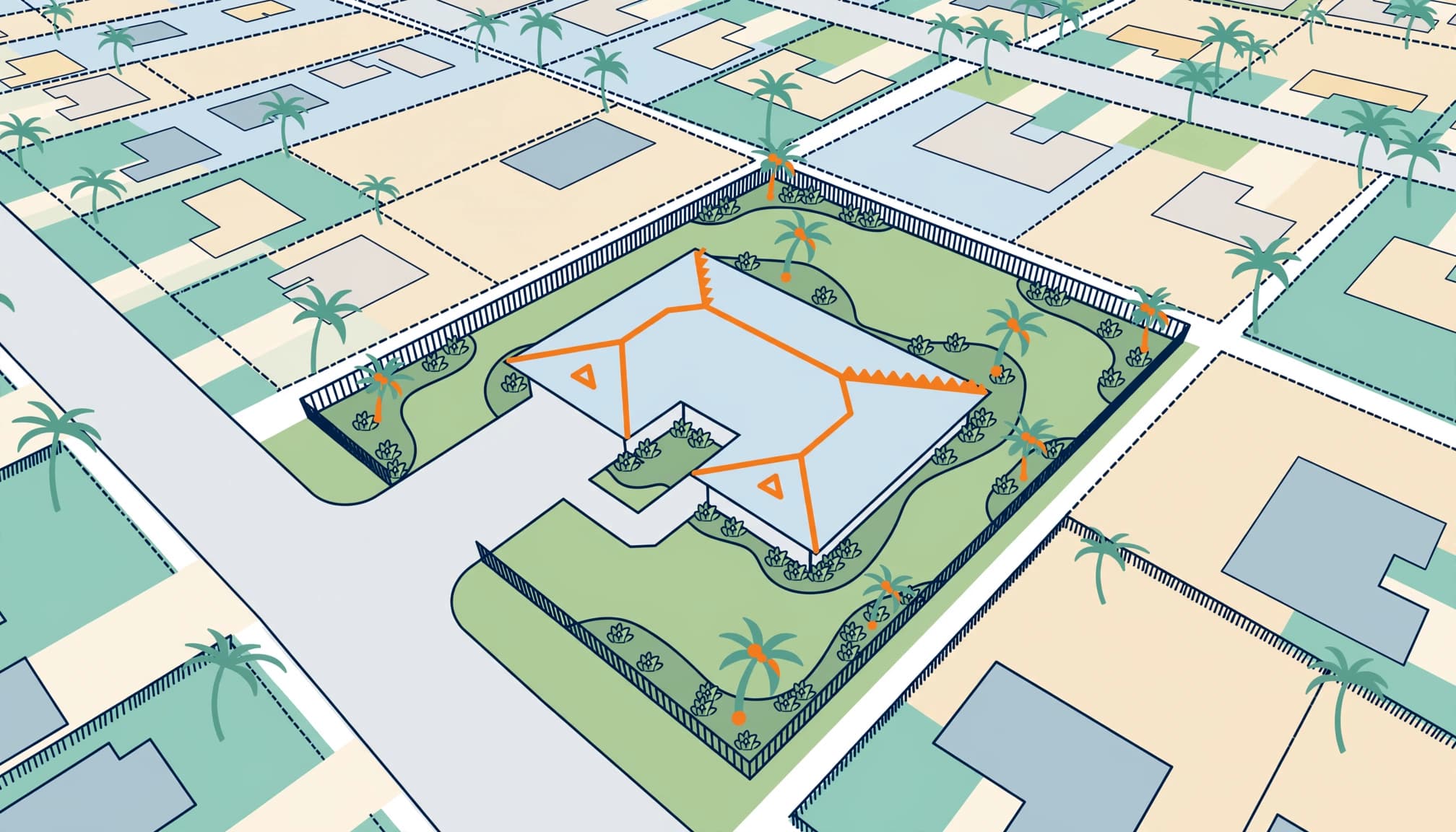
A workable home plan includes the building footprint, driveway, drainage, utilities, and planned outdoor improvements. Private restrictions can affect parts of the property that appear open and available.
Structures and Property Use
Read the provisions governing permitted structures and uses. The question is whether your intended project fits the actual recorded language.
A duplex, detached garage, guest area, or future addition deserves its own review. Permission for the principal home doesn’t establish permission for every improvement.
Compare the proposed site plan with the actual recorded deed restrictions for permitted uses, accessory structures, placement rules, and easements. Check applicable setbacks and height limits too, since they may come from zoning or other requirements.
Easements create separate property rights and may limit construction independently of zoning setbacks.
We recommend including future improvements early. Reserving space for a garage or pool is easier before the house location is fixed.
Fences, Walls, Hedges, and Household Rules
Recorded documents can reach beyond the main structure. The declaration for Villages of West Lake, Unit 43, includes architectural approval, fence, wall, hedge, and domestic-pet provisions.
Those examples show why the entire document deserves attention. A rule affecting a boundary improvement can change your yard layout even when the home itself fits.
A fence isn’t reliable evidence of the property line. Use survey information for boundaries and read the recorded requirements for permitted improvements.
Household-use provisions also matter after construction. Your plans should support both the building project and the way you intend to occupy it.
Get Architectural Approval Before Committing to Work
An Architectural Review Committee, often called an ARC, may review proposed structures or exterior improvements. Its authority depends on the community’s governing documents, including deed restrictions, and applicable law.
Florida’s Homeowners’ Association Act, Chapter 720, includes provisions addressing architectural control. Section 720.3035 ties that authority to the declaration or authorized published standards.
Prepare the application around the actual requirements. The Architectural Review Committee may request a site plan, elevations, dimensions, material information, and supporting drawings.
Written approval should identify the plans reviewed and any conditions. Keep it with the construction documents so the approved design and building scope remain aligned.
A building permit doesn’t replace private architectural approval, and private approval doesn’t replace a building permit.
Settle design conditions before ordering affected materials. Contract documents should also assign responsibility for applications, fees, revisions, and changes requested during review.
If the design changes later, the approval may no longer cover the revised work. Ask the Architectural Review Committee to confirm that revised drawings are covered. Keep revised drawings, written decisions, and construction instructions together.
How Long Florida Deed Restrictions Last
The age of a declaration matters, but its recording date alone doesn’t answer whether it remains enforceable. Florida’s expiration rules require a review of the title history and statutory exceptions.
The 30-Year Rule Depends on the Root of Title
The Marketable Record Title Act, Chapter 712, can extinguish older interests, including certain restrictions. Restrictions older than 30 years may lapse, but there isn’t a universal birthday-based expiration rule.
The analysis centers on the property’s root of title, a qualifying recorded title transaction, rather than simply the date the covenant was created.
Exceptions can preserve interests that would otherwise be affected. References within the title chain and the wording of recorded instruments matter.
A Florida real estate attorney can evaluate that history. We don’t recommend treating an old declaration as unenforceable based only on its age.
Preservation Requires a Recorded Instrument
Chapter 712 provides ways to preserve covered interests through a qualifying recorded notice. The notice window relates to the effective date of the root of title.
A valid preservation notice protects the covered interest for at least 30 years after filing. Preservation isn’t established merely because an HOA remains active.
Look for a preservation notice, qualifying summary notice, or amendment in the county records. Read the document and its exhibits to identify the restrictions and property it covers.
The practical question is whether the recorded history preserves the particular restriction affecting your parcel.
Who Can Enforce the Restrictions?
An HOA may enforce authorized requirements through the procedures available under its governing documents and Florida law. Depending on the violation and process, consequences can include fines, court orders, corrective work, or liens.
Don’t assume every enforcement tool applies to every dispute. The type of charge, governing language, and statutory procedure matter.
Without an HOA, a covenant may still give neighboring owners or other named parties enforcement rights. Those disputes can proceed through civil court.
Florida Statute 689.18 addresses restrictive covenants and reverter or forfeiture provisions. It doesn’t replace the separate Chapter 712 title analysis.
We recommend resolving a disputed restriction before construction. Building first can leave you paying for redesign, removal, or legal proceedings after materials and labor are already committed.
A neighbor’s existing improvement isn’t proof that your proposal is authorized. Older approvals, different documents, or delayed enforcement can explain the difference.
Key Takeaways Before Committing to Construction
An affordable build starts with a clear scope. We recommend settling the property requirements before the final plan, price, and construction schedule are established.
- Obtain the complete recorded declaration for the deed restrictions, amendments, referenced instruments, and any preservation documents affecting your parcel.
- Match the deed, title commitment, survey, and plat so the review concerns the correct land.
- Include the house, driveway, easements, drainage, and planned accessory improvements in the site review.
- Keep architectural decisions, approved drawings, contract responsibilities, and change orders in writing.
Your construction budget should account for application costs, design revisions, and site work tied to these requirements. The house price alone doesn’t describe the complete project cost.
Bring unresolved legal questions to a Florida real estate attorney before committing to the affected work. Your builder and design professionals can then coordinate construction around a documented scope.
Frequently Asked Questions
Does Every Florida Property Have Deed Restrictions?
No. Restrictions aren’t limited to planned communities, either. A previous owner can create recorded requirements affecting an individual parcel. The title history and recorded instruments establish what applies, not the property’s appearance or whether it has an HOA.
Does the Current Deed List Every Rule?
Not necessarily. A deed may refer to a declaration or other recorded instrument without repeating its contents. Following those references is part of a complete review. Later amendments and preservation documents can also affect the answer.
Is a Boundary Survey Enough to Identify Restrictions?
No. A survey establishes boundary information and may show easements or other features. It doesn’t replace reading the recorded documents. Compare the survey with the deed, title commitment, and underlying instruments before treating the entire lot as buildable.
Can an Owner Ignore a Restriction They Disagree With?
Disagreement alone doesn’t cancel an enforceable restriction. A legal dispute requires review of the wording, title history, enforcement rights, and applicable law. Starting construction while that dispute remains unresolved can increase the financial consequences.
Build With Clear Property Requirements
Florida deed restrictions belong in the planning process before construction begins. A complete document file supports a workable design, clear responsibilities, and a more dependable budget.
We recommend aligning the recorded requirements with your site plan before committing to the affected work. Written approvals and clear plans reduce avoidable surprises.
For practical help with your layout, site work, and construction budget, discuss your building plans with our team.