
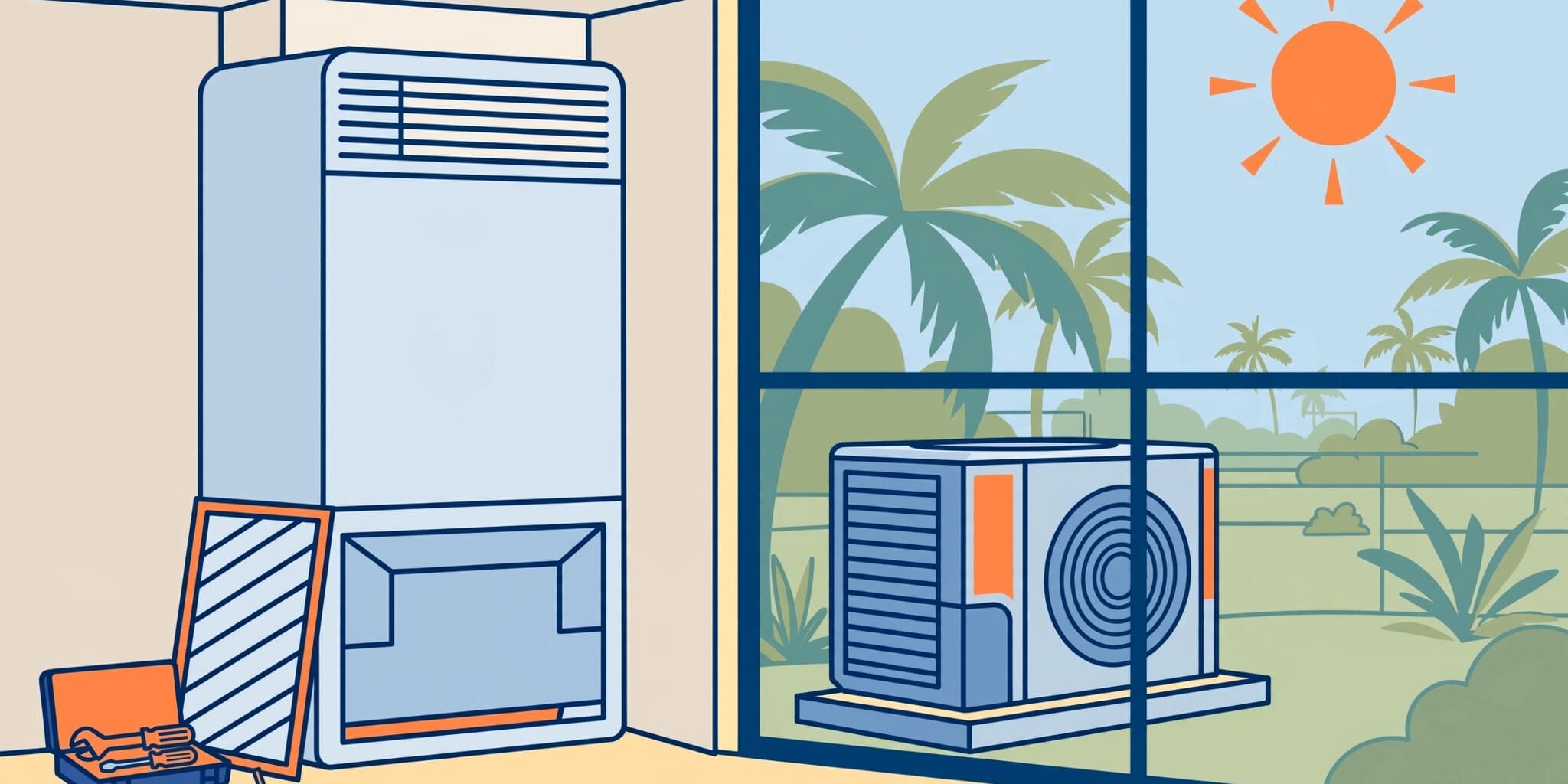
A new HVAC system still needs regular care, especially when Florida heat keeps it running for long hours. We recommend starting a maintenance routine at move-in, with simple checks that protect your comfort, budget, and home.
Your priorities are steady airflow, clear drainage, and controlled humidity. Start with the equipment records, then build a schedule that separates homeowner tasks from professional service.
Start With Your New-Home Handover Records
Good maintenance begins with knowing which HVAC system was installed. Before closing, ask for a demonstration of the system and its accessible maintenance points.
Collect Equipment and Warranty Details
Keep the air handler, outdoor unit, and thermostat model numbers together with serial numbers, manuals, installation records, and warranties. Record the filter size, recommended replacement type, and equipment registration requirements.
Save these documents in one digital folder and one physical file. Add service invoices and photographs as maintenance begins. Builder warranties, manufacturer warranties, and service agreements have different coverage and reporting rules.
For questions about equipment or features included in a planned home, speak with Nathan’s Homes.
Confirm Operation Before Closing
During the final walkthrough, check thermostat operation, accessible supply and return airflow, cooling response, filter access, and condensate drainage.
Ask your inspector to review visible duct connections, insulation, refrigerant lines, and equipment condition. Document concerns by room and location, with photographs and requested corrections. A certificate of occupancy doesn’t replace this buyer-focused review.
Set a Florida HVAC Maintenance Schedule
Calendar reminders help you stay on top of routine maintenance and preventative maintenance before you notice a hot room or rising electric bill. Use this schedule alongside your equipment manual.
| Timing | Homeowner Task | Professional Follow-Up |
|---|---|---|
| At Move-In | Collect manuals and confirm filter access. | Resolve documented installation concerns. |
| Every Month | Check filters, airflow, drain areas, and humidity. | Report leaks or performance changes. |
| Before Peak Heat | Clear vegetation and inspect visible equipment condition. | Schedule a spring tune-up before cooling season. |
| Before Heating Use | Review thermostat settings and maintenance records. | Arrange heating or heat-pump service as needed. |
| After Severe Weather | Look for debris or damage from a safe location. | Have damaged or flooded equipment assessed. |
Monthly checks don’t mean every component needs monthly servicing. Follow the manufacturer’s instructions for your installed system.
Handle Monthly Filter and Airflow Checks
These checks are affordable, straightforward, and worth keeping consistent.
Inspect Air Filters Every 30 Days
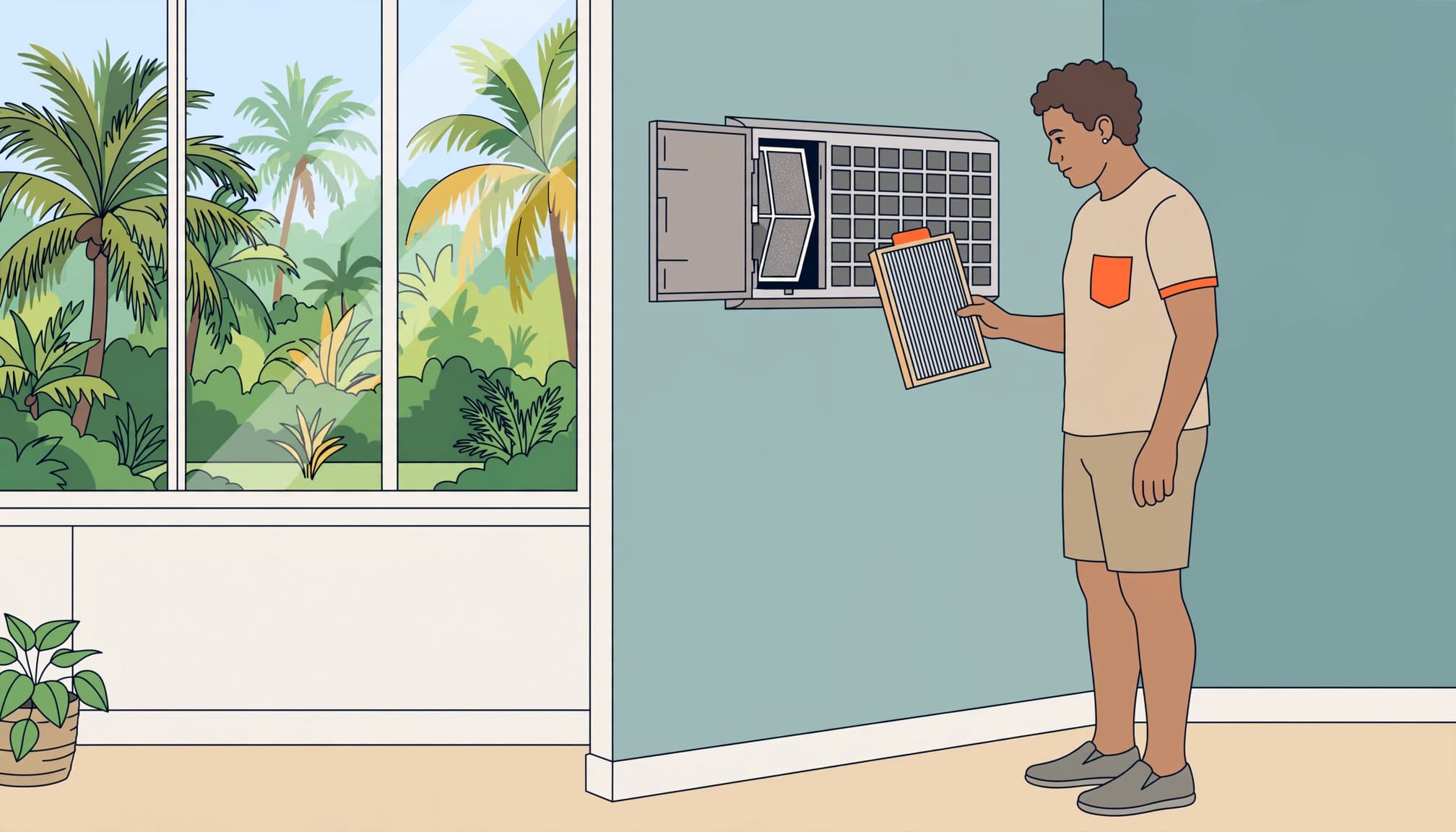
The Department of Energy’s Energy Saver guide recommends monthly filter cleaning or replacement, or following the manufacturer’s schedule. In practice, we recommend inspecting monthly and replacing according to condition and instructions.
Pets, construction dust, and long cooling hours can shorten the interval. Some deeper filters have longer replacement schedules.
Turn the system off before changing the filter. Match the printed dimensions and install it with the airflow arrow pointing toward the equipment. Don’t select a more restrictive filter without confirming compatibility. Higher filtration can reduce airflow when the system isn’t designed for it.
Keep Supply and Return Air Moving
Keep furniture, curtains, and storage away from return grilles and supply registers to support airflow and indoor air quality. Vacuum accessible grille surfaces without opening equipment cabinets.
Don’t close several vents to force cooling elsewhere. Report a room that consistently stays warmer than others or has weak airflow.
Check thermostat schedules after move-in and after power interruptions. Start with the fan set to AUTO unless your technician recommends another setting. Continuous fan operation can return moisture from a wet cooling coil to the home between cooling cycles.
Keep the Condensate Drain Clear
Your air conditioner removes moisture as it cools. The condensate drain line carries that water out of the house.
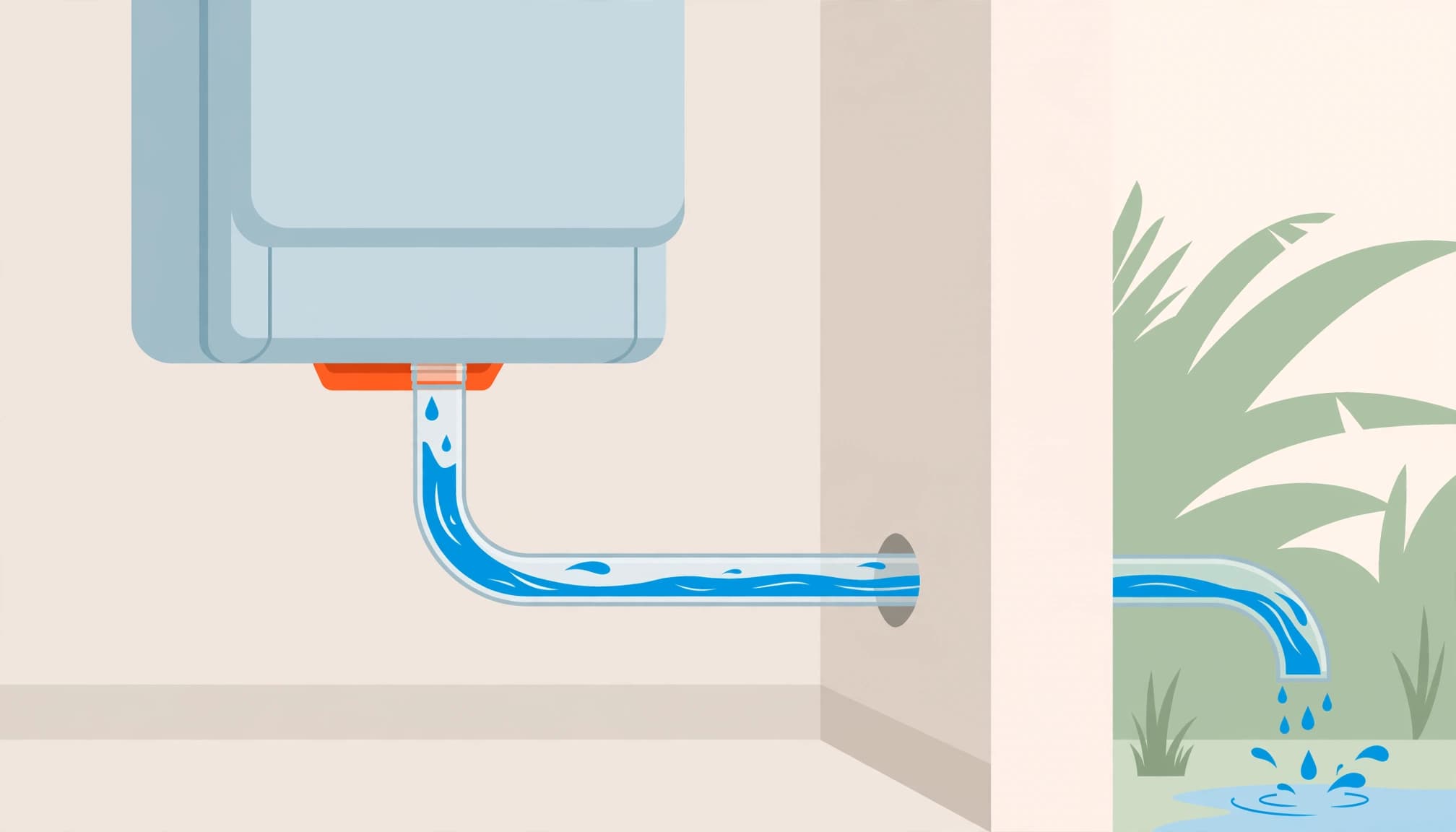
Check accessible areas around the air handler for water, staining, or damp flooring. Look at the drain outlet while the system is cooling. Discharge varies with weather and operation, so a dry outlet alone doesn’t prove a blockage.
Ask the installer to identify the drain cleanout, outlet, and any overflow safety switch. Follow the approved cleaning procedure instead of pouring vinegar or bleach into an unfamiliar system. Never mix cleaning chemicals.
A float switch can stop cooling because water has backed up. Repeatedly restarting the system doesn’t clear the blockage.
If water collects in the secondary pan or reaches nearby finishes, turn cooling off and arrange service. Don’t bypass the safety switch. Have the cause corrected before water damages flooring, drywall, or cabinetry.
Control Humidity Along With Temperature
A comfortable thermostat reading doesn’t tell the whole story. Florida homes also need dependable humidity control.
Watch Humidity in Occupied Homes
Use a separate digital humidity monitor if your thermostat doesn’t display humidity. Aim for indoor relative humidity below 60%, ideally around 30% to 50% where practical.
Persistent dampness, musty odors, or condensation deserve attention. Dirty coils, weak airflow, duct leakage, and equipment sizing can affect humidity control and moisture removal.
An oversized air conditioner may cool quickly without running long enough to remove sufficient moisture. We recommend a diagnosis before lowering the thermostat repeatedly or purchasing add-on equipment. Visible mold also needs assessment of the moisture source, not only surface cleaning.
Plan for Vacant and Rental Homes
Don’t switch cooling off for an extended vacancy. UF/IFAS seasonal-home guidance recommends a setting no higher than 84°F while owners are away, but that isn’t a universal humidity guarantee.
Confirm settings with your technician and monitor actual humidity. Remote alerts help, but someone still needs to respond.
For rentals and duplexes, put filter duties, access arrangements, and leak-reporting instructions in writing. Owners should retain service records.
Protect Outdoor Equipment and Coastal Coils
Outdoor equipment needs open airflow and safe access. Remove loose leaves and keep shrubs clear according to the unit’s installation requirements.
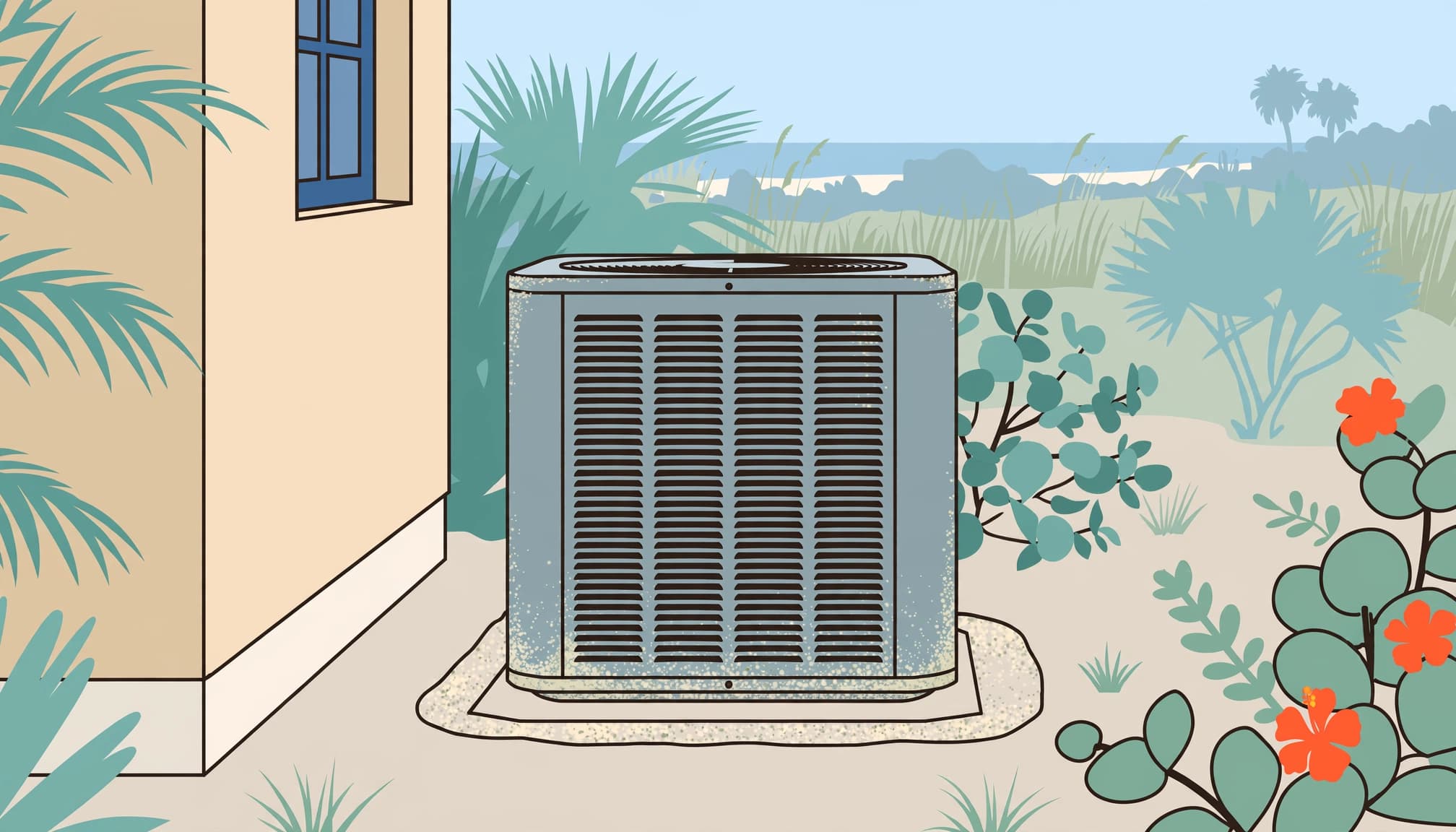
Keep irrigation from repeatedly spraying the cabinet and coils. Coastal salt exposure can accelerate corrosion, so ask your technician about manufacturer-approved cleaning and protection for your location.
Avoid pressure washers, harsh chemicals, and homeowner-applied coatings. These can damage fins or conflict with equipment instructions.
Before tropical weather, secure loose yard items without attaching anything to the condenser. Don’t operate equipment beneath a cover.
After a storm, keep away from damaged wiring or displaced equipment. Flood-exposed equipment needs professional assessment before restarting, even when the surrounding water has receded.
Schedule Professional Service Before Peak Heat
A licensed professional technician should handle electrical testing, refrigerant work, and internal equipment cleaning. Include these tasks in preventative maintenance for your HVAC system.
Request a Documented Tune-Up
ENERGY STAR recommends an annual inspection before cooling season, with service scheduled in spring. Its professional maintenance checklist covers controls, electrical connections, condensate drainage, evaporator coils, airflow, and refrigerant levels.
Ask for written findings, measurements, and any recommended repairs. Cleaning should follow the manufacturer’s procedures and the equipment’s condition.
Refrigerant isn’t a routine consumable. If levels are low, ask whether the technician found a leak or another underlying problem. Repeatedly adding refrigerant without addressing the cause can leave you paying for the same problem again.
Compare Maintenance Plans by Written Coverage
That visit is a sound starting point. A second visit may be useful for heat-pump operation, heavy use, coastal exposure, or manufacturer requirements.
Before buying a plan, confirm the visit count, included cleaning, diagnostic charges, exclusions, and cancellation terms in writing. Compare service plans on those details.
Some plans offer scheduling priority or repair discounts. Get those terms in writing. A lower membership price offers little value if the service your system needs costs extra.
Know When to Stop Cooling and Call
Long run times during hot afternoons can be normal. Sudden changes, water, or electrical symptoms need a different response.
Arrange prompt professional attention when you notice:
- Ice on refrigerant lines or the indoor coil.
- Water around the air handler, wet ceilings, or a full overflow pan.
- Repeated breaker trips, burning odors, or unusual electrical buzzing.
- Frequent short cycles, weak airflow, reduced cooling, or steadily worsening performance.
Turn the system off for ice, active water leakage, or electrical warning signs. Don’t chip ice away or keep resetting a breaker.
Have a qualified technician diagnose the cause and determine whether air conditioning repair is needed, or heat pump repair if your system is a heat pump. For urgent safety concerns or severe heat, ask about emergency AC repair and whether same day service is available.
Record the thermostat setting, room temperature, visible symptoms, and when they started. Photographs can help with diagnosis, warranty questions, and repair records.
Compare Repairs With Replacement on Total Cost
A correctable fault in a new HVAC system shouldn’t automatically trigger replacement. Check warranty coverage and get a written diagnosis first.
For a larger decision, compare repair cost, remaining coverage, equipment condition, and recurring failures. Factor in system lifespan, replacement scope, and financing options. The Department of Energy’s homeowner HVAC guide provides context for evaluating system improvements.
Ask replacement bidders to identify matched equipment, SEER2 rating, sizing method, ductwork services and corrections, permits, and warranties. Modern SEER2 ratings aren’t directly interchangeable with older SEER labels.
We recommend actual quotes rather than a fixed repair-cost cutoff. A higher energy efficiency rating alone won’t correct poor sizing, leaking ducts, or weak airflow.
Key Takeaways for New-Home Owners
Check filters monthly, keep air paths open, and monitor drainage and humidity as part of routine maintenance. Schedule professional service before peak heat.
Keep maintenance records with your closing documents. Report possible installation defects through the warranty process rather than treating every early problem as routine wear.
Frequently Asked Questions
Does a New HVAC System Need Annual Service?
Yes. New equipment still collects dust and produces condensate. Annual service also creates a record of operating condition. Check the equipment warranty for maintenance requirements and keep invoices.
Can Renters Perform the Same Monthly Checks?
Renters can usually inspect accessible filters and report leaks or performance changes. The lease should define replacement duties and approved filter types. The owner should arrange air conditioning repair and internal work through a qualified service provider. Report safety hazards promptly, since they may require emergency AC repair.
Does a Smart Thermostat Replace Maintenance?
No. A smart thermostat can manage schedules and provide alerts, but it can’t clean coils or clear a drain. Reliable comfort still depends on sizing, airflow, insulation, ductwork, and regular service.
Protect Comfort With a Consistent Routine
A new home deserves dependable comfort without avoidable repair surprises. We recommend consistent maintenance, clear records, and prompt attention to water or performance changes.
Set your monthly reminders and confirm your professional service schedule. Small checks help protect the home you’ve worked hard to own.