
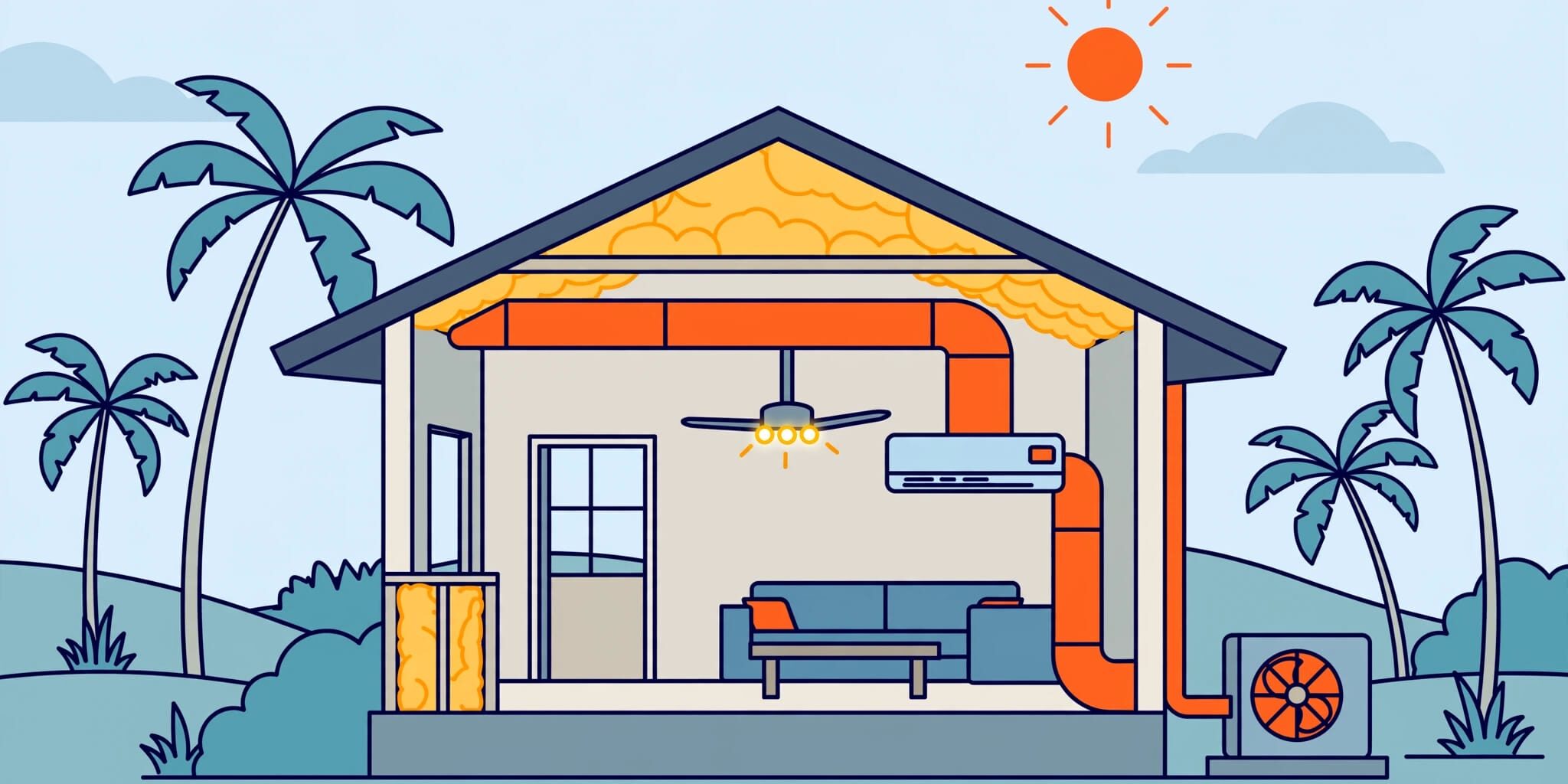
Prioritize Florida home energy upgrades that improve energy efficiency by reducing cooling demand before investing in costly equipment. Start with air sealing, insulation, energy-efficient lighting, and properly sized air conditioning, then compare water heating and window options.
A new home needs the right combination of equipment, insulation, and installation for comfort and reliable performance. A smart thermostat alone won’t deliver that.
Build your upgrade budget around features that may improve comfort and help manage utility bills over time.
Key Takeaways
- Start with low-cost steps, including LEDs, clean filters, and sensible thermostat settings.
- Prioritize sealed ducts, insulation, and right-sized cooling before considering higher-capacity equipment.
- Compare upgrade premiums, total financing costs, and available rebates. Replacement incentives don’t automatically apply to new construction.
1. Start With LEDs, Fans, and Better Controls
Small improvements make a practical starting point, especially for renters or owners with limited budgets.
Replace Incandescent Bulbs
LED bulbs use up to 90% less energy than incandescent bulbs and can last up to 25 times longer. Choose LED bulbs with about 800 lumens to replace a 60-watt incandescent with similar brightness.
That replacement saves 52 kilowatt-hours for every 1,000 operating hours. For energy savings, start with lights used most often, including kitchen, living-room, and exterior fixtures.
If your new home already has LED bulbs, there’s little reason to replace working bulbs solely for energy savings.
Use Fans and Thermostats Together
Ceiling fans let you raise the thermostat several degrees while staying comfortable. Efficient ceiling fans can cost only a few cents daily with limited use, depending on wattage and electricity rates.
Turn ceiling fans off in empty rooms. They cool people rather than lowering room temperature.
A programmable thermostat or smart thermostat helps manage schedules. Use a smart thermostat for modest schedule adjustments, and don’t turn cooling off for extended periods in Florida’s humid weather.
2. Seal Ducts and Improve Attic Protection
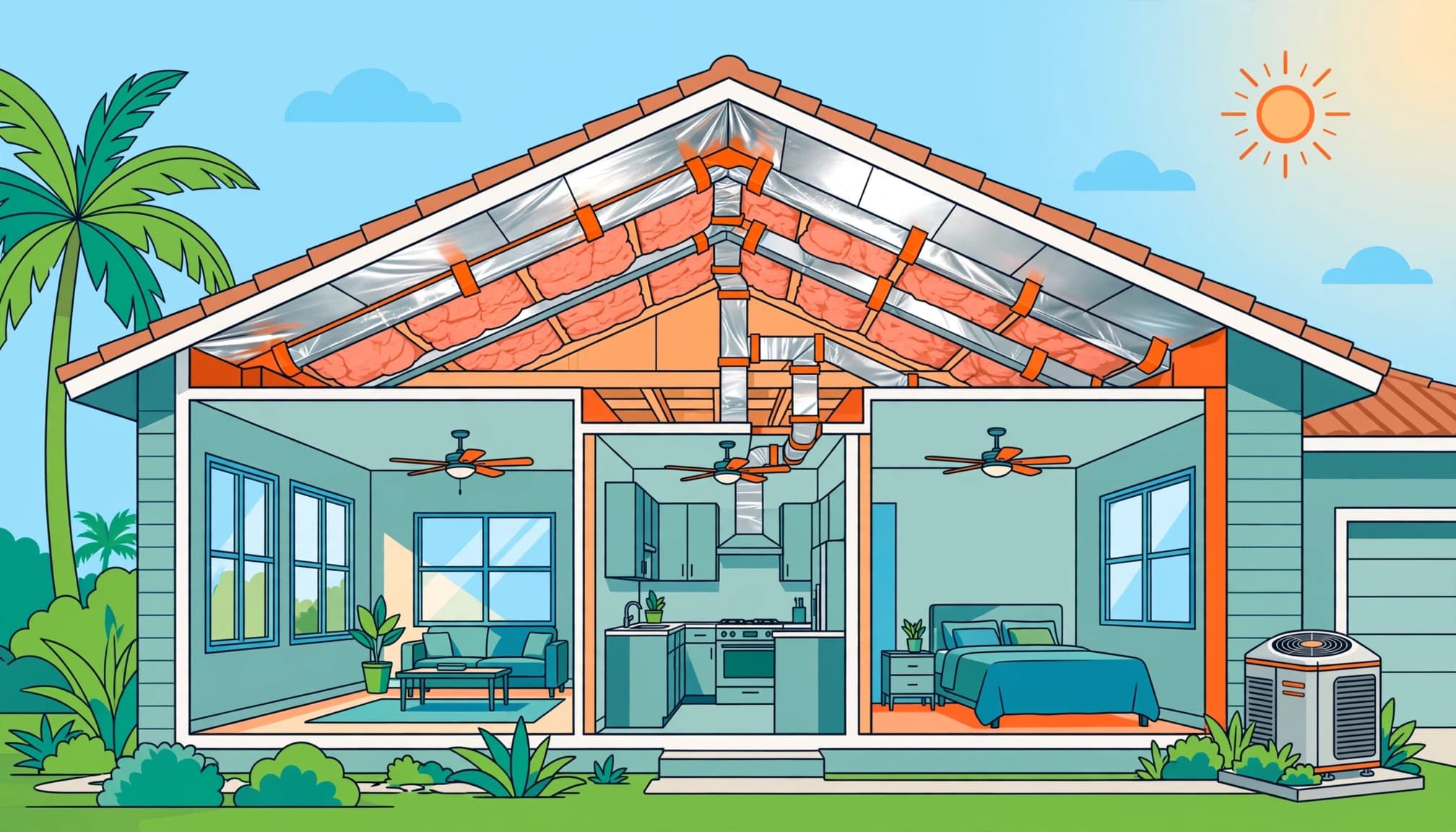
Duct leaks and roof heat gain can increase Florida cooling loads. Keep conditioned air inside and limit heat entering through the roof.
Stop Cooling Leaks
Faulty ductwork can lose as much as a third of the air passing through it. Leaks in a hot attic waste cooling and can draw humid air into the system. Duct sealing can help limit these losses.
Uneven temperatures, weak airflow, and unusually long cooling cycles can indicate problems. A professional duct-pressure test identifies leakage more reliably than symptoms alone.
For new construction, document duct location, insulation, and test results. Raise installation concerns through the warranty process before paying to repair a possible construction defect.
Insulate Before Adding Extras
Attic insulation and sealing gaps around penetrations usually deserve attention before optional reflective products. Air sealing and insulation should fit the home’s ventilation design.
A radiant barrier may reduce cooling costs by an estimated 10% in sunny climates. It is most useful when cooling ducts run through the attic.
A radiant barrier has less value when ducts stay inside conditioned space. Compare the complete attic assembly before buying one as a standalone solution.
3. Choose Right-Sized HVAC With Humidity Control
Reliable cooling starts with an HVAC system that matches the home. A higher efficiency rating can’t correct poor sizing or weak airflow.
Compare Complete Systems
Variable-speed compressors operate at lower output when full capacity isn’t needed. This can reduce energy consumption and maintain steadier comfort than single-stage operation.
Ask for matched indoor and outdoor equipment, the sizing calculation, and the SEER2 rating. Modern SEER2 ratings aren’t directly interchangeable with older SEER labels.
Existing systems around 10 to 15 years old deserve a replacement evaluation, especially after repeated failures. Prefer Energy Star certified equipment when replacing an aging system. The Department of Energy’s homeowner HVAC guide provides context for comparing options.
Treat Humidity as a Separate Requirement
High moisture levels add cooling demand and often lead people to lower the thermostat. Oversized equipment can cool quickly without running long enough to remove enough moisture.
Keep indoor relative humidity below 60%, ideally around 30% to 50% where practical. Whole-house dehumidifiers are often the best tool for persistent, house-wide moisture after installation and airflow problems are corrected.
Dehumidifiers also consume electricity, so diagnose the cause first. Inspect filters monthly and replace them every one to three months, following equipment instructions. Dirty filters restrict airflow and increase energy use.
4. Reduce Water Heating and Water Use
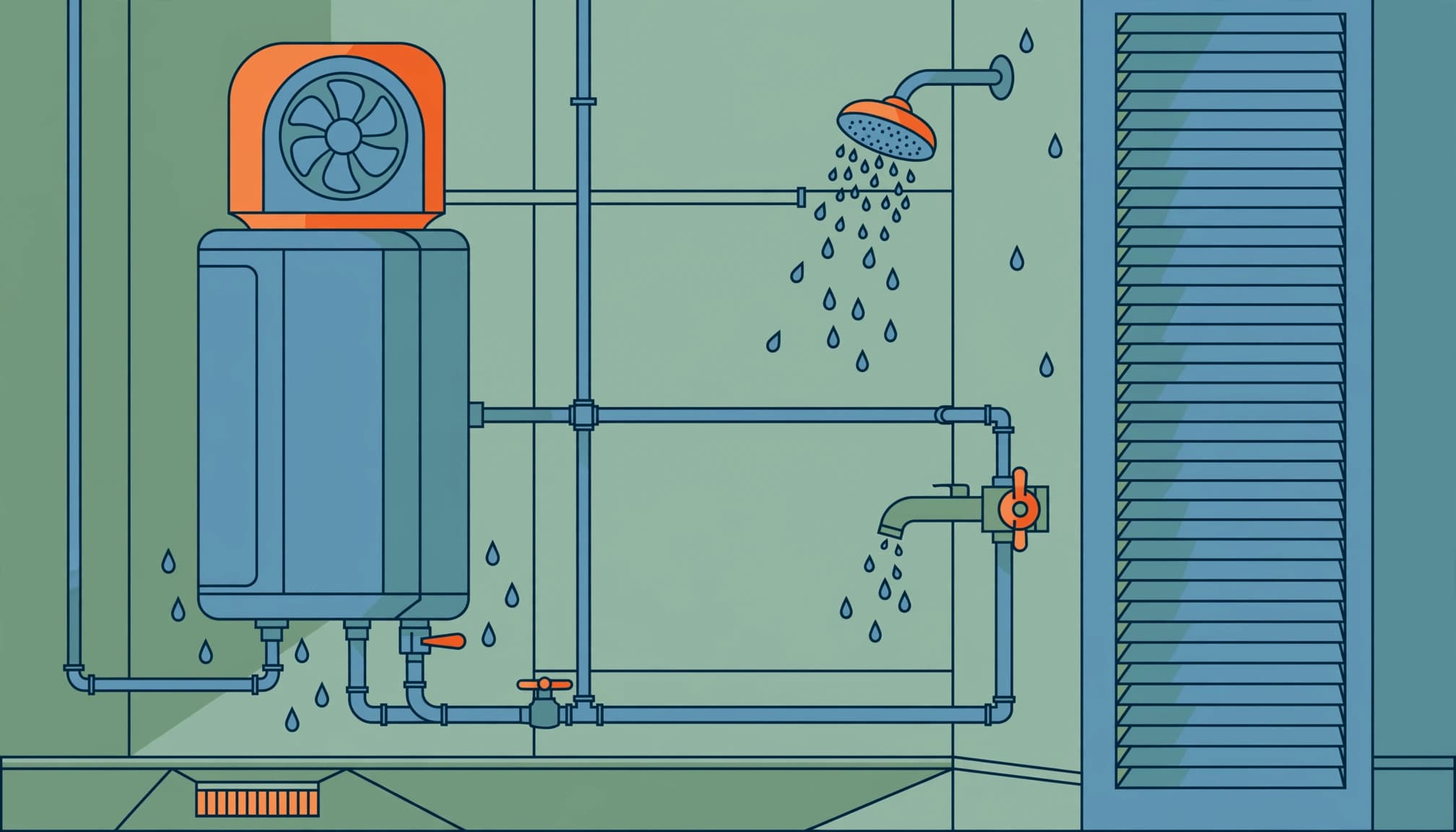
Water heating is generally the second-largest home energy expense, accounting for approximately 18% of household energy bills.
Compare Heat Pump Water Heater Options
A heat pump water heater moves heat from surrounding air into its tank. It can be up to three times as energy-efficient as a conventional electric resistance model.
Installation needs matter. The location must provide adequate air volume, condensate drainage, and service access.
For new construction, compare the upgrade premium before plumbing and electrical work are finalized. A tankless water heater may be an option, but tankless operation alone doesn’t establish lower operating costs.
Choose WaterSense Fixtures
Look for the WaterSense label on showerheads and bathroom faucets. It indicates that the product meets EPA water-efficiency and performance criteria.
The EPA estimates that WaterSense labeled showerheads can save an average family 2,700 gallons annually. Lower hot-water demand also reduces the energy needed to heat it.
These fixtures offer a straightforward improvement without a major equipment replacement. Renters should obtain permission before replacing installed fixtures.
5. Select Windows for Heat Control
Energy-efficient windows can limit solar heat gain in Florida. Compare the solar heat gain coefficient (SHGC) and U-factor. A lower SHGC lets less solar heat through the glass, while a lower U-factor reduces heat transfer.
Code-compliant windows meet the required baseline. Higher-performing glass may cost more, and impact resistance describes storm protection, not energy performance.
Compare both ratings before choosing an upgrade. Exterior shading and well-sealed window openings also help limit heat gain.
Replacing sound windows in an existing home solely for energy savings can have a long payback. For new construction, compare the added cost of energy-efficient windows before ordering.
How to Rank Florida Home Energy Upgrades
The best value for an energy efficiency upgrade depends on what’s already included. A home with LED lighting, effective duct sealing, and efficient cooling may have different priorities than an older property.
Use this order to compare proposals and estimate effects on utility bills.
| Priority | Improvement | Main Budget Consideration |
|---|---|---|
| First | LEDs, filter care, thermostat schedules | Low cost and limited disruption |
| Next | Duct sealing, air sealing, insulation | Fix wasted cooling before equipment upgrades |
| At Replacement | HVAC system and water heating | Compare operating costs and installation requirements |
| During Design | Windows, duct location, attic assembly | Compare the premium above included specifications |
For new construction, calculate payback using the upgrade premium after applicable rebates, not the full system price. Divide the premium by estimated annual dollar savings, and treat energy savings as estimates, not guaranteed results.
Keep comfort, moisture protection, and maintenance needs in the decision too. The cheapest option upfront isn’t always the most affordable to own.
Use Utility Rebates Without Assuming Eligibility
Florida utility rebates cover different combinations of central heat pumps, mini-split heat pumps, heat pump water heating, insulation, and duct repairs. Equipment eligibility varies by program.
FPL’s Air-Conditioning Rebate
FPL offers an instant $200 A/C rebate for qualifying air conditioning replacements through a Participating Independent Contractor.
The installation must include indoor and outdoor units and meet a minimum rating of 15.2 SEER2. The contractor applies the credit to the invoice.
This program covers replacements, not every new home’s HVAC installation. FPL excludes single-zone mini-splits.
Duke Energy and Other Florida Utilities
Duke Energy Florida’s Home Energy Improvement requirements call for a Home Energy Check before work begins or within the previous 24 months. The assessment must recommend the improvement.
The program covers HVAC replacement, attic upgrades, duct testing and repair, and qualifying hybrid models. Some work requires approved contractors and permits.
JEA, Tampa Electric, and Orlando Utilities Commission also offer efficiency rebates. The Florida home rebate directory organizes programs by utility and improvement type.
For rentals and duplexes, account-holder rules and property classifications affect eligibility. Duke’s hybrid-model rebate excludes multifamily properties.
Compare PACE With Standard Financing
PACE financing funds qualifying property improvements through an assessment attached to the property. Repayment appears on the annual property tax bill rather than on a separate conventional loan statement.
Florida’s changes effective July 1, 2024 require local authorization before residential PACE can be offered. Availability depends on county or other applicable local-government approval.
The Florida PACE program advertises fixed payments at a fixed rate, without balloon payments or prepayment fees. It pays the contractor after project completion. State law also requires completion verification before final residential contractor disbursement.
PACE is financing, not a rebate. Interest and fees can outweigh utility savings, and unpaid assessments can trigger serious property-tax collection consequences, including potential loss of the home.
Compare PACE financing’s annual assessment, total repayment, and repayment period with a bank or credit-union loan. A conventional improvement loan generally requires separate monthly payments rather than a property-tax assessment.
Eligibility involves property ownership, payment history, qualifying work, and program underwriting. New-home buyers should distinguish improvement financing from financing for the original construction.
We recommend budgeting the assessment alongside mortgage payments, insurance, and other property charges.
Build Efficiency Into the Home Budget
Affordable ownership depends on what your home costs after move-in. Make lower cooling demand, humidity control, and right-sized equipment home-performance priorities.
Keep specifications, warranties, and maintenance records together. When you’re ready to discuss your new-home plans, we can help you understand construction options and budget priorities before selections are finalized.
Frequently Asked Questions
What Air Conditioners Qualify for Federal Energy Tax Credits in 2026?
Air conditioners placed in service in 2026 don’t qualify for the federal Section 25C Energy Efficient Home Improvement Credit. The credit ended for property placed in service after December 31, 2025. Utility rebates are separate and aren’t guaranteed.
Does a smart thermostat Replace Other Efficiency Upgrades?
No. It manages settings and schedules but doesn’t fix oversized equipment, leaking ducts, insufficient insulation, or poor installation.
Should Cooling Be Turned Off in a Vacant Florida Home?
We don’t recommend extended shutdowns. Vacant homes still need moisture control. Use appropriate cooling settings, monitor indoor humidity, and arrange a response to drainage problems or alerts.