Buying a new Florida home isn’t one price. Planning new construction for single family homes involves several decisions, line items, and long-term commitments.
A median home price offers a statewide benchmark, but it isn’t a complete budget for a new home. Florida home costs also include the parcel, site work, financing, and recurring obligations after move-in. Advertised home prices can look manageable, but the full budget must fit your cost of living.
Florida’s k-shaped economy, where some households see rising incomes while others face tighter budgets, makes affordability vary widely. Ongoing ownership obligations can reshape your cost of living, including monthly costs that continue after move-in. A clear budget should reflect your cost of living and help you choose a home that fits your timing and household goals.
Key Takeaways
- Florida home costs extend beyond the advertised price to include the parcel, construction, site work, financing, closing costs, and recurring ownership expenses.
- Local conditions matter: home prices, housing inventory, insurance, taxes, flood exposure, utilities, and the cost of living can vary widely between Florida markets.
- Review the actual lot before setting a final budget, including surveys, drainage, elevation, utilities, permits, engineering, foundation requirements, and driveway work.
- Plan cash to close separately from the purchase price, including the down payment, closing costs, prepaids, reserves, upgrades, and site items outside the builder’s contract.
- Compare the complete monthly ownership cost—not just the mortgage payment—and protect your budget with written change orders, inspections, and reserves for future repairs.
A Base Price Doesn’t Show the Full Project Cost
Home prices and a median home price can offer a starting point, but neither shows the full project budget. An advertised benchmark also says little about the cost of living tied to a specific property.
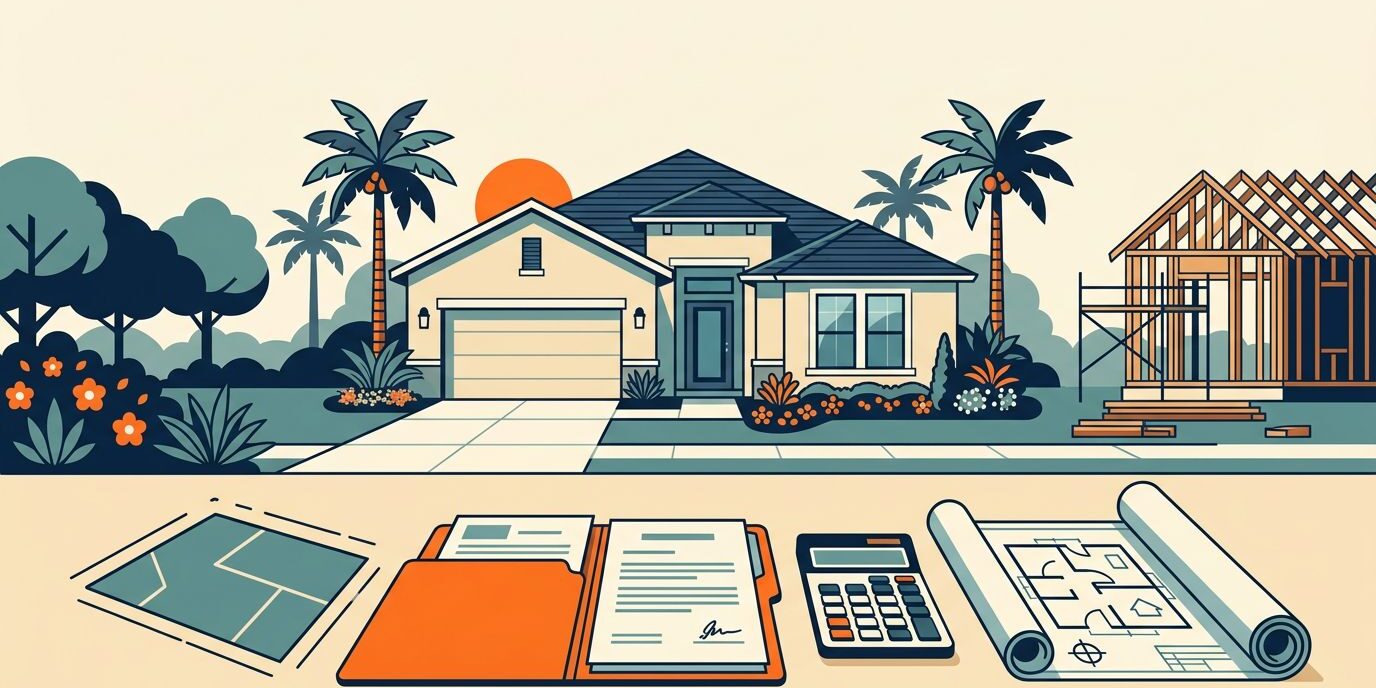
We recommend separating your estimate into three parts:
- The price to buy or build the home, including land and construction.
- The cash needed before closing, including deposits, down payment, closing costs, and reserves, compared with your cost of living.
- The recurring ownership cost after you receive the keys, part of your ongoing cost of living.
Use a Full-Cost Formula
Start with the purchase price, then add land, construction, site work, financing, and prepaid items outside the building contract. These may include land acquisition, survey work, site clearing, utility connections, permits, engineering, design selections, lender fees, and prepaid insurance.
If you already own a lot, don’t treat it as free. Its value still matters when you measure your total investment. It may also need work before construction can begin.
The best home budget is based on the actual parcel, not the price of a nearby home.
A builder should be able to explain what is included, what is excluded, and which costs depend on your lot. Clear answers early can help you compare complete budgets instead of relying on nearby properties, and prevent hard conversations later.
Price the Location Before Choosing a Plan
Florida is not one real estate market. Home prices may fit your budget in Fort Myers or Cape Coral, but cost far more in Naples, Sarasota, or Miami. Housing inventory and price cuts shift the gap; housing market trends and the cost of living add context.
Florida’s statewide median home price for single family homes was $420,000 in the first quarter of 2026. The Florida home price guide listed a $415,000 median sale price for single family homes in Lee County, compared with $785,000 in Collier County and $510,000 in Sarasota County. Those county figures show how the median home price reflects differences in home values and the cost of living.
Those figures are useful reference points, but they don’t set your final price or quote a specific plan. Home prices for individual single family homes can vary with the lot, elevation, design, and finishes. Utility needs can affect the cost of living, while location can shape home values.
Southwest Florida Has Distinct Price Points
Southwest Florida home prices vary within one real estate market; housing inventory, price cuts, and market sales activity differ by city.
A March 2026 market report placed the median sale price at about $587,500 in Naples, $355,000 in Cape Coral, and $335,000 in Fort Myers. Even among single family homes, a median home price can differ; the median sale price measures transactions, not a specific home.
The same split appears across the state, with inland and North Florida markets often showing lower home prices than coastal markets. Waterfront access and flood exposure can affect home values, while taxes, insurance, and utilities raise the cost of living. The wider real estate market follows housing market trends unevenly, as local housing inventory and price cuts can shift home values.
Price cuts and higher housing inventory can create room for negotiation, but they don’t erase recurring ownership expenses. In a k-shaped economy, those price cuts may help some buyers more than others. Test the down payment and closing costs against the complete acquisition budget. Before calling a market affordable, compare the median home price, cost of living, insurance quotes, and tax estimate.
Budget for the Parcel and Construction Scope
The lot can change the whole project. Two single family homes with the same floor plan may have very different total costs because the land has different drainage, elevation, utility, access, or flood requirements.
A straightforward lot may need a survey, clearing, driveway work, and utility connections. A more demanding parcel may also need engineered elevation, grading, fill limits, a raised foundation, or extra drainage work.
Check the Site Before Setting a Final Number
Ask for clear answers on these items before you commit:
- Confirm the flood zone, finished-floor elevation, and foundation requirements.
- Review survey, soil, drainage, and utility information for the actual lot.
- Ask whether impact fees, permits, engineering, septic, well, water, sewer, or driveway costs are included. Land-related closing costs may remain separate from the builder’s contract.
- Find out who pays for plan changes or corrections requested during permitting.
In Cape Coral and nearby coastal areas, flood and wind requirements can affect the foundation, roof connections, windows, exterior openings, and engineering. These conditions can affect your cost of living through utilities and future maintenance beyond the build contract. A lower starting price can lose its appeal if the site needs major work.
Compare Living Area and Total Area
Square footage can be confusing if you don’t compare the same measurements. Living area usually covers conditioned indoor space. Total area can also include garages, porches, storage, and covered entries.
For example, Nathan’s Homes lists the Gulfstream Cottage with 1,055 square feet of living area and 1,405 square feet of total area. The Magnolia has 1,562 living square feet and 2,236 total square feet.
That difference matters when you compare plans, materials, insurance, and future maintenance. Investors should use the same care with duplexes. A combined square-footage figure may cover both units, not one side.
Plan the Cash Needed Before Closing
The purchase price and the cash-to-close number aren’t the same. Your down payment is only one part of the cash required, alongside a deposit, closing costs, title work, prepaid property taxes, homeowners insurance, and cash reserves for unexpected costs.
Closing costs usually fall outside the amount you pay upfront. The Fannie Mae closing-cost calculator notes that closing costs commonly range from 2% to 5% of the mortgage amount. Treat that range as a planning allowance, not a loan quote.
Build a Cash-to-Close Estimate
Here is a simple planning example for a $400,000 purchase price with a 10% down payment. That contribution lowers the loan balance but increases the cash needed upfront. These figures are planning allowances, not a loan quote.
| Budget Item | Early Planning Amount |
|---|---|
| Home price | $400,000 |
| Down payment at 10% | $40,000 |
| Closing costs on a $360,000 loan | $7,200 to $18,000 |
| Insurance, tax prepaids, and reserves | Quote for your property |
| Upgrades and site items outside contract | Contract-specific |
This example puts your starting cash target between $47,200 and $58,000 before prepaids, reserves, and added options. A larger down payment may reduce the loan amount, but it also uses cash you may need after closing. Keeping more cash can protect your cost of living budget if repairs or other needs arise.
Ask who pays for title insurance, recording charges, lender fees, document stamps, appraisal fees, and other closing costs, and whether the builder offers credits. The answer can vary by contract and location.
Your lender must provide key loan documents. Review the CFPB’s Loan Estimate and Closing Disclosure guidance carefully, then compare the closing costs and other figures with your contract before closing day. Ask the lender to model the down payment at different mortgage rates, then compare each option with your cost of living budget.
Build Monthly Ownership Costs Into the Payment
A mortgage payment is only one part of home ownership expenses. Your full monthly costs should include principal, interest, property taxes, homeowners insurance, flood insurance when needed, utilities, HOA fees, maintenance, and savings for future repairs. Together, these obligations shape your cost of living and determine whether the payment fits your budget. Treat closing costs as one-time transaction costs, separate from obligations that continue each month.
Ask your lender to show payment scenarios with different down payment amounts and current mortgage rates. Compare how even a small rate change affects your monthly costs and living expenses. Utilities and HOA fees can change your cost of living, even when the mortgage payment stays the same.
Do Not Use a Vacant-Lot Tax Bill
Property taxes are based on assessed value and local millage rates. A vacant lot’s bill cannot show the completed home’s future bill, which may raise your cost of living.
A low first-year tax bill can change after the home is assessed at its completed value.
If the home will be your primary residence, review Florida’s homestead exemption rules with the county property appraiser. The exemption can reduce taxable value, but filing deadlines and local tax details matter.
Get Insurance Quotes for the Exact Home
Insurance should never be a placeholder in your budget, because premiums and deductibles affect your cost of living. Get homeowners insurance quotes based on the property address, construction details, roof, wind protection, flood zone, deductible, and coverage limits.
Florida premiums rose 75% from 2021 to 2025, compared with 38% nationally, according to a WLRN report on Florida insurance costs. Some 2026 rate filings have brought relief, but every property needs its own quote.
New construction can offer advantages through current wind standards and newer systems. Still, don’t assume a new home will carry a low premium without checking. Keep a repair reserve so future maintenance doesn’t disrupt your cost of living. Review the complete payment before committing. A change in any major bill can still strain your cost of living.
Protect Your Budget From Changes and Missed Work
A strong estimate needs room for changes. Selections, site conditions, lender requirements, and permit comments can all affect the final number.
We recommend keeping separate cash reserves for items outside the original contract. Set the amount after reviewing the project scope, site risks, and lender requirements, rather than relying on a universal percentage. Preserving funds for repairs helps protect the household budget as the cost of living changes over time.
Keep Every Change in Writing
A change order should show the added or reduced cost, the work involved, and any effect on the construction schedule. Verbal approvals create confusion, especially once materials are ordered.
Read the standard features sheet before comparing builders. High ceilings, granite countertops, stainless steel appliances, ceramic flooring, landscaping, appliances, and driveway work may be included in one package and treated as upgrades in another.
If you work with a real estate agent, confirm whether the agent represents you or the seller. A buyer agent may explain offers, coordinate inspections, and guide you through contract deadlines.
Ask the real estate agent to explain the real estate commission, including who pays it and which services it covers. Confirm the buyer agent agreement in writing, including whether it affects the transaction. Document the real estate commission separately from closing costs and other charges.
Budget for Inspection and Final Walk-Through
New doesn’t mean perfect. An independent home inspection can be a smart budget line, especially when it includes pre-drywall and final inspections.
During your final walk-through, record each unfinished or defective item by room and location. Add a photograph, requested correction, and completion date. Don’t sign off on work you know is incomplete.
A reinspection can confirm that open items were corrected. Keep your plans, permits, inspection records, warranties, and final documents together. They can help with insurance, resale, future repairs, and investment decisions.
Frequently Asked Questions
What costs should be included in a Florida new home budget?
Include the home and land, construction, site work, permits, engineering, utility connections, financing, closing costs, prepaids, and cash reserves. After closing, budget for property taxes, homeowners insurance, flood insurance when needed, utilities, HOA fees, maintenance, and repairs.
How much cash is needed before closing?
The required cash may include the deposit, down payment, closing costs, title and lender fees, prepaid taxes and insurance, reserves, and upgrades outside the contract. Closing costs commonly range from 2% to 5% of the mortgage amount, but your lender and contract provide the figures for your transaction.
Why does the Florida lot affect the total construction cost?
A lot may require clearing, grading, drainage, fill, engineered elevation, a raised foundation, utility connections, or additional flood and wind protection. These requirements can make two homes with the same floor plan have very different total costs.
Should property taxes and insurance be estimated from a vacant lot?
No. A vacant-lot tax bill does not show the future assessment for the completed home, and insurance premiums depend on the exact address, construction, roof, wind protection, flood zone, deductible, and coverage limits.
What monthly costs should be compared with the mortgage payment?
Compare principal, interest, property taxes, homeowners insurance, flood insurance when applicable, utilities, HOA fees, maintenance, and savings for future repairs. These recurring obligations determine whether the home fits your household budget and cost of living.
Build With a Number You Can Live With
The right home budget is clear, local, and honest about the full cost of ownership. Use the median home price as a starting benchmark, then test the actual purchase price, lot, closing costs, construction scope, and cash required before closing. Your cost of living also helps determine whether the finished budget fits comfortably.
Recurring home ownership expenses continue after closing, so review them alongside your cost of living. In a k-shaped economy, buyers may have different access to financing and affordability. Choose a number that fits your income and cost of living.
We build for families, homeowners, and investors who want quality work without hidden surprises. If you are comparing a lot and a floor plan in Lee, Charlotte, or Highlands County, request a Southwest Florida building cost estimate before you make your final decision.