

A canal view can make a Cape Coral waterfront parcel feel like an easy decision. But a lot for sale may bring major costs if the waterway type and route, flood zone, elevation, utilities, or seawall remain unclear.
Buying waterfront homes can seem simpler than building on vacant land. In Cape Coral FL, your plan also needs to account for dock condition, lot dimensions, zoning, setbacks, drainage, environmental concerns, and permits.
Before you make an offer, look past the listing photos and asking price. Review the title and survey, confirm insurance availability and assessments, and verify that the site can support your plans.
Key Takeaways
- Confirm whether the lot offers Gulf access or freshwater access, then review the complete boating route, bridge heights, locks, restrictions, and travel time to open water.
- Review the current survey, title, zoning, setbacks, flood zone, elevation, drainage, utilities, and environmental conditions to confirm the parcel can support your home and site plan.
- Have a qualified professional inspect the seawall, dock, boat lift, and shoreline, and verify all marine, electrical, dredging, and construction permits before relying on existing improvements.
- Compare the complete project cost—not just the purchase price—including site work, utilities, assessments, permits, insurance, engineering, shoreline repairs, and construction reserves.
- Protect the purchase with focused due diligence, written agency confirmations, property-specific insurance feedback, and contract contingencies reviewed by qualified professionals.
Waterfront Lot Cape Coral: Start With the Waterway
Cape Coral has roughly 400 miles of canals and interconnected waterways. That network helps define the city, but each route offers a different experience.
Some lots look almost identical from the street. One may lead to open water. Another may be freshwater only. Those are two very different purchases.
Compare Gulf-Access and Freshwater Routes
A parcel with direct Gulf access has a navigable route toward the Caloosahatchee River and the Gulf of Mexico. Depending on its location, reaching open water may require a canal network, bridges, locks, and significant travel time.
Freshwater canals offer peaceful views, fishing, kayaking, and backyard living. They don’t provide a boating route to the Gulf. Freshwater lots often cost less, which can make them a smart choice if boating access isn’t part of your plan.
In 2026, some freshwater canal lots begin around $20,000, while saltwater parcels start higher. Depending on location, the median list price for a saltwater waterfront lot may fall between $165,000 and $300,000. Premium riverfront or no-bridge properties can cost much more, so verify those figures through current MLS data or a qualified Cape Coral professional.
A listing price is only one part of the story. That median figure doesn’t reveal dredging, bridge, shoreline structure, utility, assessment, insurance, or elevation costs. The canal type, route, and site condition determine whether the property fits your life and long-term budget.
Bridge Heights Shape Your Boating Plans
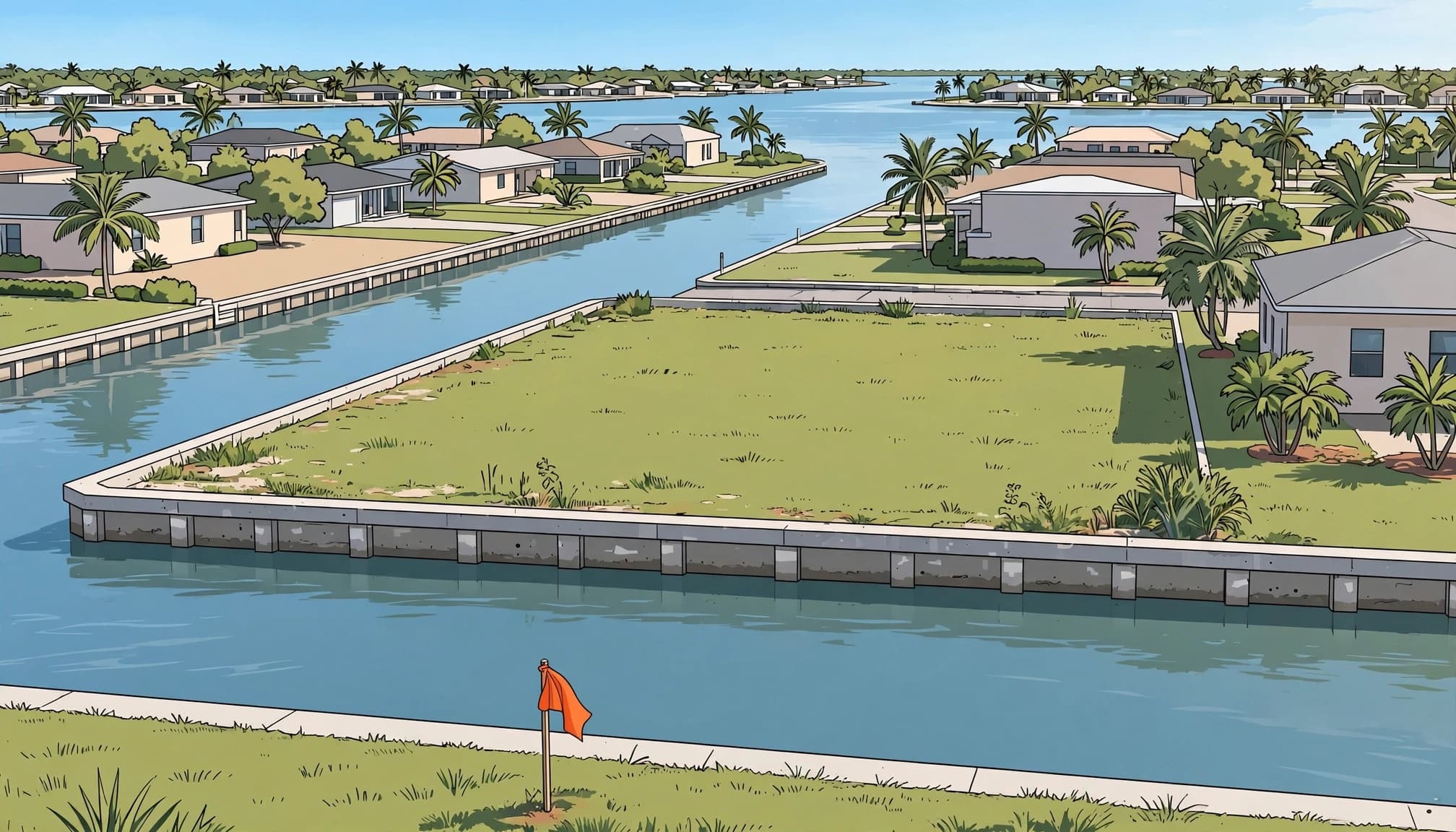
A saltwater route doesn’t always mean your preferred boat will pass through. Fixed bridges can limit clearance. A center-console boat, sailboat, cabin cruiser, or boat with a tall T-top may not fit beneath every bridge.
Evaluate boat access by requesting the complete route from the lot to open water, rather than relying on a listing label. Review bridge heights for every fixed bridge against your current and future boat. Then check locks, connecting canals and their widths, turning areas, no-wake rules, other boating restrictions, and expected travel time.
Route planning should identify a marina along the way. Check fuel availability at a marina and transient slips at another marina. Compare maintenance or storage options at a third marina, then measure distance to your preferred marina. Nearby marina access can strengthen resale appeal.
Direct Gulf access isn’t enough. Verify the actual route against the boat you own now and may want later.
Lots with direct sailboat access and no bridge restrictions usually carry a premium. That premium often supports stronger resale interest because the buyer pool is wider.
Check the Location Beyond the Street Address
Cape Coral uses a quadrant system with Northwest, Northeast, Southwest, and Southeast designations. The same street name may appear in more than one part of the city, so verify the quadrant every time.
Cape Coral real estate varies substantially by quadrant, waterway type, access route, and surrounding development. A Southwest Cape Coral parcel near Cape Harbour may have a different setting and boating route than one in Northwest Cape Coral near expanding neighborhoods. A nearby marina can change boating convenience, but the right choice depends on how you plan to live, build, or invest.
Review the Surrounding Water and Homes
Drive the area more than once, including on an ordinary weekday, after rain, and near sunset if exposure matters. Check traffic, noise, drainage, standing water, and nearby construction activity at different times. Western exposure can offer bright afternoon light and sunset views, but it may increase heat and glare, affecting pool placement and outdoor comfort.
Study the surrounding waterways and neighboring waterfront homes on both sides of the lot and across the water. Compare their height, setbacks, docks, boat lifts, and overall condition. A vacant lot can change quickly when neighboring owners begin new construction.
Also confirm nearby access to grocery stores, schools, medical care, major roads, and boat ramps. Check emergency access, the distance to a marina, and the route to the marina. Confirm fuel availability at the marina, then investigate marina slips and services at the marina. These details can shape likely buyer or renter expectations. Waterfront living should still work on an ordinary Tuesday.
Study the Parcel, Not the Sales Description
Request the legal description, parcel identification number, recorded plat, and a current survey. Confirm zoning and recorded access rights. The survey should show lot dimensions, utility easements, setbacks, and encroachments.
Don’t assume broad water means a wide lot. Nearby canals may differ in width and orientation, and a neighbor’s dock doesn’t establish what you can legally build. Recorded documents, zoning, and current city requirements control the project.
For investment buyers, also check rental rules, HOA documents when applicable, and future development around the parcel. If you’re considering vacation homes, verify zoning, occupancy limits, and applicable rental regulations before assuming the property suits that use. A strong waterfront lot should support your plans today and make sense when you sell or rent later.
Inspect the Seawall, Dock, and Shoreline Rights
A shoreline structure is not a decorative edge around the yard. It holds back soil and protects the lot from erosion, so failure, leaning, cracking, or settlement can create a major project.
Have a qualified marine engineer or other appropriately licensed professional inspect the existing seawall. Complete that review before the inspection period ends, and don’t rely on a building contractor alone. Review cracks, cap condition, tiebacks, soil loss, drainage outlets, erosion, leaning, settlement, and movement against planned dock, lift, and home designs.
Confirm What Is Already Permitted
Request permit records for the shoreline structure, dock, boat lift, captain’s walk, boat canopy, electrical work, dredging, shoreline repairs, and prior modifications. Verify those records with the City of Cape Coral and, where applicable, state and federal agencies before relying on an existing waterfront improvement.
The City of Cape Coral requires permits for marine improvements. Its waterfront permit documents cover docks, marine walls, boat lifts, boat canopies, and related work.
An electrical permit is required for a lift installation. Work near the Caloosahatchee River may also require state and federal approvals before the City issues a permit.
Compare conditions near a marina with your intended boating use, including wake and traffic. Check whether marine-improvement records or restrictions affect practical access near the marina.
Also investigate mangroves, wetlands, submerged-land issues, protected habitat, dredging limits, contamination, and other environmental concerns before relying on an existing improvement. Confirm current requirements with official sources and qualified legal, engineering, surveying, and permitting professionals.
Check the Waterway Status
Some parcels adjoin a platted waterway right-of-way involving unexcavated canals or unusual conditions. That can change the approval process for a dock or shoreline structure. The City may require a written agreement, a scaled site plan, proof of ownership, and other documentation before work begins.
This is why we recommend treating dock and shoreline plans as their own budget category. Include marine engineering, permitting, environmental review, dredging, and repairs in that estimate. Don’t fold them into a rough home estimate and hope the numbers work out later.
Confirm the Lot Can Support Your Home Plan
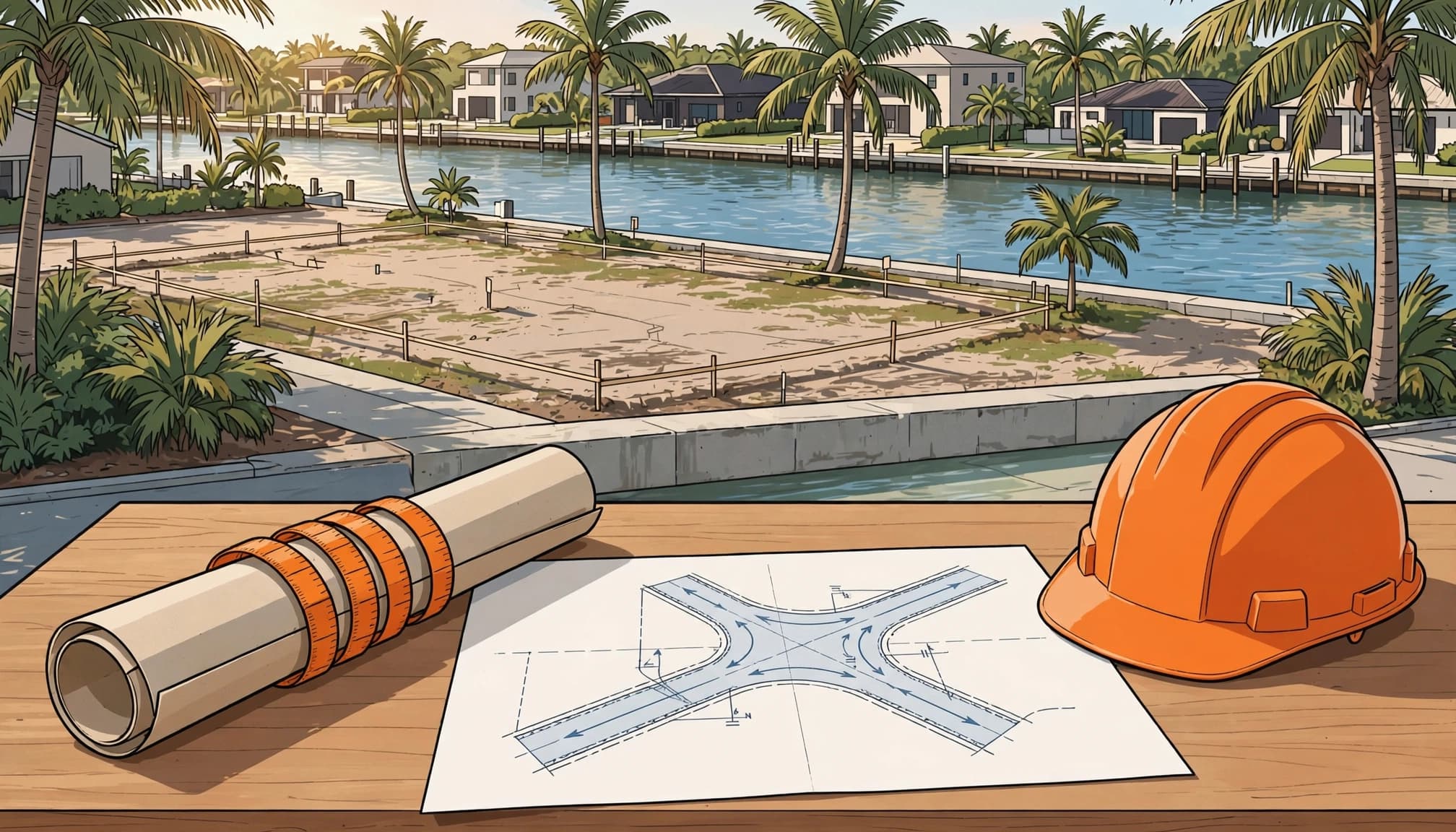
A beautiful waterfront lot still needs to fit the home you want to build. Living area in square feet alone doesn’t establish buildability. The survey must show room for the building footprint, garage, driveway, lanai, pool, drainage features, setbacks, and side access.
Start with a review of the residential site plan before you commit to a floor plan. A narrow or irregular lot can limit house width and affect the pool, outdoor kitchen, or side-yard access.
Flood Zone, Elevation, and Drainage Matter
Waterfront property needs clear flood planning. Check the parcel’s mapped flood zone, base flood elevation, elevation certificates, and other current elevation records before closing. Review flood history, prior claims, or damage disclosures where available, and observe neighborhood drainage. Flood history and mapped status answer different questions.
Use Lee County’s flood-zone information and the FEMA Flood Map Service Center with the exact address or parcel number. Verify current information through official sources, because neighborhood averages aren’t enough.
Flood and elevation requirements can affect design, engineering, permitting, construction cost, insurance availability, finished-floor elevation, foundation design, drainage, and fill. Ask qualified engineers, surveyors, insurance professionals, and permitting officials for project-specific guidance. A lower-priced lot isn’t a bargain if it requires expensive site work that wasn’t included in your budget.
Imported fill isn’t an automatic solution for every low lot. Where relevant, complete soil, groundwater, drainage, stormwater, wetland, mangrove, and other environmental checks. Then confirm the approved plan works with current elevation and code requirements.
Get Answers in Writing Before Closing
Ask the City for written confirmation of zoning, setbacks, lot coverage, driveway access, easements, elevation requirements, and special site restrictions. Review a new construction plan against the actual survey and current zoning. Check finished-floor requirements, foundation needs, fill, drainage, and utilities, not just a listing map.
The City’s Permitting Services Division handles permit support and online applications. Permit timing depends on complete plans, engineering, review comments, revisions, and inspections.
If you’re comparing house plans, include the garage, covered lanai, outdoor areas, and full site layout. Total project cost can change even when two homes have similar living areas.
Price Utilities and Site Work as Separate Costs
The land price is not the total cost of buying a waterfront parcel. The full budget also includes closing costs, survey work, engineering, permits, utilities, site preparation, insurance, and reserve funds.
We recommend a line-item budget that separates the home itself from the costs tied to the parcel.
| Cost Area | What to Confirm |
|---|---|
| Utilities | Exact parcel availability for water, sewer, irrigation, electric service, meters, deposits, connection timing, propane or natural gas, and solid-waste arrangements |
| Site Work | Parcel-specific clearing, grading, fill, drainage, access, foundation requirements, and utility extensions |
| Waterfront Work | Parcel-specific shoreline repairs and dock work, electrical needs, and permit costs |
| Public Charges | Parcel-specific current and future assessments, CIAC, impact fees, permit fees, written balances, due dates, and transfer obligations |
| Ownership Costs | Parcel-specific property taxes, maintenance, reserves, insurance availability, property-specific quotes, and underwriting feedback |
Public charges can vary by parcel. Separate current assessments from future assessments, Contribution in Aid of Construction (CIAC), impact fees, permit fees, and other obligations attached to the property. Obtain written balances, payment responsibility, due dates, and transfer consequences from the City of Cape Coral or other responsible agencies.
The takeaway is simple: compare lots using the complete project number, not the purchase price alone.
Insurance availability is a separate due diligence item, not just an estimated premium. Obtain a property-specific quote and underwriting feedback from a qualified insurance professional before making an offer or reaching the due-diligence deadline. Flood zone, elevation, prior loss information, construction type, waterfront improvements, and unresolved permits can affect availability and cost.
Verify Utility Availability by Parcel
City water, wastewater, and irrigation service are managed separately from electric service, solid-waste collection, and propane or natural gas arrangements. Confirm each service for the exact parcel. A nearby utility line does not prove immediate or simple service.
Cape Coral utility expansion projects and assessments can affect parcel costs. Some properties have service available. Others are in extension or assessment areas. The difference can be substantial.
Ask Cape Coral Customer Billing Services for current, parcel-specific information about deposits, meter charges, connection requirements, assessments, and CIAC. Request written balances, payment responsibility, due dates, and transfer consequences. Confirm electric requirements with LCEC for the exact parcel before assuming power can be activated on your timeline.
If a lot still uses septic, confirm current Lee County or applicable health requirements, septic abandonment obligations, soil limitations, and private plumbing costs with the appropriate agency and qualified professionals. Get responsibility for every charge in writing.
Protect Your Offer With Focused Due Diligence
A strong offer gives you time to inspect, verify records, review estimates, and decide without pressure. Before submitting an offer, discuss a written due diligence plan with a qualified real estate professional.
Resolve known questions before making the offer when possible. Preserve adequate contingencies and review time in the contract, and ask a qualified attorney to review the terms.
Use the inspection period as a written checklist:
- Order a current boundary and topographic survey, and compare it with recorded documents.
- Review the title commitment for legal access, easements, restrictions, liens, encroachments, and title exceptions.
- Confirm zoning, setbacks, flood and elevation records, utility availability, drainage, environmental concerns, and assessments.
- Verify dock, lift, and shoreline permits, insurance availability, and construction or site-work estimates.
- If relevant to your intended use, check a nearby marina’s access, restrictions, and traffic patterns.
Keep a Written Property File
Save the survey, title documents, permit records and numbers, agency correspondence, survey revisions, utility estimates, flood maps, insurance quotes, assessment statements, title exceptions, and professional inspection reports in one folder.
These records help during construction, future insurance reviews, resale, and decisions involving vacation homes or rental use.
For a new home project, use written scopes and change orders. The contract should identify who handles clearing, fill, drainage, shoreline coordination, utilities, permits, inspections, and final site work.
Consult qualified legal, surveying, engineering, and insurance professionals before relying on records or estimates. Verify time-sensitive facts with official City of Cape Coral, Lee County, state, and federal sources. This article provides general information, not a substitute for professional legal, engineering, insurance, or financial advice.
Frequently Asked Questions
Is every Cape Coral waterfront lot suitable for boating to the Gulf?
No. Some lots are on freshwater canals, while saltwater routes may include bridges, locks, narrow canals, and other restrictions. Request the complete route to open water and compare it with your current or planned boat.
What should I inspect on a waterfront lot before buying?
Review the survey, title, zoning, setbacks, flood zone, elevation, drainage, utilities, and environmental conditions. Have a qualified marine engineer or other licensed professional inspect the seawall, dock, boat lift, and shoreline before the inspection period ends.
How much does a waterfront lot cost beyond the listing price?
The total project cost can include surveys, engineering, permits, fill, drainage, utility connections, assessments, insurance, site work, seawall repairs, and dock improvements. Obtain parcel-specific estimates and written balances so you can compare the complete project number.
Do existing docks and seawalls automatically transfer with the property?
Existing improvements may have expired, incomplete, or missing permits, and their condition may not support your intended use. Verify permit records with the City of Cape Coral and applicable state or federal agencies, then obtain a professional inspection.
What contingencies should a buyer include in the offer?
Allow enough time to review the title, survey, flood and elevation records, utilities, assessments, insurance availability, environmental conditions, and construction estimates. Discuss a written due diligence plan with a qualified real estate professional and have an attorney review the contract terms.
Final Thoughts on Buying Waterfront Land
The right waterfront lot gives you more than a great view. It provides a buildable site, a realistic budget, and water access suited to your plans for waterfront homes.
Make sure the waterways and canals fit your plans, from the route to the Gulf of Mexico to boating restrictions, bridge heights, and convenience near a marina. Confirm the flood zone, elevation, flood history, drainage, lot dimensions, zoning, setbacks, utilities, and environmental conditions.
Before closing, review the shoreline, dock, and seawall condition, along with the title and survey. Verify required permits, assessments, and insurance availability.
A waterfront lot Cape Coral purchase is strongest when it offers direct Gulf access and every major approval and cost is clear before construction begins.