
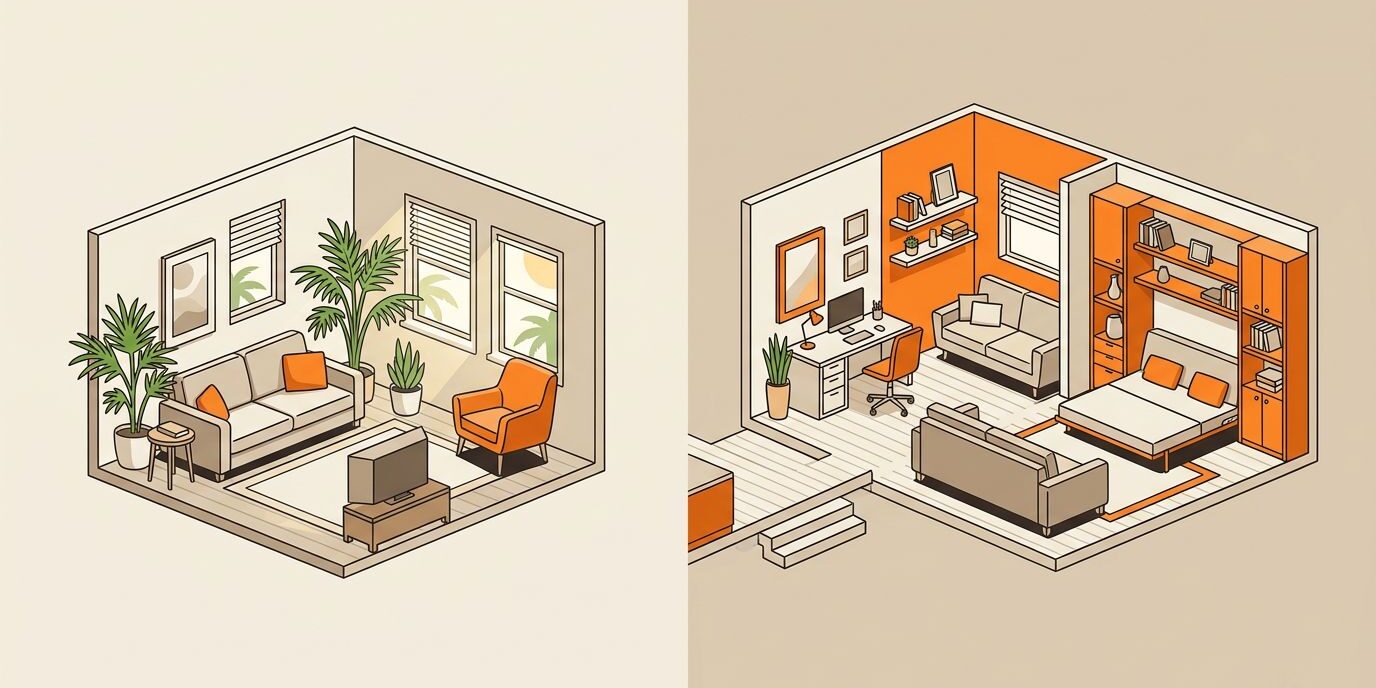
The right bedroom count can protect your budget or create years of unused space. For Florida buyers, the choice affects more than the purchase price. Insurance, air-conditioning, storage, guests, work, and future plans all matter.
When we compare the bedroom-count choice, we start with the full cost of ownership, not the extra room alone. A one-bedroom home may be the better value today, while a two-bedroom home can deliver more flexibility and stronger daily function. The right choice depends on how you plan to live in the home.
Key Takeaways
- Compare the full cost of ownership, including the purchase price, closing costs, taxes, insurance, flood coverage, utilities, furnishing, and maintenance.
- A second bedroom is most valuable when it solves a clear, recurring need such as a home office, guest room, storage, or changing household needs.
- Review the actual floor plan and measurements instead of relying on bedroom count or square footage alone. Living area, total covered area, garage size, storage, and room dimensions can significantly affect daily comfort.
- A one-bedroom home may better suit a solo buyer, couple, seasonal resident, or minimalist lifestyle while leaving more room for savings and upgrades.
- Choose a two-bedroom home when the larger payment still leaves a healthy reserve and the extra room is likely to remain useful over the next five years.
One vs Two Bedrooms: Compare Upfront Costs
A second bedroom usually increases the purchase price, but there is no reliable statewide premium. Lot size, construction quality, garage space, finishes, location, flood exposure, and total square footage can change the price more than the bedroom count. Apartment-style ownership can be evaluated with the same financing comparison, using a one-bedroom apartment or a two-bedroom apartment.
Purchase Price and Cash to Close
Ask your lender to compare both options using the same down payment, interest rate, loan term, taxes, and insurance assumptions. Account for your budget constraints, then compare the monthly difference instead of assuming the larger home costs “a little more.”
The upfront cost includes more than the down payment. Buyers also need to plan for inspections, lender fees, title work, prepaid taxes, insurance, escrow deposits, and moving expenses. General buyer guidance often places closing costs between 2% and 5% of the purchase price. A current first-time buyer expense guide can help you build a starting budget, but your lender and closing agent should provide the final figures.
A two-bedroom home may require more cash at closing. Consider the cost-effectiveness of the second room if it could prevent a future move. It still creates a greater financial commitment, and unused space isn’t automatically a smart investment.
Taxes and Insurance in Southwest Florida
Florida’s homestead exemption can reduce the taxable value of an owner-occupied primary residence by up to $50,000. The first $25,000 applies to all taxing authorities, while the second $25,000 applies to non-school taxes. You generally need to qualify as a permanent resident on January 1 and file by March 1. Verify current requirements with your county property appraiser.
Bedroom count does not determine your insurance premium. Roof age, wind protection, construction features, claims history, replacement cost, and location matter more. A recent Southwest Florida estimate places annual homeowners insurance around $4,005 to $6,210 in Lee, Collier, and Charlotte counties. Verify current quotes, since county-specific figures and individual premiums can vary widely.
Standard homeowners insurance also doesn’t cover flood damage. Buyers in high-risk FEMA zones, including A, AE, V, and VE zones, may need separate flood coverage when using a federally backed mortgage. Confirm the flood zone and request current insurance quotes before choosing between the layouts.
Keep Monthly Costs in View
The monthly payment tells only part of the story. We encourage buyers to compare the full ownership budget, including utilities, insurance, taxes, furnishing, maintenance, and the extra space they choose to heat, furnish, and maintain.
Utilities Follow Conditioned Space
Compare utility costs using utility history when available. A second bedroom doesn’t automatically double them. Air-conditioning load depends on total conditioned area, insulation, HVAC efficiency, sun exposure, thermostat settings, and occupancy.
In Southwest Florida, cooling is a major consideration. A larger home can also use more water and electricity, especially when it includes additional bathrooms, irrigation, a pool, or larger appliances. City water and sewer costs differ from well and septic expenses.
If you’re buying new construction, ask about the HVAC system, insulation package, windows, and expected efficiency. These details give you a better estimate than bedroom count alone.
Furnishing and Maintenance Add Up
A second bedroom needs a purpose and a budget. A simple office may need a desk, chair, lighting, and storage. A guest room may also need a bed, mattress, dresser, window coverings, and linens. The difference can range from a modest setup to several thousand dollars for a finished room.
Larger homes may require more maintenance and upkeep, including painting, flooring, air filters, pest control, and repairs. General planning resources on hidden ownership costs are useful because the purchase price is only one part of the budget.
A smaller home may leave more room in your budget for emergency savings, upgrades, or insurance increases. That financial breathing room has real value.
What a Second Bedroom Actually Adds
The best reason to choose a two-bedroom apartment is not that it sounds larger. The best reason to buy a two-bedroom home is that the second room solves a clear problem in your daily life.
A Home Office That Can Stay an Office
Full-time remote work can make this choice clearer. Working at the dining table may be manageable for a short period, but it can make work and home life feel crowded.
A dedicated home office gives you a door, a stable work setup, and space for files or equipment. It also protects your work-life balance and keeps the living room from becoming an office every evening. For buyers who work remotely five days a week, that separation may justify the additional cost.
If you work remotely only occasionally, a flexible nook or den may be enough. Choosing between these layouts depends on how consistently you need the room, so inspect the actual layout rather than relying on the listing description. A small second bedroom with a window and closet can work well as an office, while a large open living area may not provide the privacy you need.
Guests, Storage, and Hobbies
A second bedroom keeps overnight guests out of your daily living space. It can serve as a guest bedroom or provide extra space for bicycles and fishing equipment. Seasonal items, photography gear, and hobby supplies can fit there too, giving a growing family room to adapt.
Outdoor enthusiasts often need more storage than their bedroom count suggests. In Florida, the garage can matter as much as the bedroom. Measure the garage’s storage space for bikes, kayaks, tools, coolers, and storm preparation supplies before you decide.
The risk is allowing the extra room to become an expensive storage area with a bed in it. Decide how the room will function before you buy. An office today can become a guest room or child’s room later, but flexible space is useful only when it stays organized and accessible.
Read Florida Floor Plans Carefully
Square footage comparisons can be misleading. Buyers need to know whether a listing shows living area, total area, garage area, or covered outdoor space.
Living Area Is Not Total Area
Nathan’s Homes offers a clear example of why measurement details matter. The one-bedroom Paradise model is listed with 500 square feet of living area, while the Caribbean model has 675 square feet. Two-bedroom examples include Coral Bay at 832 square feet of living area and Seabreeze Retreat at 828 square feet.
Those numbers don’t tell the whole story. Coral Bay is listed with 968 square feet of total area and a two-car garage. Seabreeze Retreat is listed with 1,297 square feet of total area and a one-car garage. Garages, porches, storage, and other covered areas can create a large difference between living area and total area.
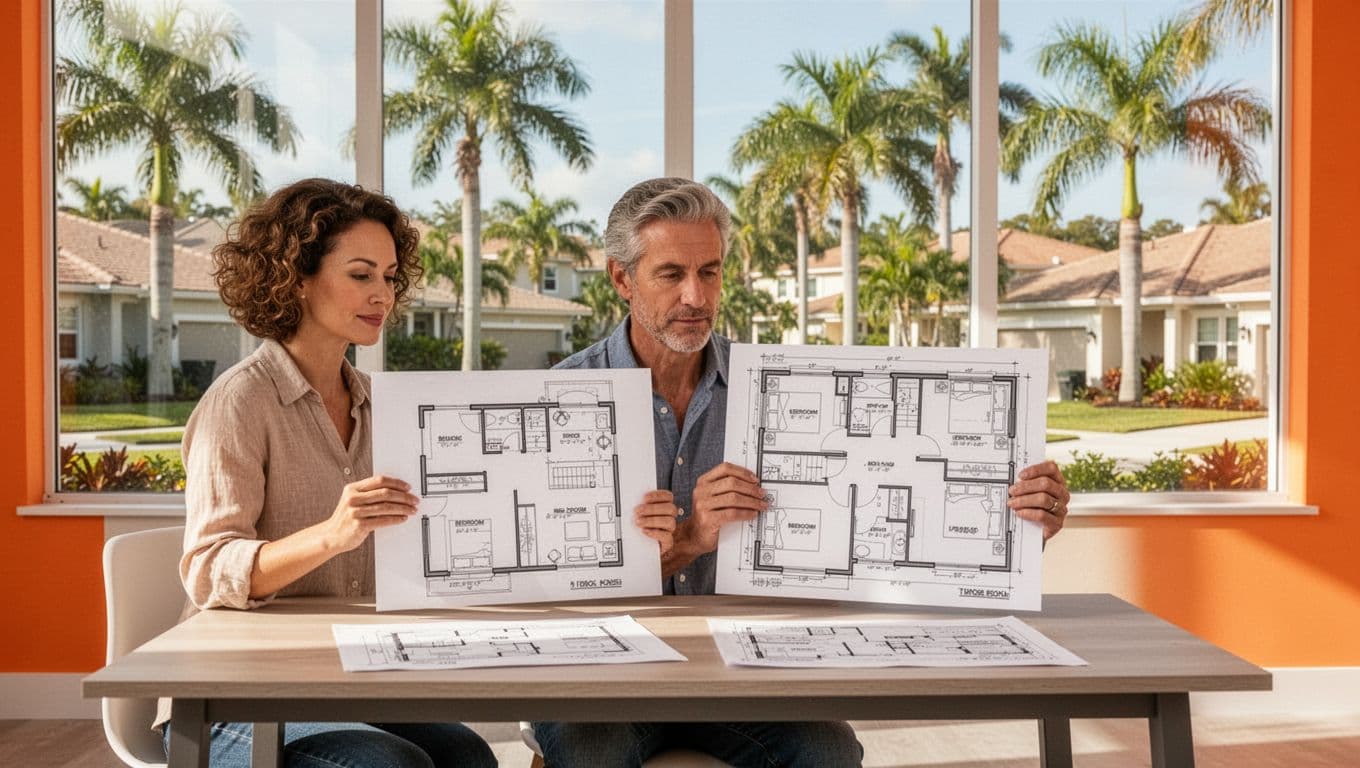
Compare the floor plans alongside the listing measurements, then ask for these four figures:
- Living area
- Total covered area
- Garage size
- Room dimensions
A home with less total area may still feel more comfortable if the kitchen, living room, closets, and bedrooms are arranged well.
Layout Quality Beats a Bedroom Label
Two homes with the same bedroom count can feel completely different. Look at bedroom placement, closet access, room dimensions, and available wall space for furniture.
Pay attention to bathroom access, laundry placement, pantry storage, natural light, door swings, and traffic flow. These details can affect how useful each room feels.
A two-bedroom home with a narrow living area may feel less useful than a well-designed one-bedroom home with generous storage.
We also recommend checking door swings and furniture dimensions. Room dimensions should leave space for a bed, dresser, and other essentials. A bedroom that fits a bed but leaves no space for a dresser may not work as a guest room or office. Good craftsmanship and durable finishes matter, but the layout must support the way you live.
Match the Home to Your Future Plans
Buying only for today can lead to another move sooner than expected. Buying far more space than you need can tie up money without improving your life or matching your lifestyle preferences.
When a One-Bedroom Home Fits
A one-bedroom apartment often works well when you’re living alone or sharing the home with a partner and don’t need a permanent home office. It can also make sense for seasonal use, a simple retirement lifestyle, or an investment with lower furnishing and maintenance needs.
A solo renter can compare monthly rent during an apartment search with the broader cost of occupying or owning a home. For buyers, this is simply another way to compare housing costs.
The smaller footprint supports minimalist living, makes cleaning easier, reduces rooms needing cooling, and limits maintenance and upkeep. You may have more room in the budget for a better location, stronger finishes, storm upgrades, or savings.
For a solo buyer, the one-bedroom choice is strongest when your belongings fit comfortably and your work, guests, and hobbies don’t compete for the same room.
When a Two-Bedroom Home Earns Its Place
A two-bedroom apartment earns its cost when full-time remote work is part of daily life, you host family, need storage, or expect your household to change. The extra space can support a child, caregiver, guest, roommate, or growing family.
A roommate may reduce your personal housing cost, but don’t build your budget around rent that isn’t guaranteed. Check local rules, insurance requirements, parking, privacy, and your backup plan before making that assumption.
For investors, a two-bedroom home may appeal to more renters in the rental market than a one-bedroom property, but rental income is only one part of the analysis. Compare vacancy, repairs, insurance, taxes, property management, realistic income assumptions, and likely resale demand when assessing long-term value.
Use a Simple Buyer Decision Test
We recommend answering these questions before choosing a layout, whether you’re starting an apartment search or comparing Florida homes:
| Question | One-Bedroom Signal | Two-Bedroom Signal |
|---|---|---|
| How will you use the second room? | No clear use today | Office, guest room, storage, or household need |
| How often will guests stay? | Rarely or never | Regular family visits or guests |
| How stable is your budget? | Smaller payment protects savings | Higher payment still leaves a healthy reserve |
| What may change in five years? | Lifestyle is likely to stay simple | Work, family, roommate, or care needs may change |
| What matters most in the property? | Lower maintenance burden and easier ownership | More ways to use the home |
If the second bedroom has two or three consistent jobs, the added room may be worth paying for. If you’re searching for a purpose after touring the home, a one-bedroom layout may be the better fit.
Our home offerings include practical one- and two-bedroom designs for different budgets and lifestyles. When you’ve narrowed down your priorities, schedule a tour or discuss available floor plans with Nathan’s Homes.
Frequently Asked Questions
Is a two-bedroom home always more expensive to own?
A two-bedroom home usually has a higher purchase price and may cost more to furnish, cool, maintain, and insure as a larger property. However, bedroom count alone does not determine insurance or total ownership costs, so compare the actual home and its features.
Will a second bedroom significantly increase utility costs?
Not necessarily. Utility costs depend more on total conditioned area, insulation, HVAC efficiency, sun exposure, occupancy, and features such as additional bathrooms, irrigation, or a pool.
When is a one-bedroom home the better choice?
A one-bedroom home can be a strong fit for a solo buyer or couple who do not need a permanent office, frequent guest space, or extra storage. Its smaller footprint may also reduce maintenance and leave more room in the budget for savings, upgrades, or a better location.
What should Florida buyers check before choosing between the layouts?
Review the floor plan, living area, total covered area, garage size, room dimensions, storage, and traffic flow. You should also confirm current property taxes, homeowners insurance, flood exposure, utility history, and the monthly payment for each option.
Conclusion
Choosing between these layouts comes down to function, not appearance. A smaller home can deliver lower costs, simpler upkeep, and a comfortable fit for a solo buyer or couple. A two-bedroom home can provide a dedicated work area, guest space, storage, and room for a growing family.
A larger home also creates a financial commitment beyond its purchase price. Compare the full monthly payment, insurance, flood exposure, utilities, furnishing needs, and layout details. Choose the smaller or larger home based on a defined need, not appearance alone.