
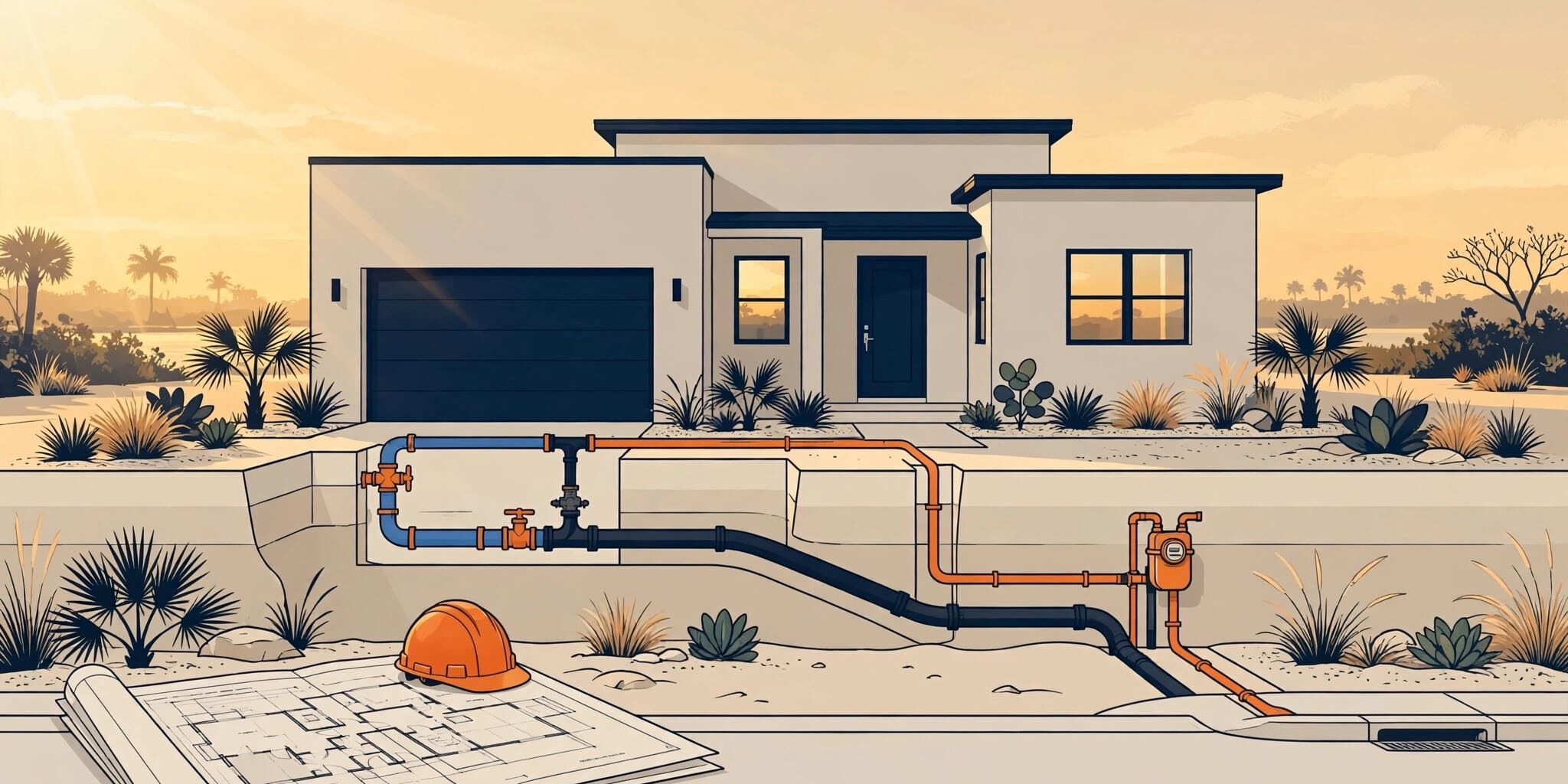
A new home isn’t ready because the paint is dry and the driveway is poured. It’s ready when water runs, power is on, wastewater has a clear path, and every required approval is in place.
Cape Coral utility connections should be part of your plan long before closing day. The right preparation protects your schedule, budget, and move-in date for a family home, rental property, or duplex.
Readiness involves several parties. The City of Cape Coral handles applicable municipal services and approvals, while LCEC handles electric service. Your builder and licensed trades complete the on-site work, but they can’t approve provider applications. The property owner or account holder typically manages applications, deposits, and account activation.
Natural gas availability varies by parcel, and propane may require a separate private supplier. We build with the full picture in mind, because the lot, service area, and utility requirements can affect more than one line in the budget.
Key Takeaways
- Plan Cape Coral utility connections early, since City services, LCEC electric service, private trades, inspections, and account activation follow separate timelines.
- Verify utility availability, assessment status, easements, septic conditions, and parcel-specific requirements before finalizing the construction budget or site plan.
- Budget for more than monthly bills, including deposits, meter fees, CIAC or extension charges, electrical work, septic abandonment, and other private-side costs.
- Coordinate utility applications and inspections with the builder and licensed plumbers or electricians to protect the final connection and Certificate of Occupancy schedule.
- Keep utility applications, permits, inspection records, approvals, closeout documents, and account information together for future maintenance, leasing, refinancing, or sale.
What Cape Coral Utility Connections Include
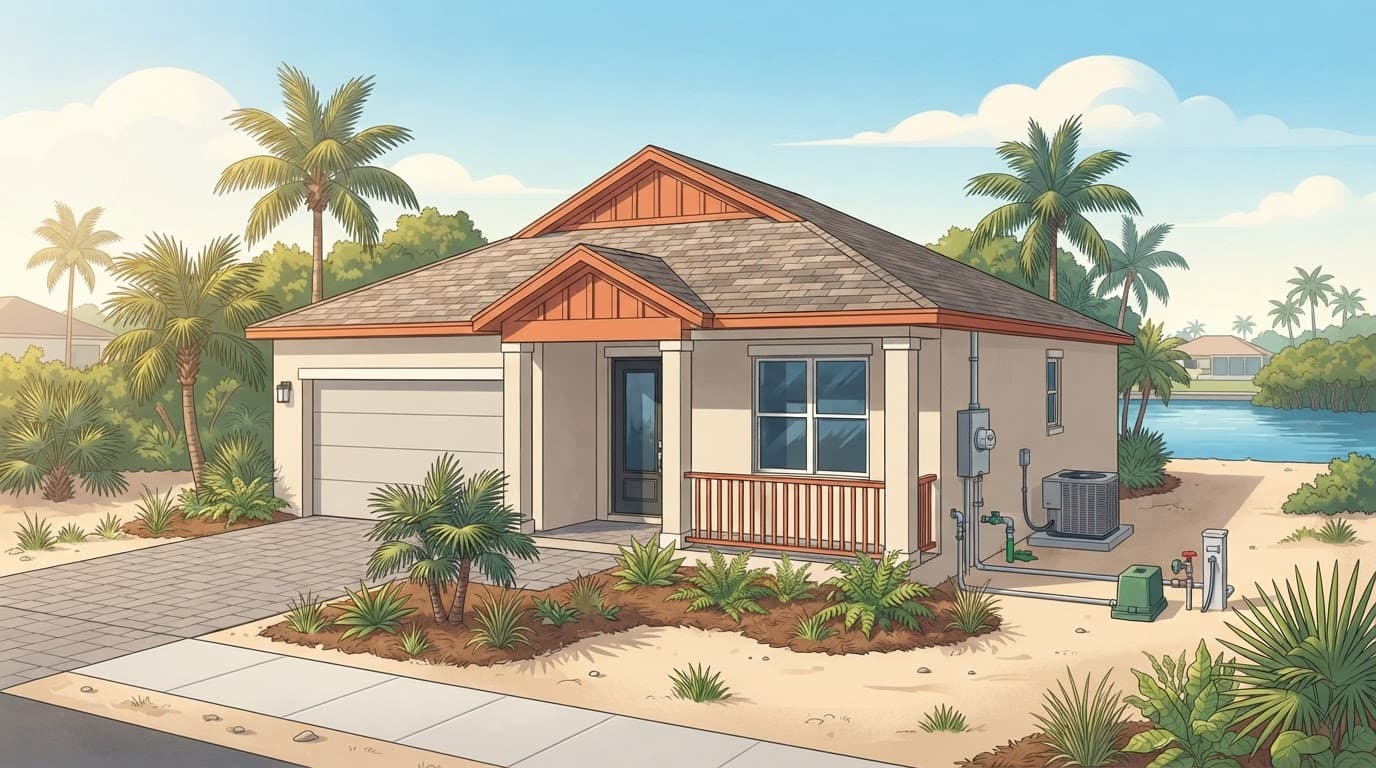
A utility plan for a new Cape Coral home may include electric service, potable water and wastewater, irrigation, solid-waste collection, and natural-gas or propane service. The providers, applications, and payment timing are not always handled by one office.
The City of Cape Coral manages municipal water, wastewater, irrigation, and customer billing for properties served by City utilities. Its infrastructure-expansion work may occur through a Utilities Extension Project, but availability still depends on the specific parcel. Customer Billing Services can answer questions about accounts, deposits, and billing.
LCEC provides electric service across Cape Coral. Solid-waste collection is separate and should be confirmed for the property’s address before move-in. Natural-gas or propane arrangements must also be verified separately, since availability and installation requirements vary by location.
City Water, Sewer, and Irrigation
City service is not the same thing as a water line somewhere down the street. The parcel must have service available, and the project must follow the City’s connection process.
For a new structure, the City may require a utility service extension application or a new utility service application. The City’s new construction utility application page is the right place to confirm current forms and account requirements.
The builder must also coordinate work on private property. A licensed plumber typically handles private plumbing, testing, and coordination for the private-side connection. Irrigation availability can vary by parcel, and an irrigation system may require separate planning or installation.
Electric Service Through LCEC
Electric service needs its own timeline. The panel, meter location, service equipment, inspections, and release process all need to line up before LCEC can complete the final connection.
LCEC has a separate path for new-construction electric service. Don’t treat it like a standard move or transfer request. A brand-new home has different site and inspection needs.
Verify the Parcel Before Finalizing the Plan
Every Cape Coral lot has its own story. A nearby home may have City water and sewer, while another parcel has different infrastructure conditions. The property owner should confirm parcel conditions and authorize required applications, rather than rely on assumptions.
Confirm whether the home will connect to City water, sewer, and irrigation, and whether potable water and wastewater services are available. If public service isn’t available at the parcel, the project may need a different approved approach.
If the lot has an existing septic system and will connect to City sewer, get the arrangement assessed. A licensed plumber should review the plumbing and septic setup. Septic abandonment requirements may apply. Verify the sewer lateral pipe and private-side connection separately from City main or meter work.
Also confirm whether the connection route crosses a right of way, utility corridor, or easement. Work beyond the lot boundary may require additional approval.
Check Utility Availability and Assessment Status
Some properties are in utility expansion or assessment areas. Others have City service available nearby but are outside an assessment project area. The costs can be very different.
Check current parcel records, assessments, and notices before applying. If the current parcel-specific Notice of Availability or application materials establish a 180-day window, record that deadline before scheduling work.
The City describes service availability for certain utility charges as being within 200 feet of a property. Review the Cape Coral utility connection process, including the Utilities Extension Project guidance, before making decisions based on a neighbor’s setup.
For onsite sewage requirements, verify current rules with the Department of Health or another authoritative health agency. Your verification checklist should cover septic abandonment permits, pumping, disconnection, approved fill, and closeout documentation. A licensed plumber should complete and document the private plumbing work.
A utility connection is a parcel-specific decision. Two homes on the same street can have different costs, requirements, and timing.
Confirm Flood and Site Conditions Too
Utility placement must work with the approved site plan, drainage, elevation, driveway, and building design. Cape Coral’s weather makes site drainage more than a finishing detail.
A properly planned lot helps protect the home, utilities, and long-term maintenance budget. Keep surveys, approved plans, permits, elevation records, inspection reports, and final closeout documents together. Those records matter when you sell, refinance, insure, rent, or improve the property later.
Budget for More Than the Monthly Bill
The monthly utility bill is only one part of the cost. New construction may also involve account deposits, meter work, connection fees, assessments, extension costs, and charges related to septic or construction review.
City fees and utility charges can change as schedules are updated or project details become clearer. Confirm the current amount for your specific parcel with Customer Billing Services or the responsible utility provider before finalizing the budget.
Here are the cost categories we recommend reviewing early:
| Cost Category | What It May Cover | When It Often Applies |
|---|---|---|
| Utility account deposit | New customer account setup | Before City service begins |
| Meter installation fee | Water meter installation | New City utility connection |
| Septic abandonment | Closing an existing septic system | Connection to City sewer |
| CIAC or extension charges | Utility capacity and infrastructure costs | Parcels with City service available |
| Electrical service work | New LCEC connection and site requirements | Before power can be activated |
Some site, private utility, or electrical work may be included in the builder’s contract. City account charges, assessments, CIAC, or extension costs may remain the property owner’s responsibility. Review the contract and confirm payment responsibility with Customer Billing Services or the utility provider.
Private plumbing work, septic disconnection, and required documentation should be handled by a licensed plumber. The City controls its own permits and charges.
Understand CIAC and Expansion Costs
Contribution in Aid of Construction, often called CIAC, can be a major cost on a qualifying parcel. It is separate from the monthly bill, a homeowner account deposit, and builder-contract pricing. CIAC helps fund utility infrastructure.
Request a current, parcel-specific written estimate because assessments, extension work, and posted fees can change. Don’t rely on charges from a neighboring property or an old listing.
Keep a Separate Reserve
A strong construction budget has room for items outside the home price. Your down payment and closing costs are separate from utility-related expenses, insurance, prepaid taxes, and reserve funds.
We recommend keeping a clear reserve for site conditions, permit comments, selection changes, and utility costs that aren’t included in the original contract. Clear expectations protect the project and help prevent surprises late in construction.
Start Applications Before the Finish Line
Waiting until the home looks complete can create an avoidable delay. Review the parcel and submit utility service applications early. Account setup, fees, inspections, and approved site work can all affect the final connection.
Where the City has issued a current Notice of Availability for the parcel, review its 180-day window. Confirm directly that the deadline applies to your parcel.
For City service, the property should be clearly marked with the E-911 house number. The City notes that an unclear or missing address marking can lead to an added fee. It’s a small detail with a real effect on timing.

Match the Utility Timeline to Inspections
After application review, wait for permit issuance before connection work begins. The City or applicable agency must authorize the work through the correct permit, including a utility connection permit when required.
If temporary construction power is needed, the builder or electrician should coordinate site equipment and inspection readiness. LCEC determines its release and connection requirements.
A licensed plumber should coordinate water, sewer, or septic-related work. The electrician and builder have separate responsibilities for electrical systems, building work, and inspection readiness.
The sequence usually moves from rough inspections to final inspections, then meter or equipment installation. Once the provider releases the work, activate the utility account and complete the Certificate of Occupancy closeout.
If the project converts from septic to public sewer, complete septic abandonment documentation before final closeout when required. Incomplete inspections, unclear address marking, easements, fees, weather, or provider workload can change the schedule.
Set Up the Right Accounts
The person listed on the utility account should match the ownership and move-in plan. This matters for a primary home, rental property, or newly completed duplex.
The City may require a utility account deposit for new utility customers. Current rules may allow a waiver with qualifying payment history or a utility credit review. Confirm the latest requirements directly with Customer Billing Services before relying on a waiver.
For electricity, start with LCEC’s residential service information and confirm the exact new-construction requirements for your address. Power should be ready when the final approvals are ready.
Protect the Certificate of Occupancy Schedule
A Certificate of Occupancy is the City’s building and permitting closeout decision that allows a completed house to be occupied legally. It doesn’t automatically mean every utility account or provider-side service issue is complete.
Utilities are part of the larger closeout picture, along with site work, safety items, inspections, documentation, and required corrections. The builder coordinates construction and punch-list corrections, while licensed trades complete their scopes. A licensed plumber handles plumbing completion, required tests, septic-related work, and corrections within that scope. The City performs or records required inspections, and the property owner preserves approvals and service records.
If private inspection providers are involved, their reports or affidavits may support the review, but they don’t guarantee issuance of a Certificate of Occupancy.
Use a Written Final Walkthrough List
Before final sign-off, walk the property with a written list. Check the exterior, utility areas, plumbing fixtures, electrical covers, drainage, screens, doors, appliances, paint, and promised site work.
Confirm that any private-side connection work is complete and separate from City-owned infrastructure. If the property is converting from septic to sewer, confirm septic abandonment is complete and documented.
Record the location, take photographs, identify the requested correction, and ask for a target completion date. A written punch list keeps small items from becoming forgotten items.
Do not sign paperwork stating that all corrections are complete if known work is still open. A reinspection is a practical way to confirm the work has been finished.
Keep Every Approval Together
Save the utility applications, receipts, approved plans, permits, inspection records, final reports, and Certificate of Occupancy. These documents can answer future questions about service, maintenance, insurance, and property history.
They also make life easier if you decide to sell the home or bring in a tenant later.
Plan Cape Coral Utility Connections for Rentals and Duplexes
Investors need the same care as owner-occupants, with a few added questions. Who will hold the utility accounts? Which services are included in rent? Is there one meter, separate meters, or shared service?
Cape Coral utility connections affect operating costs, turnover, tenant expectations, and resale value. Tenants can establish accounts only when the provider permits it. Providers control account eligibility, meters, billing, and activation, not the builder.
Review Duplex Utilities as a Whole Property
A duplex should be reviewed as a complete property, not as one side of a larger plan. Water, electric, the irrigation system, access, and waste service must work for both households.
Confirm whether shared services use one meter or separate meters. Clarify who handles irrigation, waste service, and other shared responsibilities. Have a licensed plumber review the plumbing and meter configuration instead of assuming it from the floor plan.
If a builder offers duplex layouts, review the distinct living spaces, garages, and available room to grow. Before choosing a model, confirm whether quoted square footage covers one unit or the combined building. That detail affects insurance, maintenance planning, and rental projections.
Make Tenant Responsibilities Clear
If tenants will establish their own electric account, say so in the lease. If water, waste, or irrigation will remain in the owner’s name, include a realistic allowance in the rental budget. If natural gas or propane is available at the parcel, identify the provider and confirm safety or tank responsibilities before leasing.
The property owner decides how accounts and costs are allocated in the lease. Clear terms protect both sides, so tenants know what they’re paying for and owners can forecast monthly costs.
Frequently Asked Questions
Who handles utility connections for a new Cape Coral home?
The City of Cape Coral handles applicable water, wastewater, irrigation, and billing services, while LCEC handles electric service. The builder and licensed trades complete private-side work, but the property owner or account holder typically manages applications, deposits, and account activation.
When should utility applications be started?
Start reviewing the parcel and submitting applications well before the home is complete. Account setup, fees, permits, inspections, address marking, and provider release requirements can all affect the final connection and move-in schedule.
What costs should be included in the utility budget?
In addition to monthly bills, plan for account deposits, meter installation, connection fees, CIAC or extension charges, electrical service work, and possible septic abandonment costs. Confirm current, parcel-specific charges directly with the City or utility provider because fees and assessments can change.
Does a nearby home confirm that utilities are available for my lot?
No. Utility availability, assessment status, connection routes, easements, and septic conditions can differ between neighboring parcels. Confirm the requirements for the specific property with the City, LCEC, and any applicable health or solid-waste authority.
Are utilities automatically complete when the Certificate of Occupancy is issued?
No. A Certificate of Occupancy confirms the City’s building and permitting closeout decision, but it does not automatically resolve every provider-side account or service issue. Confirm that private connections, inspections, utility activation, septic documentation, and final records are complete.
Get Utility Questions Answered Early
Utility work should support the home you want to build, not become a late-stage obstacle. A clear plan confirms parcel requirements, current provider rules, fees, inspection sequencing, account setup, and certificate of occupancy timing.
Requirements can change, so confirm details directly with the City of Cape Coral, LCEC, and any applicable health or solid-waste authority. Early answers help you coordinate approvals without relying on outdated information.
For help discussing your lot, home plans, and new construction timeline, contact Nathan’s Homes about your new home.