A hurricane category can tell you how strong the wind is, but it can’t tell you the full risk to your home. Water, flooding, roof exposure, drainage, and construction details all matter.
For homeowners, renters, and investors, understanding the rating system makes it easier to ask better questions before a storm and before a new home is built. A well-planned Florida home starts with the right information, not assumptions.
Understanding Hurricane Wind Ratings
The Saffir-Simpson Hurricane Wind Scale classifies a hurricane by its maximum sustained winds. It has five categories, beginning at Category 1 and ending at Category 5.
The category is useful, but it’s only one part of the forecast. We recommend looking at the full storm picture, including evacuation notices, rainfall forecasts, flood zones, and local emergency guidance.
What the Scale Measures
The Saffir-Simpson Hurricane Wind Scale is based only on maximum sustained winds, not gusts or total storm risk. A hurricane’s category doesn’t measure its size, forward speed, storm surge, or rainfall totals.
Sustained wind speed means the highest one-minute average wind measured 33 feet above open ground. Short gusts can be much stronger, especially near open water, tall buildings, or exposed lots.
Meteorologists use aircraft data, satellites, radar, weather stations, and other observations to estimate a tropical cyclone’s intensity. The National Hurricane Center publishes the official classification, which can change as conditions change.
Why the Number Matters
Wind speed affects roofs, doors, windows, garage doors, trees, power lines, and exterior materials. As wind speeds increase, a small opening can become a larger structural problem.
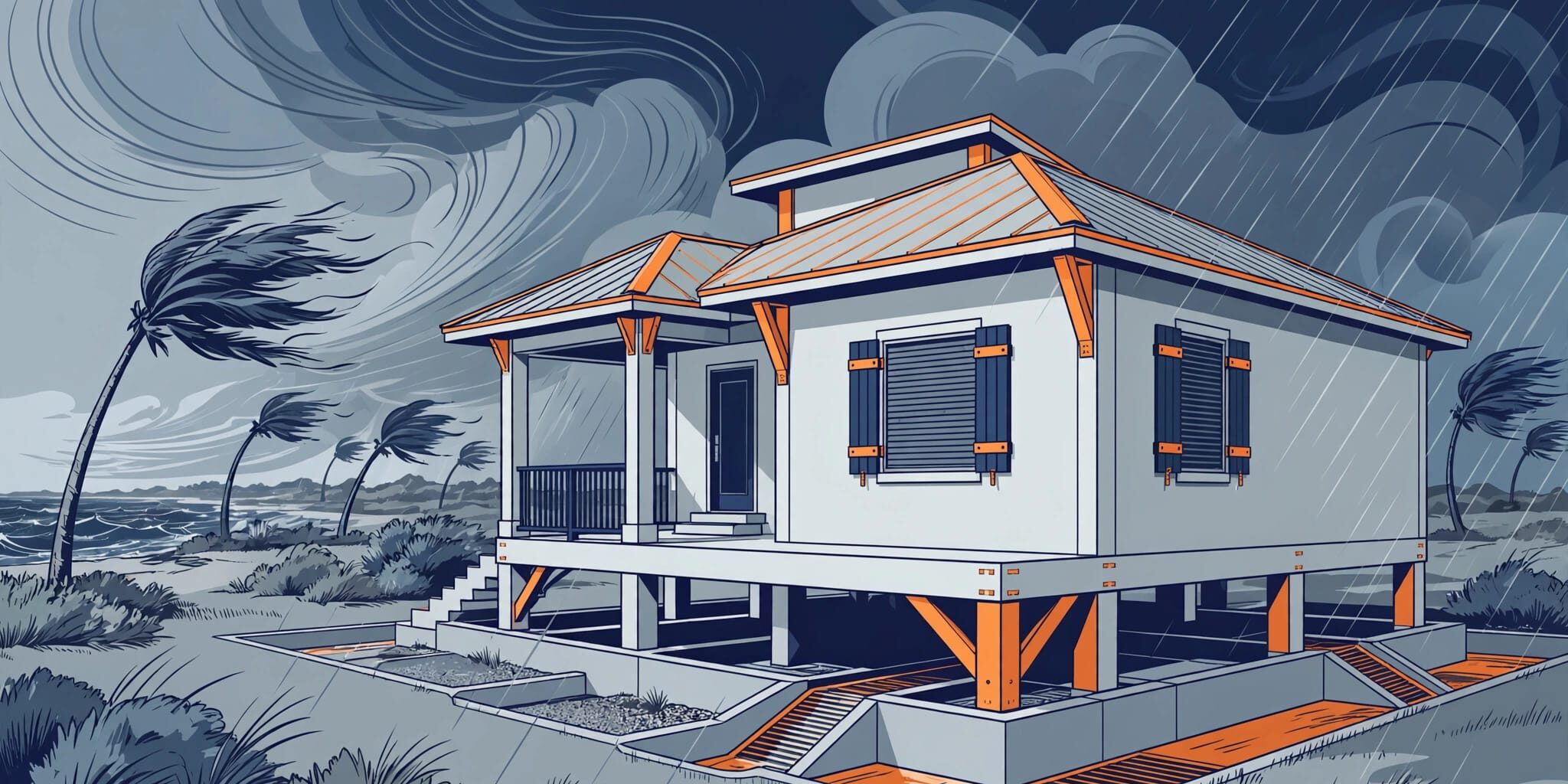
A well-built home is designed as a connected system. The roof, walls, openings, garage, foundation, and fasteners all need to work together when wind pressure builds.
Hurricane Wind Ratings by Category
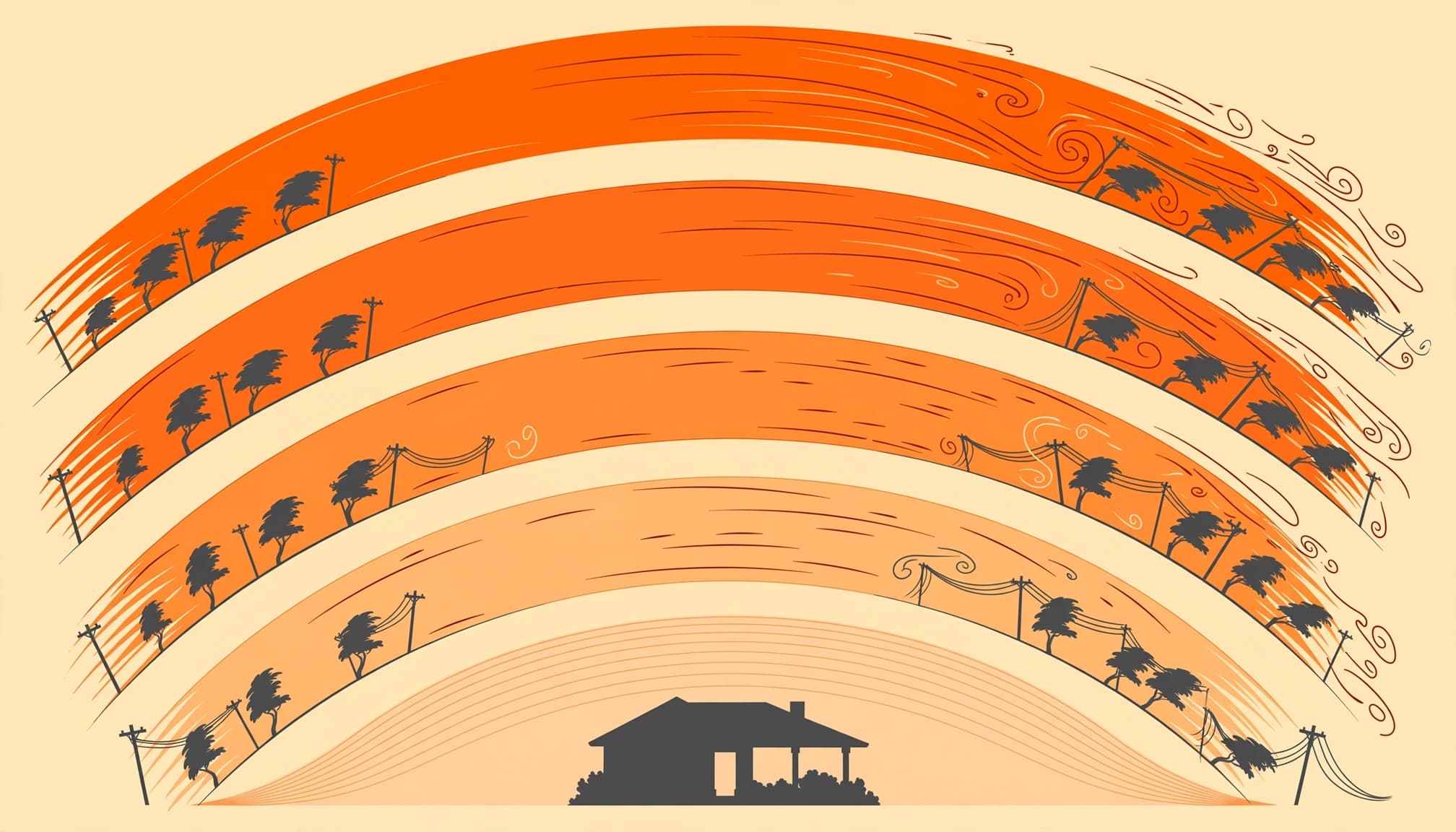
The National Hurricane Center recognizes five hurricane categories. These hurricane categories are based on maximum sustained winds, not gusts. Meteorologists use this measurement to rank storm intensity, but local conditions can vary.
| Hurricane Category | Sustained Wind Speed | General Wind Damage Risk |
|---|---|---|
| Category 1 | 74 to 95 mph | Damage to roofs, siding, trees, and power lines can occur. |
| Category 2 | 96 to 110 mph | Major roof and siding damage is possible, with longer outages. |
| Category 3 | 111 to 129 mph | Devastating damage can affect homes, trees, roads, and utilities. |
| Category 4 | 130 to 156 mph | Severe structural damage and extended outages are likely. |
| Category 5 | 157 mph or higher | Catastrophic damage can destroy a high percentage of framed homes. |
These thresholds follow NOAA’s tropical cyclone classification guidance.
Category 1 and Category 2 Hurricanes
A Category 1 hurricane is still a dangerous storm. Even a Category 1 hurricane can cause property damage. Loose outdoor items can become airborne, while shingles, gutters, soffits, trees, and utility lines may be damaged.
As wind speeds increase, Category 2 winds place more pressure on the building envelope. Roof coverings, garage doors, exterior doors, and window protection become even more important. A lower category doesn’t mean a homeowner can ignore warnings.
Category 3, Category 4, and Category 5 Hurricanes
A Category 3 hurricane begins at 111 mph. It is the first major hurricane category, and the National Hurricane Center describes expected damage as devastating.
A Category 3 hurricane can bring extensive damage to homes, roads, utilities, and surrounding communities. Category 4 and Category 5 storms can cause catastrophic damage, blocked roads, and power outages that last well beyond the storm itself.
A Category 5 hurricane is the highest official category. Homes, mobile homes, and other structures may face different levels of vulnerability, and the category alone can’t predict damage.
A hurricane category describes wind intensity, not whether a property is safe to stay in or whether evacuation is necessary.
What Hurricane Categories Leave Out
Storm surge can cause serious damage during a Category 1 or Category 2 hurricane. Rainfall flooding can affect inland neighborhoods far from the coast. Tornadoes can also form within a tropical cyclone.
That is why a wind rating should never be treated as a total danger score. The National Hurricane Center and meteorologists track wind, storm surge, rainfall flooding, and tornado threats separately. Each hazard needs its own forecast and response.
Hurricane Ian made this clear across Southwest Florida. Wind was a major concern, but water, flooding, storm surge, post-storm access, and utility damage also shaped what homeowners faced after landfall.
For a new home, flood planning deserves the same attention as wind design. The flood zone, Base Flood Elevation, local freeboard rules, drainage plan, foundation type, and equipment location can all affect the final design.
How Florida New Home Design Uses Wind Standards
Florida home design doesn’t begin with, “What hurricane category will this home survive?” Approved plans use mapped wind zones, site-specific design wind speeds, wind pressures, exposure conditions, engineering, and the current adopted code.
These requirements are tied to the actual property. A protected inland lot may have different conditions than a waterfront parcel or an open lot with fewer nearby structures. Wind-borne debris requirements can also vary by location and design conditions.
Check official Florida and local building-code sources to verify current building codes and requirements before relying on a general example.
Design Wind Speed Is Not a Hurricane Category
Florida code references ultimate design wind speed, often called Vult, rather than a hurricane category label. Design professionals use that wind information to calculate the pressure a home and its components must resist.
In areas where the mapped Vult reaches 115 mph or more, the Florida Residential Code requires prescribed wind-design methods for applicable concrete, masonry, wood, and steel construction.
If verified against the current official code and local map, Cape Coral construction documents may use a basic wind speed of 160 mph or a calculated speed where required. That figure isn’t a universal requirement for every Florida home. Exposure category, roof shape, height, lot conditions, and the approved plans all matter.
The Whole Home Must Carry the Load
Wind pressure moves through a home. Roof and wall assemblies transfer force through roof-to-foundation connections, so every connection in between matters.
A strong design may include reinforced concrete or masonry, tie beams, roof-to-wall connections, rated garage doors, protected openings, approved fasteners, and engineered foundation details. Continuity helps reduce the risk of roof failure, but no single upgrade can replace a properly connected structural system.
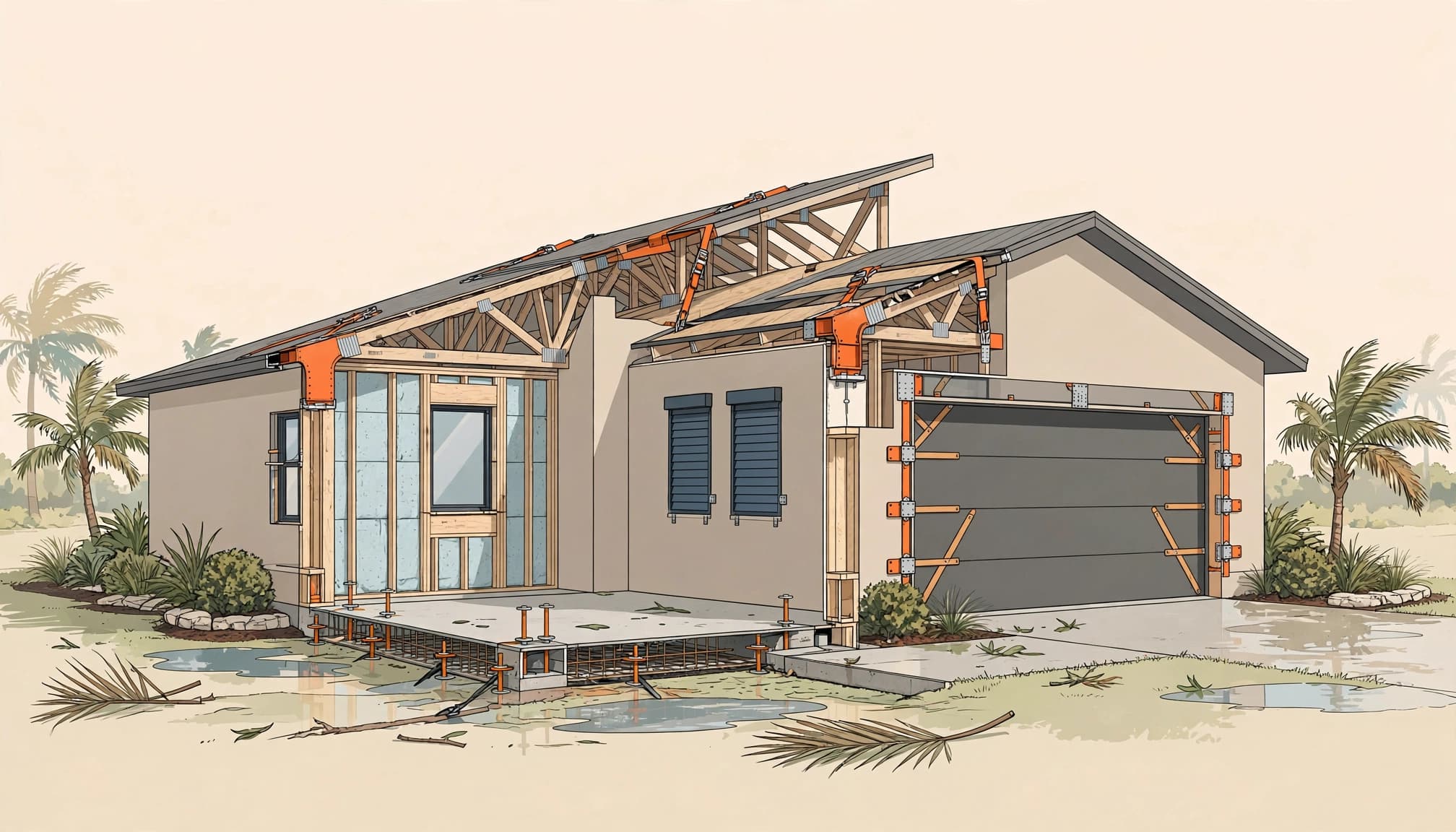
Features That Support a Stronger Florida Home
Modern Florida building codes have improved how newer homes perform in major storms. The Insurance Institute for Business & Home Safety found that homes built to modern Florida code standards generally performed better during Hurricane Ian than older nearby homes.
Code compliance is the baseline. The final home still depends on sound plans, approved products, correct installation, inspections, and site-specific engineering.
Protected Openings and Garage Doors
Windows and exterior doors must meet the design pressures shown on the approved plans, including pressures tied to expected wind speeds. Impact-resistant glazing, impact-rated doors, and properly selected shutters may satisfy wind-borne debris requirements.
Their use depends on approved design pressures, product approvals, size limits, and installation details. Ask for those records before making a final selection. A product may be rated for a certain application but still need to match the home’s approved plans.
Garage doors deserve the same attention. A failed garage door can allow wind pressure into the home, adding stress to the roof and walls.
Roof Shape, Connections, and Documentation
A well-designed roof needs more than quality shingles. Roof and wall assemblies involve geometry, decking, underlayment, trusses, connectors, straps, fasteners, and installation. Each detail affects storm performance.
Keep copies of your plans, permits, product approvals, inspection records, warranties, and signed changes in one folder. Those records can help with warranty questions, insurance reviews, resale, rental planning, and future repairs.
Reading a Hurricane Warning the Right Way
Start with the wind forecast and projected wind speeds, then look beyond it. Meteorologists also track rainfall, flood watches, storm surge forecasts, evacuation zones, and county emergency instructions.
Don’t wait for hurricane warnings to mention a certain category before taking action. If local officials issue evacuation orders for your area, follow them, especially if you live in a mobile home. A new home may meet current building standards, but no construction removes the danger of rising water, rainfall flooding, blocked roads, falling trees, or damaged utilities.
The National Hurricane Center’s Hurricane FAQ explains why maximum sustained wind alone is not a full measure of a storm’s destructive potential.
Key Takeaways for Florida Buyers
- Hurricane wind ratings measure sustained wind speed, not storm surge, rainfall flooding, or tornado risk.
- Categories 3 through 5 are major hurricanes, but lower-category storms can still cause expensive wind and water damage.
- Florida new homes use local wind design standards, approved plans, and engineering rather than a simple hurricane category target.
- Roof connections, rated openings, garage doors, foundations, elevation, drainage, and installation quality all work together.
- Keep records of permits, inspections, product approvals, and warranties after construction is complete.
Frequently Asked Questions
Is a Category 6 Hurricane Official?
No. The official Saffir-Simpson Hurricane Wind Scale ends at Category 5, the highest official category, which begins at 157 mph. A Category 5 hurricane can cause catastrophic damage, but the label doesn’t capture every hazard a storm may bring.
Some researchers and media reports discuss a possible Category 6 for future extreme storms, but the National Hurricane Center has not adopted one.
The current scale remains a five-category system. It’s still important to remember that wind categories don’t describe every hazard a storm may bring.
Should a New Florida Home Be Built for One Hurricane Category?
No. A new home should be designed for the wind requirements, site conditions, exposure category, flood information, and engineering that apply to its location.
Verify current building codes with official Florida sources, such as the Florida Building Commission. Also check applicable local building officials or code departments. Ask your builder to explain the wind design shown on the approved plans. You should understand the opening protection, roof connections, garage-door rating, foundation approach, drainage plan, and elevation requirements before construction begins.
Build With the Full Storm Picture in Mind
Hurricane categories offer a clear starting point, but they are not the whole story. A home built with the right wind design, flood planning, connected structural details, and approved materials is better prepared for Southwest Florida weather.
We believe quality construction should be practical, affordable, and built to last. When you are ready to discuss a new home in Lee, Charlotte, or Highlands County, schedule a Florida home construction consultation with our team.