
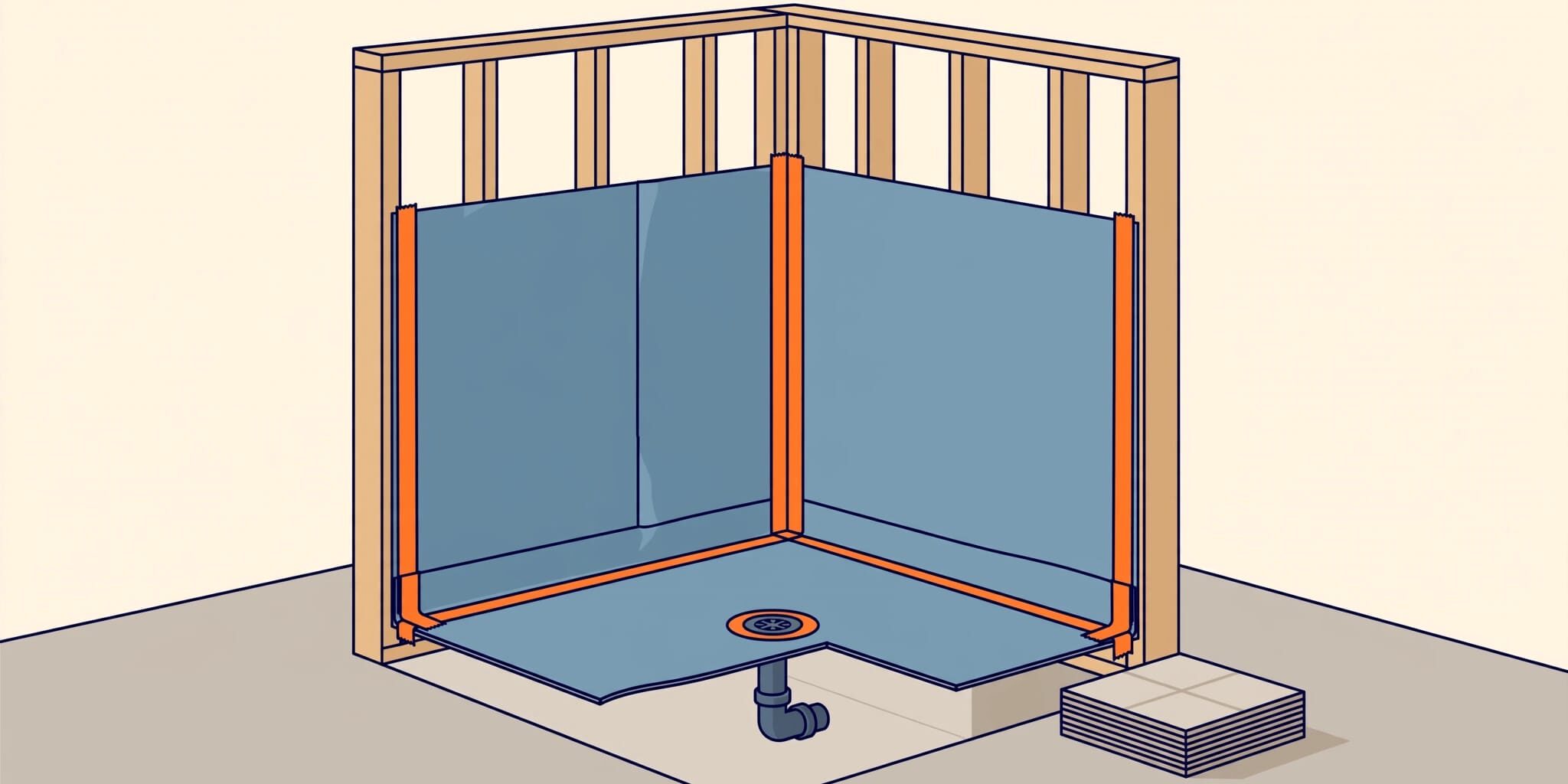
Florida bathroom waterproofing needs a continuous water barrier before tile covers the shower assembly. Tile and grout alone don’t provide dependable protection against water reaching the materials behind them.
For new homebuyers, the best time to review the shower assembly is before tile conceals it. We recommend treating shower tile waterproofing as a separate construction checkpoint, with photos, inspection records, and test results documented before the work disappears. Start with what the finished shower needs underneath.
Key Takeaways
- A complete shower assembly protects concealed materials, but only when the floor, walls, seams, and drain connections work together.
- Sheet membranes, liquid-applied membranes, and waterproof backer-board systems require different installation details.
- A pre-drywall inspection doesn’t replace a later review of shower waterproofing before tile installation.
- Keep material information, photographs, test records, corrections, and warranties with your closing documents.
What Waterproofing Protects Behind Shower Tile
The shower’s water-management layer directs water toward the drain instead of into the building assembly. Depending on the design, it may include membranes, coatings, or waterproof panels with compatible sealants at seams and plumbing penetrations.
The protection must continue through corners, wall-to-floor transitions, niches, and plumbing penetrations. An otherwise sound installation can leak where one connection remains incomplete.
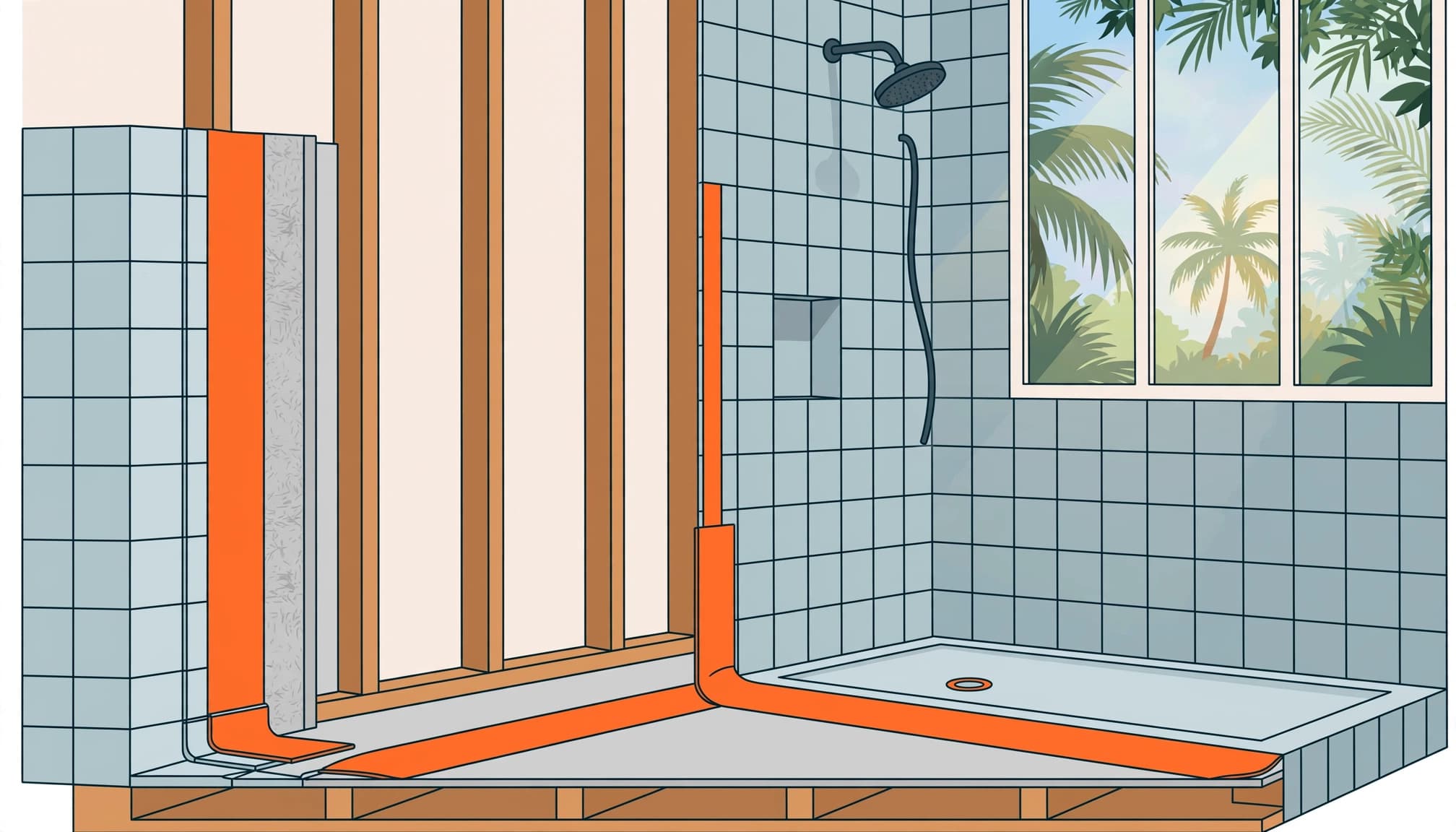
Without that protection, water can reach wood framing, insulation, or adjoining finishes. Repeated wetting can cause water damage, mold growth, wood decay, and deterioration that stays hidden behind attractive tile. The EPA’s home mold and moisture guidance emphasizes controlling moisture sources to prevent recurring problems.
We also distinguish waterproofing from surface maintenance. Grout can absorb moisture, and grout sealer may reduce absorption or staining, but neither replaces the concealed water-management assembly. Topical sealants also don’t replace that assembly. Cement backer board can tolerate moisture without making every joint, fastener, and surrounding surface watertight.
For buyers, the practical question is whether the complete assembly manages water, not whether one product carries a label claiming water protection.
Three Common Shower Waterproofing Methods
Each approach can suit a properly designed shower. We recommend comparing the complete system and installation requirements rather than choosing by material name alone.
Sheet Membrane Systems
Sheet membranes are one form of membrane waterproofing, with consistent material thickness. Bonded systems place the barrier beneath the tile; traditional shower-pan liners occupy a different position within the floor assembly.
The main concerns are seams, corners, transitions, and drain compatibility. Overlaps or accessories may also create buildup that affects tile preparation. A sheet system needs careful detailing, and an incomplete connection can compromise the surrounding work. Manufacturer instructions govern the required materials and connections.
Liquid-Applied Waterproofing
Liquid-applied waterproofing coatings create a barrier after application and curing. They can accommodate shower shapes that would otherwise require multiple pieces of sheet material.
However, coverage alone doesn’t prove adequate protection. The specified thickness, preparation, reinforcement where required, and curing conditions all matter. Florida humidity can slow drying, so the construction schedule must allow the product’s required conditions. We recommend recording the product information and application requirements instead of accepting appearance as proof of readiness.
Waterproof Backer-Board Systems
Some shower boards have cores that block water or factory-applied water-barrier surfaces. These systems combine wall preparation with part of the water barrier, but the installed assembly still needs completed connections.
Seams, fastener locations, cut edges, and penetrations require the manufacturer’s specified treatment. Ordinary cement board isn’t interchangeable with a board system designed to provide a complete water barrier. Buyers should receive the actual product names and system details so future repairs don’t rely on assumptions about what sits behind the tile.
Florida Code Details That Matter Before Tile
The 2023 Florida Residential Code addresses shower receptors in its plumbing fixture requirements. Site-built shower receptors require an approved watertight lining arrangement, while prefabricated receptors use a different approved assembly.
For lined shower receptors, relevant provisions include extending the lining at least 2 inches above the finished threshold. Shower-floor lining provisions also address slope toward the drain and testing before concealment.
Approved bonded waterproofing materials include products meeting ANSI A118.10, a standard for load-bearing waterproof membranes beneath tile. That designation doesn’t mean every shower wall must use the same membrane or construction method.
We recommend understanding these requirements as parts of an assembly. A compliant membrane doesn’t correct an incompatible drain, inadequate slope, or unfinished transition.
The water test is another separate checkpoint. It evaluates the receptor’s ability to hold water under the applicable procedure. It doesn’t establish that every wall penetration, future glass attachment, or plumbing connection is leak-free. Keep the test record alongside the installation photographs.
Schedule Reviews Around the Work That Will Disappear
Required permit inspections follow approved plans and applicable requirements available through Florida Building Code Online. A buyer-focused inspection adds a separate review of workmanship and condition.
Before the Waterproofing Is Covered
A pre-drywall inspection can document framing, blocking, rough plumbing, and other exposed work. However, the shower’s final waterproofing may not exist at that stage.
A completed pre-drywall inspection doesn’t document the shower membrane installed afterward. The shower needs its own before-tile checkpoint.
At that review, ask which system and products were installed, and how seams and penetrations were treated. Confirm that the receptor test passed and ask how corrections were documented.
Photographs should show the receptor, wall treatment, corners, niche details, and penetrations. Include wide views that establish location and closer views of connections.
Keep any test result and correction record with those photographs. This creates a useful construction record without relying on memory after the tile hides the assembly.
Before Closing and After Corrections
At the final walkthrough, review shower operation, visible joints, drainage, and adjoining finishes. A finished inspection can identify concerns, but it can’t provide a direct view of concealed waterproofing.
Record unfinished or defective work by bathroom and exact location. Include photographs, the requested correction, and the agreed completion date. Significant corrections deserve a follow-up review before closing.
Also retain the waterproofing product information and applicable warranty documents. Product coverage and installation responsibility may differ. A clear record helps identify who should respond if a problem appears after move-in, without assuming that one warranty covers the entire bathroom.
What a Complete Waterproofing Quote Should Cover
A useful quote separates the concealed water-management assembly from the other work required to deliver a finished shower. Otherwise, two proposals can appear comparable while covering very different scopes.
These distinctions help explain what you’re paying for.
| Quote Component | What the Written Scope Should Explain |
|---|---|
| Preparation | Substrate condition, necessary repairs, and surface preparation |
| Waterproofing | System, treated areas, connections, and testing for full shower waterproofing |
| Finished shower | Tile, setting materials, fixtures, glass, and related work |
| Documentation | Photographs, correction records, and warranty information |
Compare written scopes for waterproofing services from local contractors, not bottom-line totals with missing details.
Access also affects the work. During new construction, installers can complete the assembly before finishes block access. An existing tiled shower may require removal and reconstruction before anyone can address concealed defects.
Likewise, a larger shower, multiple niches, a bench, or a curbless transition adds detailing. Those features belong in the scope before construction begins.
We recommend settling the waterproofing system, drain arrangement, and shower layout together. A late design change can affect several connected components. Clear selections protect your budget by reducing avoidable rework, while a written scope identifies what the quoted amount includes.
Florida Humidity Needs a Separate Moisture Plan
The shower assembly manages water within the wet-area assembly. Ventilation and humidity control address moisture in the room’s air. Your bathroom needs both.
The EPA’s indoor humidity recommendations call for relative humidity below 60%, ideally between 30% and 50% where practical. Dependable cooling and humidity control also matter during vacancies, when an unattended home can remain damp.
During construction, we recommend allowing substrates, coatings, and other materials to meet their required drying conditions before covering them. Progress should follow readiness, not simply the next scheduled trade.
After move-in, property owners should use the bathroom’s exhaust ventilation and address leaks promptly. A new surface finish won’t correct an unresolved moisture source.
Keep the shower assembly’s water management separate from exterior water protection, too. Site drainage, finished-floor elevation, and flood exposure need their own planning. A waterproof shower assembly doesn’t make the bathroom or the surrounding home floodproof.
Bathroom Waterproofing FAQ
Can Waterproofing Be Assessed After Tile Installation?
A finished inspection can review visible condition, drainage, and signs of moisture. However, tile conceals the membrane, most seams, and many drain connections. A clean appearance can’t establish how those components were installed.
Construction photographs, material records, and test documentation therefore become more valuable after completion. If a qualified professional identifies a concern, further evaluation may require access to concealed areas. We recommend preserving the original records so an investigation starts with useful information rather than assumptions.
Does Every Bathroom Wall Need the Same Waterproofing?
No. Shower walls and tub surrounds receive direct water exposure, while many other bathroom walls mainly experience humidity or occasional splashes. The selected wall assembly should match those conditions and the approved design.
A steam shower also presents different demands from a conventional shower, including vapor-management requirements. That distinction belongs in the design before material selection. We recommend defining how you plan to use the space early, because the intended use affects the assembly hidden behind the tile.
Can a Localized Repair Preserve the Existing Shower?
A localized repair depends on whether the installer can expose sound material and create a reliable connection to the existing waterproofing system. Replacing the visible damaged finish alone doesn’t establish that connection.
When the original system is unknown or inaccessible, the repair scope becomes less predictable. A qualified professional should assess the concealed assembly before recommending how much to retain. We recommend documenting the findings and proposed repair boundaries in writing before replacement finishes cover the work.
Protect the Hidden Work Before Choosing the Finish
A durable shower starts with a complete waterproofing assembly, supported by timely reviews and clear records. Tile selection matters, but the concealed connections determine how the shower manages everyday water exposure.
We recommend resolving the system, layout, and inspection checkpoints before installation moves forward. If you’re planning a new home in Lee, Charlotte, Highlands County, or Land O Lakes, discuss your construction plans with our team. We’ll document bathroom details and waterproofing services in a clear construction scope.