
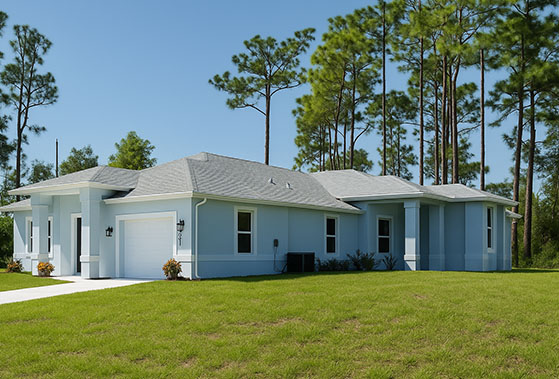
 Cape Coral Home Builder
Building a new home is exciting, and careful planning helps protect that investment. As a Cape Coral home builder, we serve residents throughout this part of our Southwest Florida service area.
Your lot, budget, permits, and local conditions shape the project before construction begins. A clear plan keeps total project costs in view while you choose a layout that fits your needs.
We recommend starting with the property, understanding the written proposal, and comparing builders on the same scope of work.
What to Expect from a Cape Coral Home Builder
A home builder coordinates the people and work needed to turn approved plans into a finished home. That can include planning, design coordination, construction scheduling, inspections, and completion.
We offer one- to four-bedroom homes and duplexes, with options to discuss around your household’s needs and budget. A practical layout should support how you live, the space you need, and what you can afford.
Project scope varies. Before signing, establish who handles permits, site preparation, utility connections, and finish selections. The agreement should identify work handled by outside professionals or paid separately.
You should know who your main contact is, when selections are due, and how progress updates will be shared. We encourage clear conversations about quality, timing, and budget before work begins.
Completion should include a walk-through, a written record of unfinished items, and the required occupancy approval. Keep approved plans, revisions, inspection results, and City decisions together. Those records can support future repairs, insurance questions, and resale.
Plan for Cape Coral Lots, Permits, and Building Costs
Good budgeting starts with the actual lot. Soil, drainage, access, utilities, and elevation can affect the work needed before construction.
Separate the Home Price from the Full Budget
Construction pricing depends on design, materials, finishes, labor, and site conditions. The home contract and total project budget may cover different expenses.
Your full budget may include land, site work, utility connections, permits, design, financing, and a contingency. Waterfront improvements can require separate allowances.
Flood and wind requirements depend on the property and proposed plans. They can affect foundation design, finished-floor elevation, utility placement, and exterior openings. These details belong in the planning conversation before a layout is finalized.
Understand the City’s permit and inspection steps
Cape Coral reviews building plans, issues permits, conducts inspections, and provides a certificate of occupancy when requirements are met. The City’s Permit Document Center provides permit-specific checklists for assembling an application.
Applicants use EnerGov Citizen Self-Service to submit applications, track reviews, and view inspection information.
The City’s 2026 fee schedule lists a $55 floodplain-review fee per review. That’s one project-specific charge, not a complete estimate of permit fees or construction costs.
Compare Builders Before You Sign a Home-Building Contract
Choose a builder whose proposal makes costs and responsibilities clear. A low headline price can leave major work outside the agreement.
Review Credentials and Comparable References
Match the contractor’s exact legal business name to the contract and active Florida license. Request current insurance documentation and comparable local references.
Ask those references about communication, unfinished work, and how changes were handled. A comparable project should share meaningful features with yours, such as home size, construction type, or local site conditions.
Ask what is included in the written proposal
Compare itemized bids using the same plans and specifications. Review allowances, exclusions, payment milestones, schedule terms, and responsibility for permits, utilities, and site work.
An allowance should identify the amount included for a selection. The proposal should explain how costs above that amount are handled. Changes need written pricing and approval terms before work proceeds.
Include an explanation of how lot-specific flood and wind design needs affect the scope. We recommend discussing unclear contract or lien provisions with a Florida construction attorney.
Frequently Asked Questions
How do I check whether a Florida home builder is licensed?
Florida’s official DBPR license lookup accepts searches by legal business name or license number. Review the license status and classification before signing, and match the result to the contractor named in your agreement.
Does a home-building contract include land and site preparation?
Contract scope varies, so land and site preparation aren’t automatically included. We recommend a written breakdown showing whether clearing, fill, utility connections, permits, and other site costs are included or billed separately.
How can I check a Cape Coral building permit?
The City’s EnerGov Citizen Self-Service portal provides permit status and inspection information. A permit record documents the approval process, but it doesn’t establish the project’s total cost or guarantee a completion date.
How do flood requirements affect a new home in Cape Coral?
Requirements depend on the exact parcel and proposed plans. The City and project professionals determine the applicable flood designation and elevation requirements. Those requirements can change the foundation, utility locations, and construction budget.
Can I choose a smaller home or duplex plan?
We offer one- to four-bedroom homes and duplexes. The right option depends on your property, household needs, and project goals. Our team can discuss suitable layouts and budget considerations with you.
Build with a Clear Plan and Budget
A well-planned home starts with complete proposals, a clear understanding of the lot, and room for costs beyond the house contract.
We build homes for Cape Coral residents with affordability, quality, and clear communication in mind.
Contact our team to discuss your Cape Coral project, the space you need, your budget, and possible next steps.