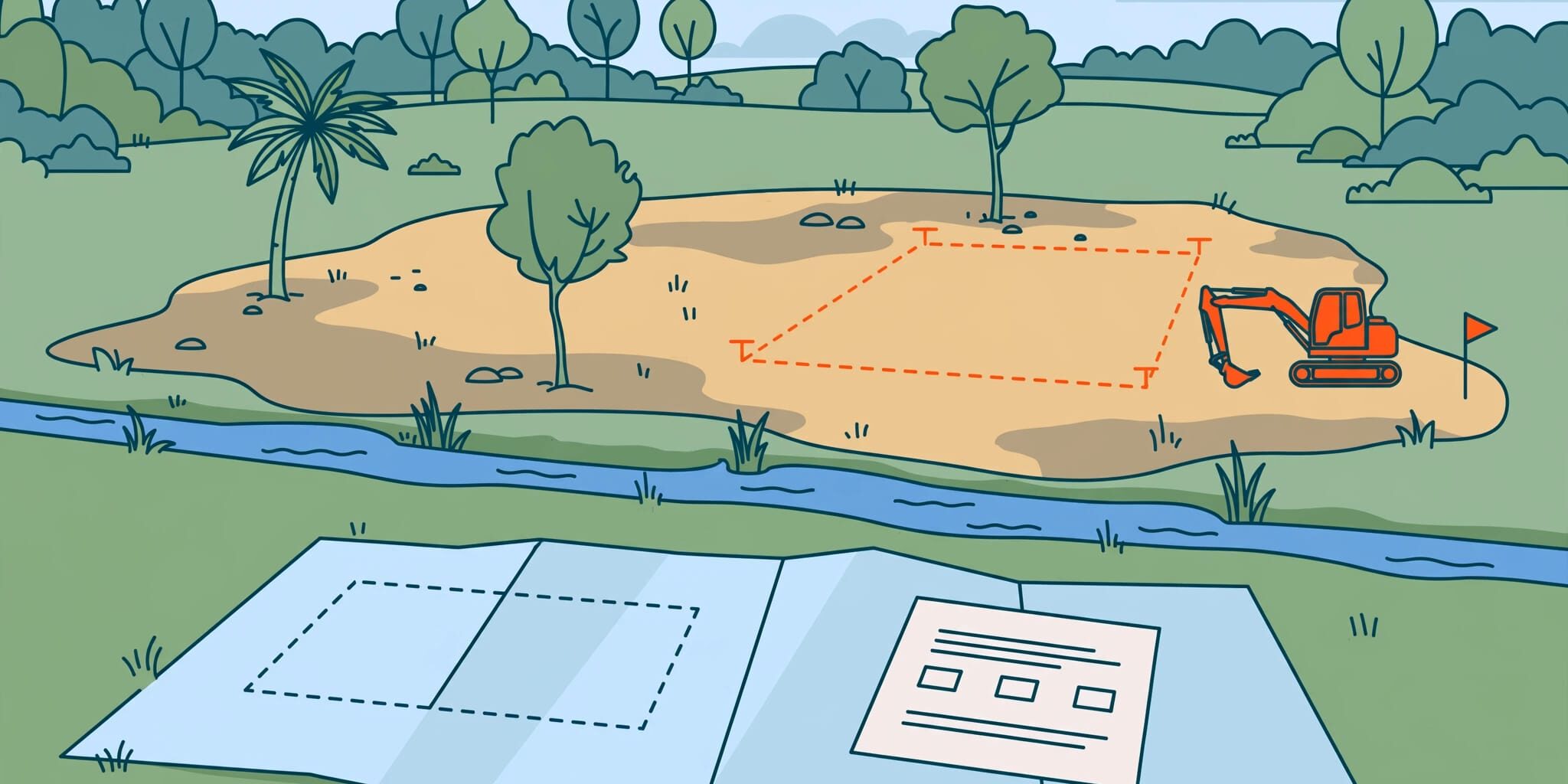
Clearing approvals are usually handled locally, with separate environmental reviews required for some sites or work. Before clearing land for a new home, get written approval; owning the parcel alone isn’t enough.
Coordinate the home footprint, drainage, tree removal, and access before equipment arrives. Confirm the parcel’s jurisdiction and define the proposed work first.
Key Takeaways Before Clearing a Lot
- A building permit may include clearing approval, but submitting the application doesn’t authorize work.
- Tree removal, equipment use, wetlands, and protected wildlife can bring separate requirements.
- Permit fees are only part of the budget. Surveys, environmental work, mitigation, hauling, and grading can add costs.
The same clearing method can face different rules on neighboring properties. County boundaries, municipal boundaries, existing approvals, and environmental conditions all matter.
When Florida Lot Clearing Permits Are Required
There isn’t one statewide land clearing permit for every residential lot. Requirements depend on the county or municipality, and environmental and safety rules can also apply.
Building Approval Comes Before Equipment
Martin County’s land-clearing procedures provide a clear example. Clearing associated with a building project is reviewed with the building application. Work can’t begin until the building permit is issued.
An application number, paid fee, or contractor agreement doesn’t replace that approval. A clearing approval may also not cover a separate tree permit for removing protected trees. Environmental conditions can limit when authorized work begins.
We recommend planning clearing around the complete home layout. Removing trees before locating the driveway, utilities, septic area, and drainage can create avoidable redesign costs.
Brush Cutting Is Different From Site Work
Routine vegetation maintenance isn’t automatically treated as land clearing for a construction project. Stump removal, root raking, excavation, and grading involve more disturbance than mowing.
Martin County also distinguishes tools and equipment. Removing only exotic vegetation on undeveloped land requires a permit when machinery or motorized vehicles are used. Hand-held tools, including chainsaws, don’t require that permit under its exotic-vegetation procedure.
That exception doesn’t authorize removing protected native trees or disturbing wetlands. The type of vegetation, equipment, and location all affect the approval needed.
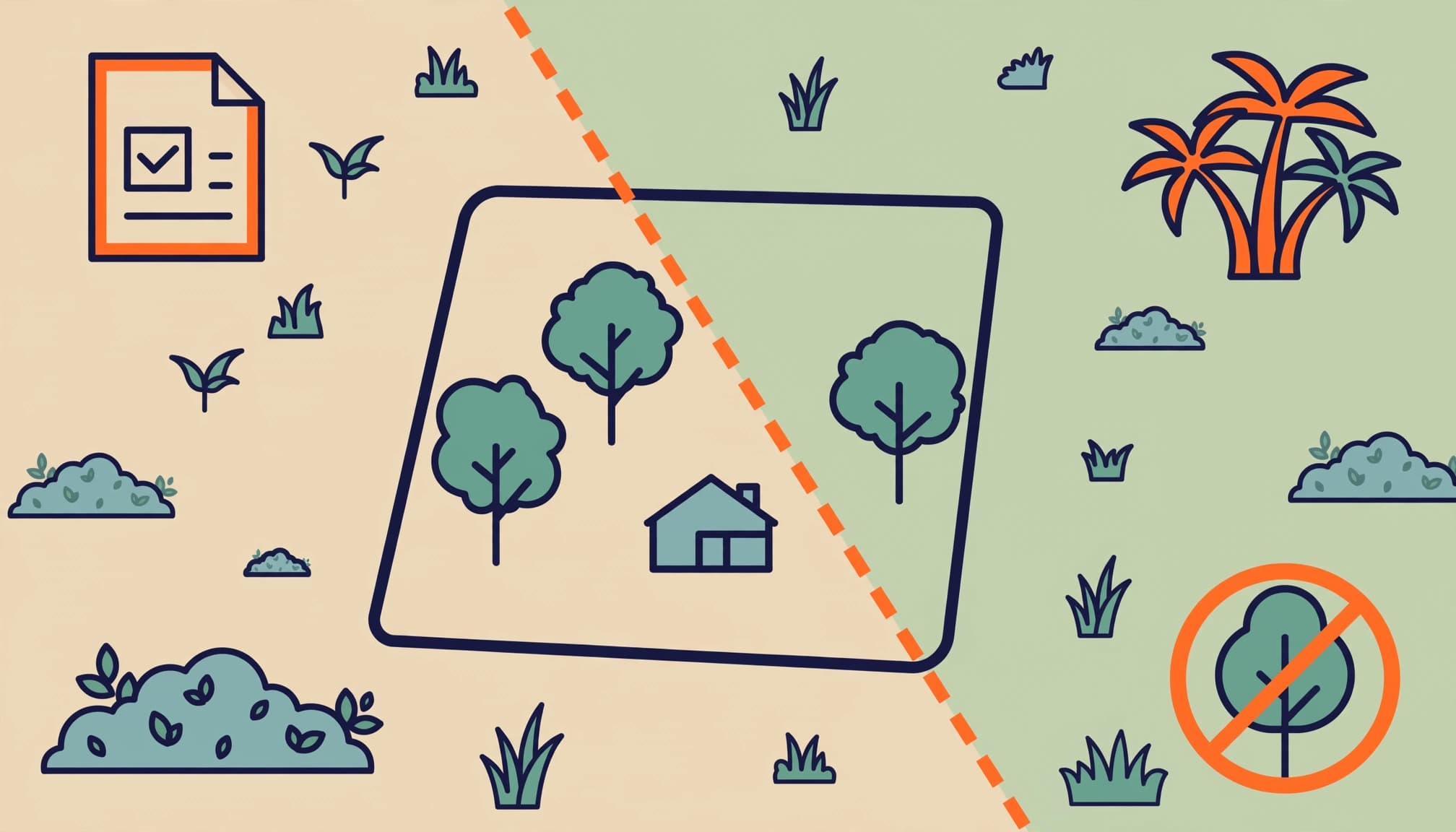
Florida Lot Clearing Permits by County
These local examples show why one Florida permit rule shouldn’t be applied to another location.
| County | Clearing Requirement | Tree Rules and Posted Costs |
|---|---|---|
| Martin | Building-related clearing is reviewed with the building application. Equipment-based exotic removal on undeveloped land requires approval. | The exotic-removal procedure distinguishes machinery from hand-held tools. |
| Santa Rosa County | Minor or major clearing requires prior county approval unless exempt. | Code categories include listed small trees at 4 inches DBH and large trees at 8 inches. The in-lieu payment is $130 per inch established by the applicable formula. |
| Escambia County | A general land disturbance permit is required before clearing, cutting, excavating, filling, or grading, unless another permit under the code authorizes it. | The land/tree form lists protected trees at 12 inches or greater and a $216.75 land-disturbing fee. Heritage trees have a 60-inch threshold. |
DBH means trunk diameter measured at breast height, generally 4½ feet above ground.
The $130 amount is mitigation, not an application fee. Don’t multiply it by every removed trunk inch; apply the required formula.
Escambia exempts pine, cherry laurel, and turkey oak from tree-protection provisions, except trees planted or preserved to satisfy code. That exemption doesn’t cancel land-disturbance requirements.
The Escambia form was reported updated October 23, 2025. That date isn’t the fee’s effective date or a statewide price benchmark.
Check current official rules for Okaloosa County and Walton County rather than inferring requirements from neighboring jurisdictions.
Wetlands and Wildlife Need Separate Review
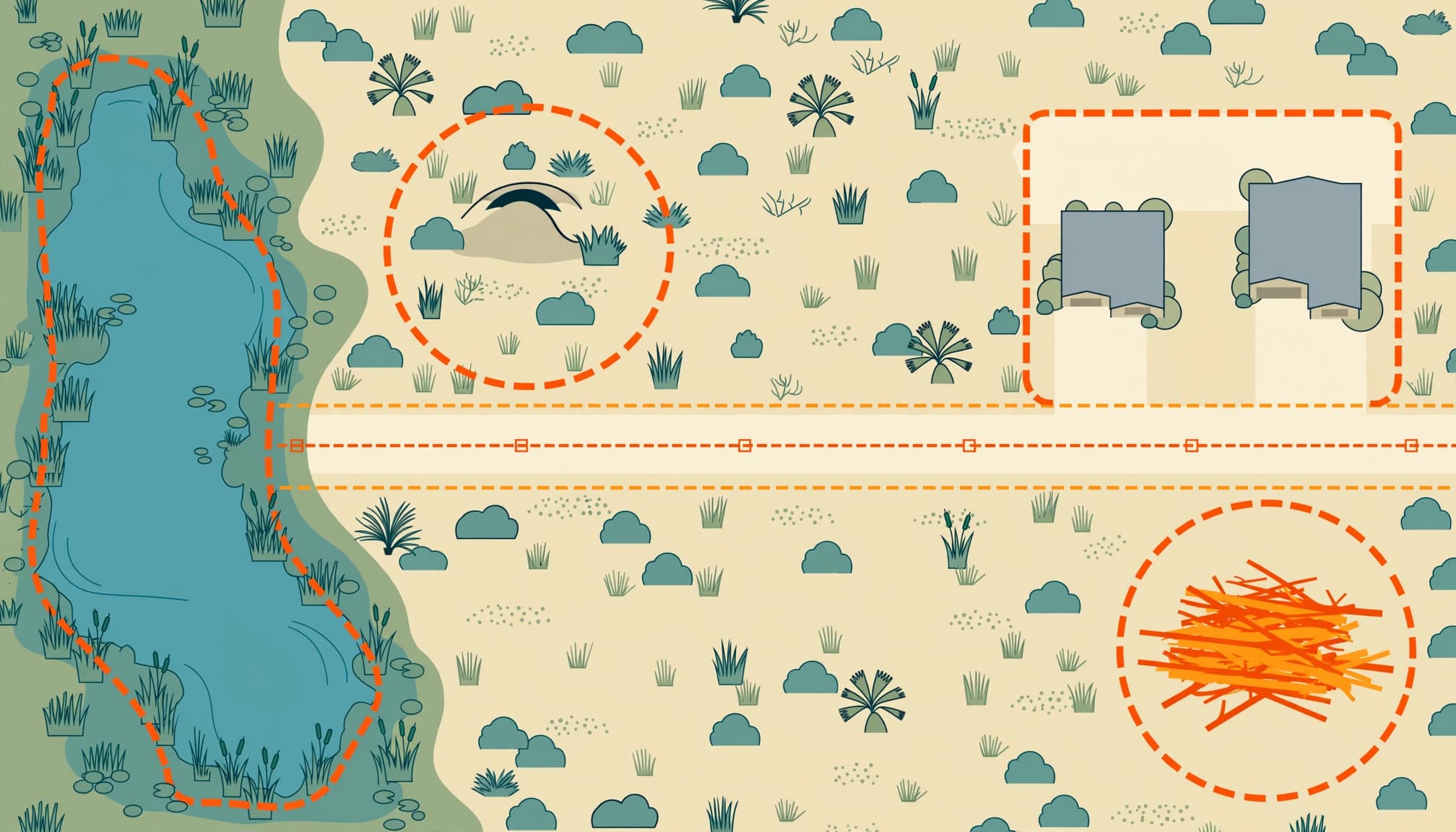
A local clearing permit doesn’t resolve every environmental restriction. The approved work area must account for wetlands, surface waters, habitat, and drainage.
Wetland Boundaries and Permits Are Different
A wetland delineation identifies wetland boundaries. It doesn’t authorize filling, crossings, or clearing.
Florida’s Environmental Resource Permit program reviews regulated work involving wetlands, surface waters, and stormwater. Review may involve FDEP, a water management district, or a delegated local government.
A Section 404 wetland permit from the Army Corps of Engineers may be required for regulated discharges of dredged or fill material into federally jurisdictional waters. A USACE Jacksonville District public notice illustrates federal wetland-fill review alongside water-district permitting.
State and federal jurisdiction can differ. An area outside federal jurisdiction can still face state or local restrictions. Don’t place fill or cut a drainage route through low ground because it offers convenient access.
Gopher Tortoises Can Change the Clearing Plan
Gopher tortoises and their burrows receive protection under Florida law. Work affecting them may require an FWC relocation permit and qualified professional involvement.
Arrange a qualified site review when suitable habitat or burrows are present. Keep equipment outside restricted areas until the required wildlife work is complete.
Forestry mulching doesn’t remove these responsibilities. A lower-disturbance method can still damage habitat or conflict with permit conditions.
Utilities and Debris Burning Before Work Begins
Utility locating and burn authorization serve different purposes. Neither replaces the local approval for clearing.
Allow Time for Underground Utility Marking
Sunshine 811’s safe-digging steps explain the locate process. After a ticket is submitted, member utility operators have two full business days to mark approximate underground facility locations.
Build that time into the excavation schedule. The crew also needs to review utility responses and protect markings during work.
Private facilities, such as owner-installed irrigation or electrical lines, may need separate locating. A vacant-looking lot can still contain underground services, abandoned connections, or lines serving nearby improvements.
Get Burn Authorization Before Ignition
Land-clearing debris burning requires a Florida Forest Service burn authorization before ignition.
The agency lists occupied-building setbacks of 300 feet for residential burns and 1,000 feet for nonresidential burns. Other setbacks also apply. Piles greater than 8 feet in diameter require authorization.
Burning isn’t always a workable disposal option. Available space, weather, smoke, and neighboring buildings affect the plan.
We recommend including the disposal method in the clearing proposal. Hauling, chipping, and authorized burning involve different equipment, costs, and scheduling needs. A permit to remove vegetation doesn’t itself authorize burning it.
What to Submit With a Clearing Application
A complete package connects the clearing limits to the planned home. It should show what stays, what goes, and how the site will function afterward.
We recommend organizing the preparation in this order:
- Identify the parcel number and governing jurisdiction. Property-appraiser records and municipal boundary maps help distinguish city property from unincorporated county property.
- Assemble the boundary survey, recorded easements, and site layout. Show the house, driveway, utilities, drainage, septic or well areas, and planned land clearing limits.
- Add required tree information, including a tree survey, environmental findings, erosion control details, and drainage information. Include professional seals where required.
- Coordinate clearing authorization with the building application and any separate environmental approvals. Keep issued approvals and conditions available to the crew.
Charlotte County’s single-family guidance, for example, calls for a signed and sealed survey less than one year old, plus flood and elevation information. That isn’t a statewide submission standard.
A visible path doesn’t establish legal access. Clearing an easement also doesn’t authorize widening it or constructing a wetland crossing.
Permit Costs and Scheduling Need a Complete Scope
Keep permit charges separate from physical clearing costs. Surveys, tree inventories, environmental assessments, mitigation, engineering, hauling, and grading can each affect the total.
For comparable proposals, use the same clearing boundaries and disposal requirements. A brush-cutting price isn’t comparable to a proposal that includes stump removal, root raking, hauling, and final grading.
There isn’t one dependable Florida-wide approval timeline. Building review, environmental review, plan corrections, and wildlife permitting follow different processes. Scheduling equipment before those approvals creates unnecessary exposure.
Unauthorized clearing can bring fines, a stop work order, legal disputes, and owner-paid restoration or other corrective costs.
A tree-removal exemption doesn’t authorize grading, wetland filling, or other regulated site work.
We recommend assigning permit responsibility, debris disposal, and restoration obligations in writing before work begins.
Frequently Asked Questions
Can Property Owners Clear Their Own Lots?
Ownership doesn’t create an exemption from approval requirements. You can perform only work allowed under the applicable rules and issued approvals.
The same limits on protected trees, wetlands, wildlife, and burning apply whether you operate the equipment or hire a contractor. Renters also need the owner’s authorization, which doesn’t replace government approval. Agricultural use isn’t an automatic exemption for residential site preparation. The proposed activity and any applicable exemption control the requirement.
How Much Does It Cost to Clear One Acre?
Acreage alone doesn’t produce a reliable price. Tree density, trunk size, stumps, access, debris disposal, and required grading all affect the scope.
We recommend comparing written proposals for the same work rather than using an unsupported statewide per-acre figure. Keep permit fees separate from required site-remedy costs, environmental services, and engineering so you can see what each proposal includes. A low clearing quote may exclude work needed before foundation construction.
Start With an Approved Site Plan
A build-ready lot needs clear boundaries, workable drainage, and approvals that match the proposed work. Clearing only the approved area protects your budget and keeps the home plan on track.
At Nathan’s Homes, we build in Lee, Charlotte, and Highlands counties. Once the property records and environmental findings are available, you can discuss your homebuilding plans with our team and connect the usable area to a practical construction scope.