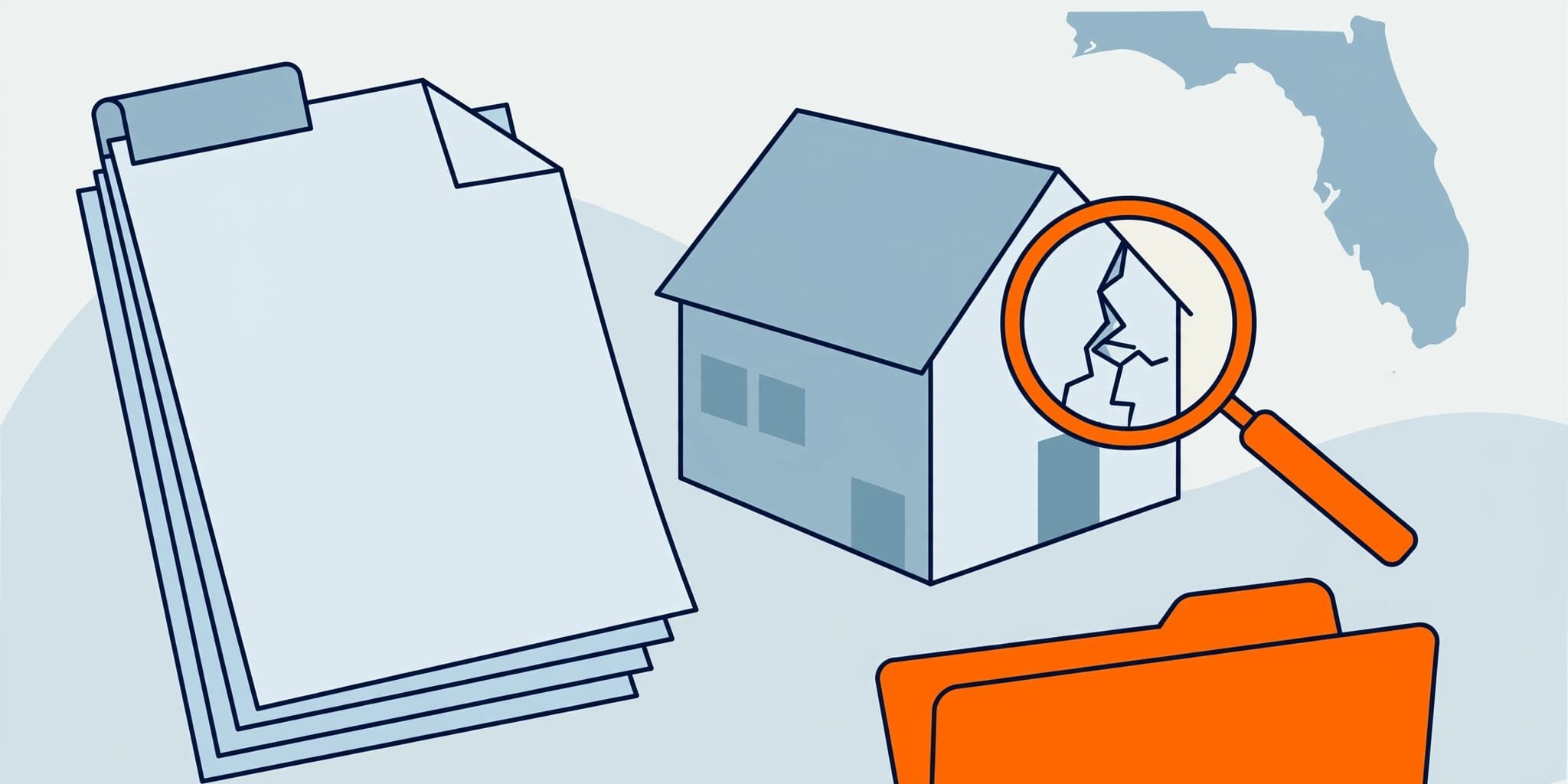
A Florida construction defect notice generally must be served at least 60 days before a homeowner files a lawsuit under Chapter 558. This process gives the parties time to inspect the problem and discuss repairs or settlement before litigation.
A warranty request doesn’t automatically meet this requirement. Treat formal notice, warranty reporting, and evidence preservation as separate responsibilities.
Start by documenting the condition, organizing your records, and identifying who is responsible for the work.
Key Takeaways
- Most individual homeowners must give at least 60 days’ written notice before filing a construction-defect action.
- An association representing more than 20 parcels generally follows a 120-day notice period.
- Describe each defect and its location, preserve evidence, and retain proof of service.
- Notice doesn’t stop the current statute of repose, so approaching deadlines require prompt legal advice.
Understand the Chapter 558 Notice Deadlines
Chapter 558 of the Florida Statutes establishes the pre-suit notice and opportunity-to-repair process. Its deadlines depend partly on who brings the claim.
Individual Homeowners Generally Give 60 Days
For an individual homeowner, written notice generally comes at least 60 days before filing an action alleging construction defects. The recipient ordinarily has 30 days after service to inspect and 45 days to provide a written response.
We recommend arranging legal review early when water intrusion, structural concerns, or substantial repair costs are involved. Waiting until a filing deadline approaches leaves little room for service problems or technical investigation.
Larger Associations Follow a Longer Schedule
An association representing more than 20 parcels generally must serve notice at least 120 days before filing. Its inspection period is 50 days, and the written-response deadline is 75 days.
The threshold matters: the statute says more than 20 parcels, rather than 20 or more. An individual investor’s ownership of multiple homes doesn’t automatically make that investor an association.
Document the Defect Before Repairs Change the Evidence
Record the Condition and Exact Location
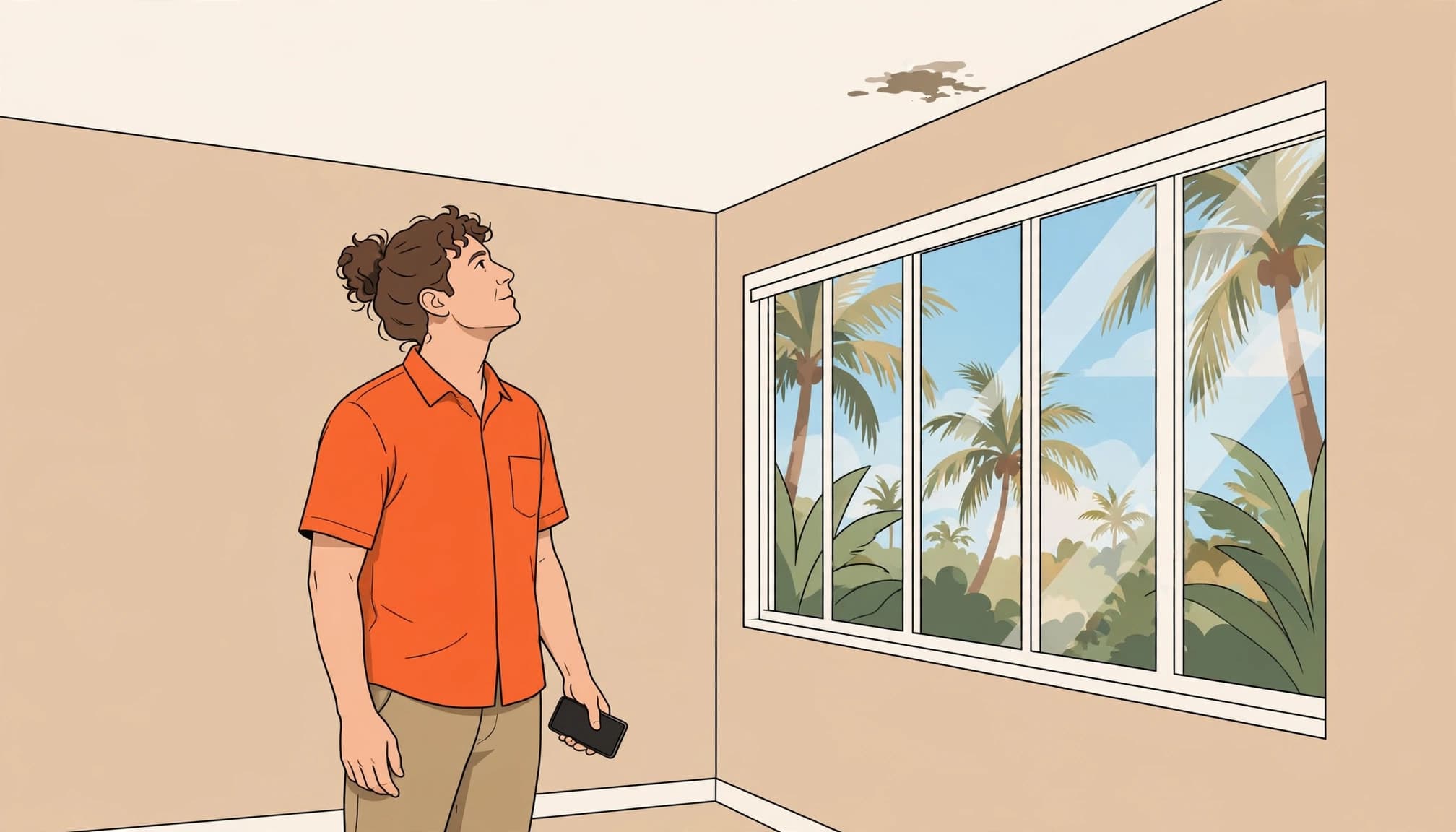
Take dated photographs and videos to document suspected construction defects. Identify the room, wall, opening, roof area, or exterior elevation where each concern appears. Also record when you first noticed it and what happened afterward.
In Southwest Florida, rain-related photographs can help document water entry and drainage concerns. A stain alone doesn’t establish its cause. A qualified professional can investigate whether the problem involves construction, maintenance, or another source.
Record suspected building code violations as observations. Ask a qualified professional to assess whether they relate to the Florida Building Code and confirm any violations.
Address immediate safety hazards and active damage promptly. When practical, document emergency work before conditions change and retain repair invoices.
Build a Complete Property File
Keep the contract, plans, approved changes, warranty documents, closing records, inspection reports, and correspondence together. Preserve original photographs and request written responses rather than relying on telephone conversations.
We also recommend keeping the permit history, certificate of occupancy, and other completion documents because they can matter when calculating legal deadlines.
For questions about your Nathan’s Homes construction project, you can contact our team. Routine communication doesn’t replace formal statutory notice.
Prepare and Serve a Florida Construction Defect Notice
The statutory notice rules require reasonable detail about each alleged defect and its location, as set out in the statutory notice requirements. A general statement that the home has poor workmanship provides little useful direction.
Include a Clear Defect Schedule
Identify the claimant, property address, relevant contracting parties, and contact information. Refer expressly to Chapter 558. Then describe each alleged construction defect separately and identify its location.
Attach photographs and available reports that support those descriptions. State your requested resolution without presenting an unconfirmed diagnosis as an established fact.
After adding the identifying information and a complete defect schedule, an opening paragraph can read:
This letter provides notice of a construction-defect claim under Chapter 558, Florida Statutes. The attached schedule identifies each alleged defect, its location, and the supporting documentation. Please provide a written response and coordinate reasonable access for inspection. The requested resolution is correction of the identified defects or an appropriate written settlement proposal.
That paragraph alone isn’t a complete notice.
Deliver Notice to the Correct Parties
Serve each general contractor, subcontractor, supplier, or design professional against whom you intend to pursue a claim, as applicable. Identify and serve the correct legal entity, using its legal business name rather than a salesperson’s name.
The statute recognizes certified mail with return receipt requested or personal delivery. Keep the notice, attachments, mailing records, and evidence of delivery together.
Recipients may also notify other potentially responsible parties. However, we wouldn’t rely on that forwarding process to replace service on a party you intend to sue.
If additional defects appear, address them through an appropriate supplemental notice.
Allow Inspection and Evaluate the Written Response
Provide reasonable access for a site inspection and keep a written record of scheduling. The Florida Bar’s Chapter 558 guidance discusses the process involving owners and responsible construction parties.
For a standard homeowner claim, this calendar illustration assumes service on January 4, 2027, with no agreed extensions.
| Milestone | General Timing | Illustrative Date |
|---|---|---|
| Notice served | Day 0 | January 4, 2027 |
| Inspection period ends | Day 30 | February 3, 2027 |
| Written response due | Day 45 | February 18, 2027 |
| General pre-suit notice period reaches 60 days | Day 60 | March 5, 2027 |
These dates illustrate separate milestones, not automatic authorization to file. Responses, agreements, and applicable deadline rules can affect the next step.
A statutory response may offer repairs, propose payment, combine those options, dispute the claim, or address an insurance determination. An offer to repair should describe the proposed work and its timetable.
Before accepting, assess whether the proposal addresses the underlying cause and related damage. Also review access terms, completion dates, and any release of claims.
We recommend keeping all inspection agreements in writing. To reduce the risk of spoliation of evidence, agree in writing on the testing scope and evidence-preservation arrangements before testing alters or removes materials. Removing damaged components without documentation can make the original condition harder to prove.
Separate Contract Notices, Warranties, and Lien Paperwork
For covered contracts entered into after October 1, 2009, section 558.005 requires the statutory contract notice. The parties can agree otherwise in writing. The required provision appears conspicuously in capitalized letters:
ANY CLAIMS FOR CONSTRUCTION DEFECTS ARE SUBJECT TO THE NOTICE AND CURE PROVISIONS OF CHAPTER 558, FLORIDA STATUTES.
This contract language alerts the parties to the statutory process. It isn’t the homeowner’s defect notice.
Builder warranties may impose their own reporting methods and deadlines. Likewise, a contractual opportunity to cure may differ from the statutory process. Review arbitration provisions and other alternative dispute resolution terms because they can affect where warranty, defect, or contract disputes proceed.
Keep warranty documents with your closing file and report concerns through the warranty’s required method. Don’t assume that doing so also completes statutory service.
A Notice of Commencement or Notice to Owner belongs to Florida’s construction-lien process. Neither document substitutes for a construction-defect notice.
Protect the Filing Deadline Before Waiting
A notice period and a lawsuit deadline are different clocks. We recommend having a Florida construction defect attorney calculate both before you rely on ongoing repair discussions.
Limitations and Latent Defects Follow Different Rules
Under Florida Statutes section 95.11, claims founded on the design, planning, or construction of real property generally have a four-year statute of limitations.
For a latent defect, that period generally runs from discovery or when due diligence should have revealed the defect. A latent defect is a concealed problem, rather than one reasonably apparent.
However, discovery doesn’t provide an unlimited filing window. The separate statute of repose generally creates a seven-year outside limit tied to the earliest applicable statutory completion or abandonment event.
Current Repose Rules Differ From Older Case Law
In Gindel v. Centex Homes, 267 So. 3d 403 (Fla. 4th DCA 2018), the court treated Chapter 558 compliance as commencing an action under earlier law.
Current law expressly provides that notice doesn’t toll the statute of repose. Don’t rely on the older decision to assume that serving notice preserves a claim beyond today’s outside deadline.
Limitations tolling and repose are different concepts. A timely warranty request, inspection appointment, or repair negotiation also shouldn’t be treated as a substitute for deadline analysis.
This is general information, not legal advice. Deadline-sensitive claims deserve individual legal review.
Frequently Asked Questions About Home Defect Claims
What Happens If a Lawsuit Starts Too Early?
Under section 558.003, a party’s timely motion requires the court to stay the action filed without completing the statutory pre-suit process. The stay lasts until compliance.
A stay pauses the case rather than resolving whether the construction was defective. However, premature filing can add avoidable work and expense.
How Can a Homeowner Complain About a Florida Contractor?
For a state-licensed contractor, a homeowner can submit a complaint to the Florida Department of Business and Professional Regulation. DBPR’s Uniform Complaint Form for construction matters requests supporting documentation.
Include the contract, contractor identification, photographs, communications, payment records, and relevant reports. A licensing complaint is separate from a civil damages claim and doesn’t replace Chapter 558 notice or preserve a lawsuit deadline.
Can a Renter Send the Same Notice?
Chapter 558’s claimant definition generally concerns property owners, associations, and qualifying subsequent purchasers. A renter should promptly report the condition to the landlord in writing and preserve photographs and communications.
The owner generally handles the construction-defect claim. However, urgent safety conditions and landlord-tenant remedies raise separate issues. Renters shouldn’t assume an owner’s construction dispute resolves their immediate housing concerns.
Keep the Record Clear Before Filing
A useful Florida construction defect notice identifies the problems, reaches the correct parties, and supports a documented inspection process. Organize that record before disagreements become harder to resolve.
If inspection, repair, or settlement discussions don’t resolve the dispute, keep the record, review any contractual dispute procedures, and assess whether filing is appropriate before deadlines expire. Keep notice deadlines and filing deadlines separate. Preserve evidence and get legal advice before accepting a settlement or nearing the repose deadline. Clear paperwork supports repair discussions and protects the record if litigation becomes necessary.