
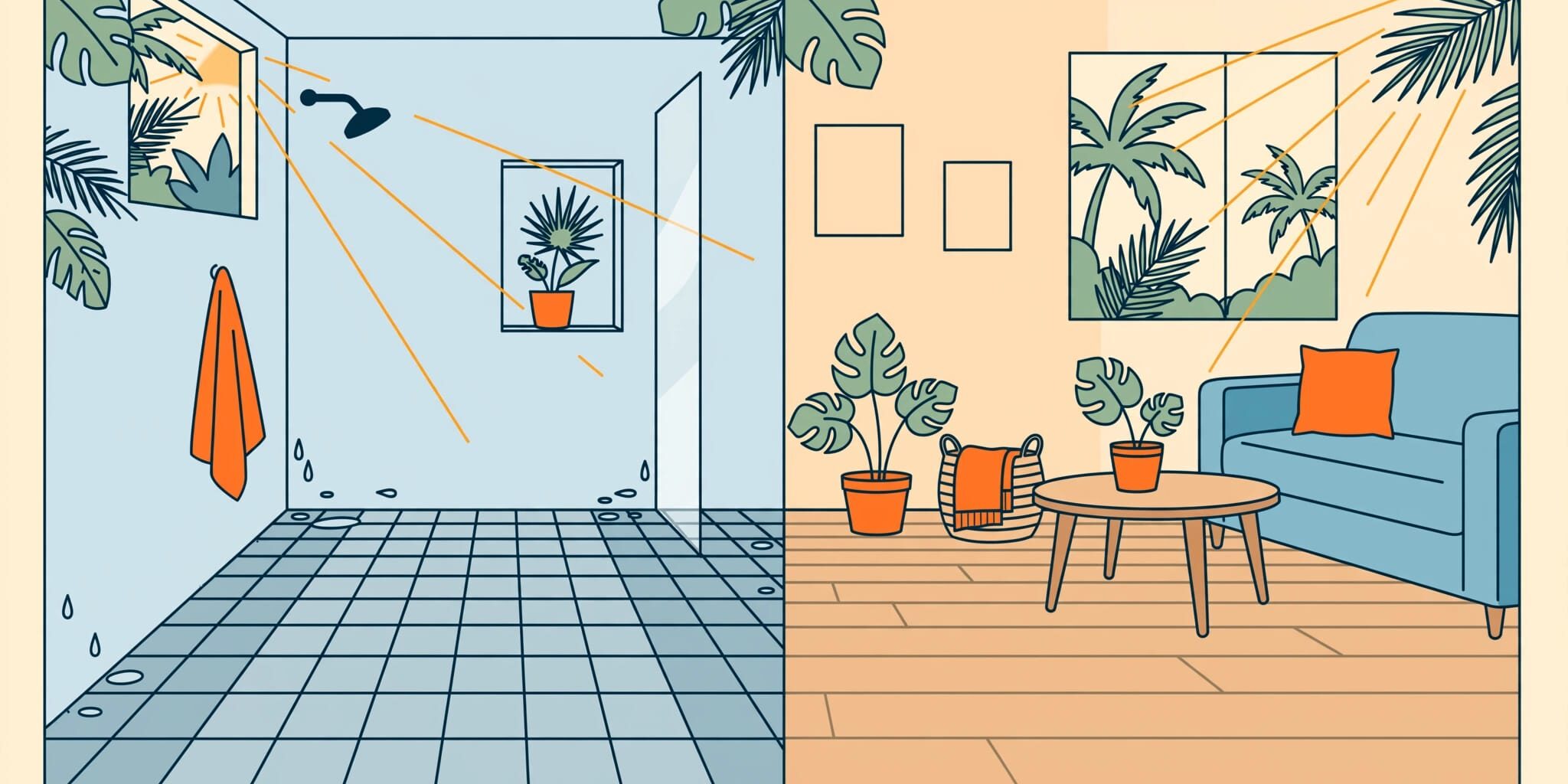
Porcelain tile is our recommendation for Florida’s wettest, sunniest spaces, while luxury vinyl suits tighter budgets and softer living areas. Choosing between tile and luxury vinyl comes down to room use, installation cost, and how long you plan to keep the floor.
Both can handle everyday household activity, but moisture protection depends on more than the finished surface. Start with the room’s exposure and your total installed budget.
Key Takeaways
- Choose porcelain tile for showers, strong sunlight, and long-term durability.
- Luxury vinyl offers lower upfront costs, easier installation, and more comfort during extended standing.
- Neither finished surface replaces proper waterproofing, slab preparation, drainage, or indoor humidity control.
Tile vs Luxury Vinyl: Materials and Comfort
Ceramic and Porcelain Provide a Harder Surface
Ceramic tile starts with natural clay, which manufacturers shape and fire at high temperatures. Many products receive a glaze. Porcelain is a denser ceramic category with water absorption of 0.5% or less.
Traditional ceramic sizes include roughly 3-inch through 18-inch formats, with square, rectangular, and geometric options. Modern porcelain also includes larger formats, such as 12-by-24-inch tiles.
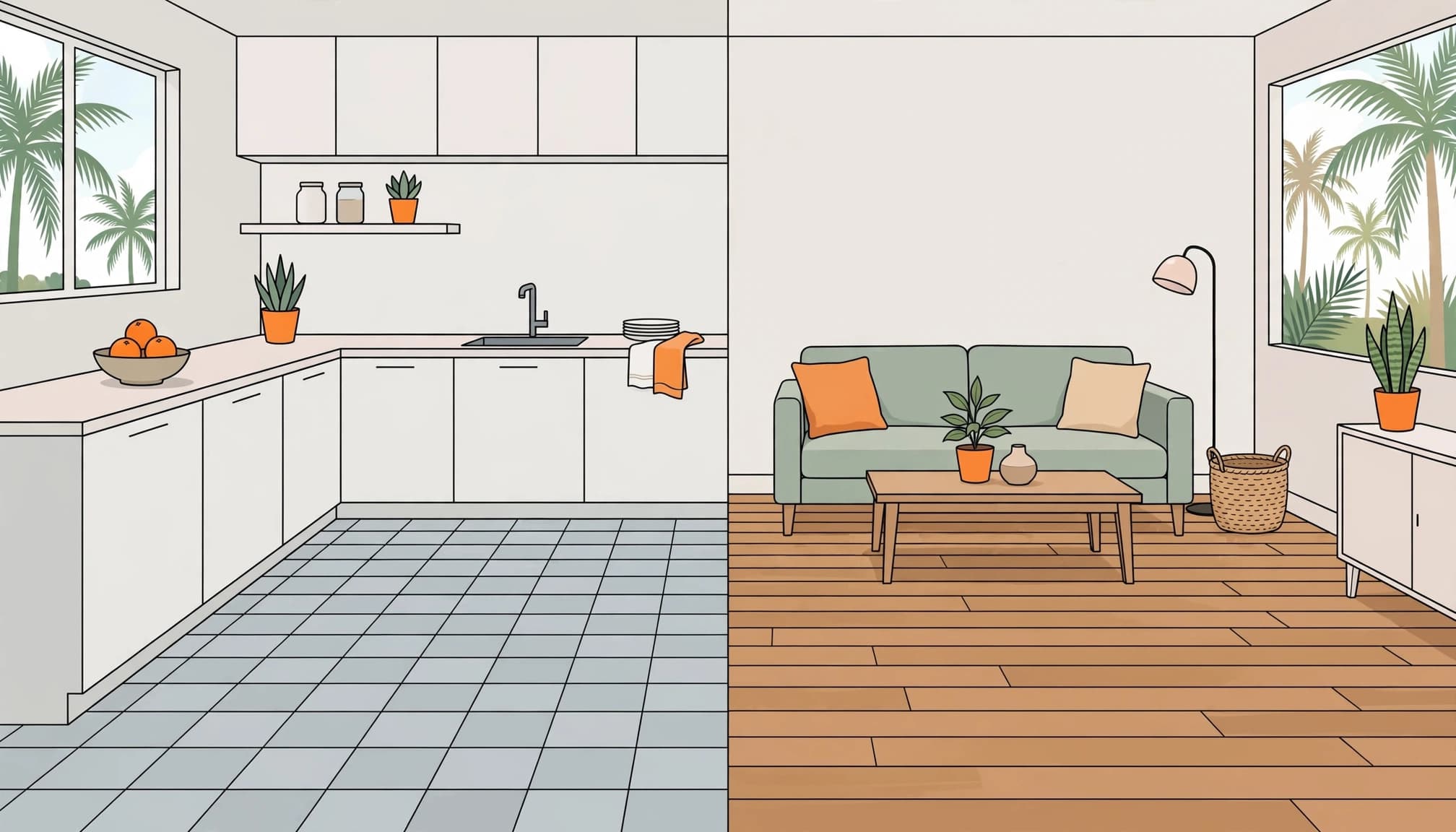
Tile feels hard and cool or even cold underfoot. That can be welcome in Florida, although long kitchen sessions can become uncomfortable. Ceramic and porcelain are colorfast under sunlight, which favors bright rooms.
Luxury Vinyl Provides More Cushion
Luxury vinyl uses PVC-based construction, a printed decorative layer, and a protective wear layer. LVT, or luxury vinyl tile, usually describes tile-look products; LVP describes wood-look planks.
Square LVT remains common, but rectangular designs are also available. Modern printing can reproduce ceramic and stone closely for less money.
Vinyl feels warmer and more forgiving underfoot, and it doesn’t feel uncomfortably cold. However, prolonged direct sunlight can fade some products or create excessive surface heat. We favor shading and climate-controlled spaces rather than treating indoor vinyl as an outdoor finish.
Flooring Costs: Compare the Same Scope
Curbio and Magnolia cite luxury vinyl material costs around $4 to $7 per square foot, compared with $5 to $20 for ceramic tile. Those figures don’t include every installation expense.
For early budgeting, broad U.S. installed-cost ranges are roughly $6 to $12 per square foot for luxury vinyl tile and $10 to $25 for ceramic. These are planning allowances, not Florida project quotes.
The same area makes the difference easier to see.
| Budget Item | Luxury Vinyl | Ceramic Tile |
|---|---|---|
| Materials per square foot | $4 to $7 | $5 to $20 |
| Installed planning range per square foot | $6 to $12 | $10 to $25 |
| 200-square-foot kitchen, installed | $1,200 to $2,400 | $2,000 to $5,000 |
Vinyl generally wins on upfront cost, but removal, moisture treatment, leveling, and trim can change either total.
For a 36- to 40-square-foot bathroom, Curbio estimates a material-price gap of roughly $40 to $500. Using exactly 40 square feet, the stated material ranges calculate to $160 to $280 for vinyl and $200 to $800 for ceramic.
Vinyl Flooring Direct quotes UK materials at £20 to £30 per square foot for vinyl plank and £25 to £45 for tile. It also lists professional installation at £10 to £15 for vinyl and £10 to £20 for tile. Those UK figures aren’t Florida estimates and shouldn’t be mixed with U.S. quotes.
Water Protection Starts Beneath the Floor
Spills Differ From Standing Water
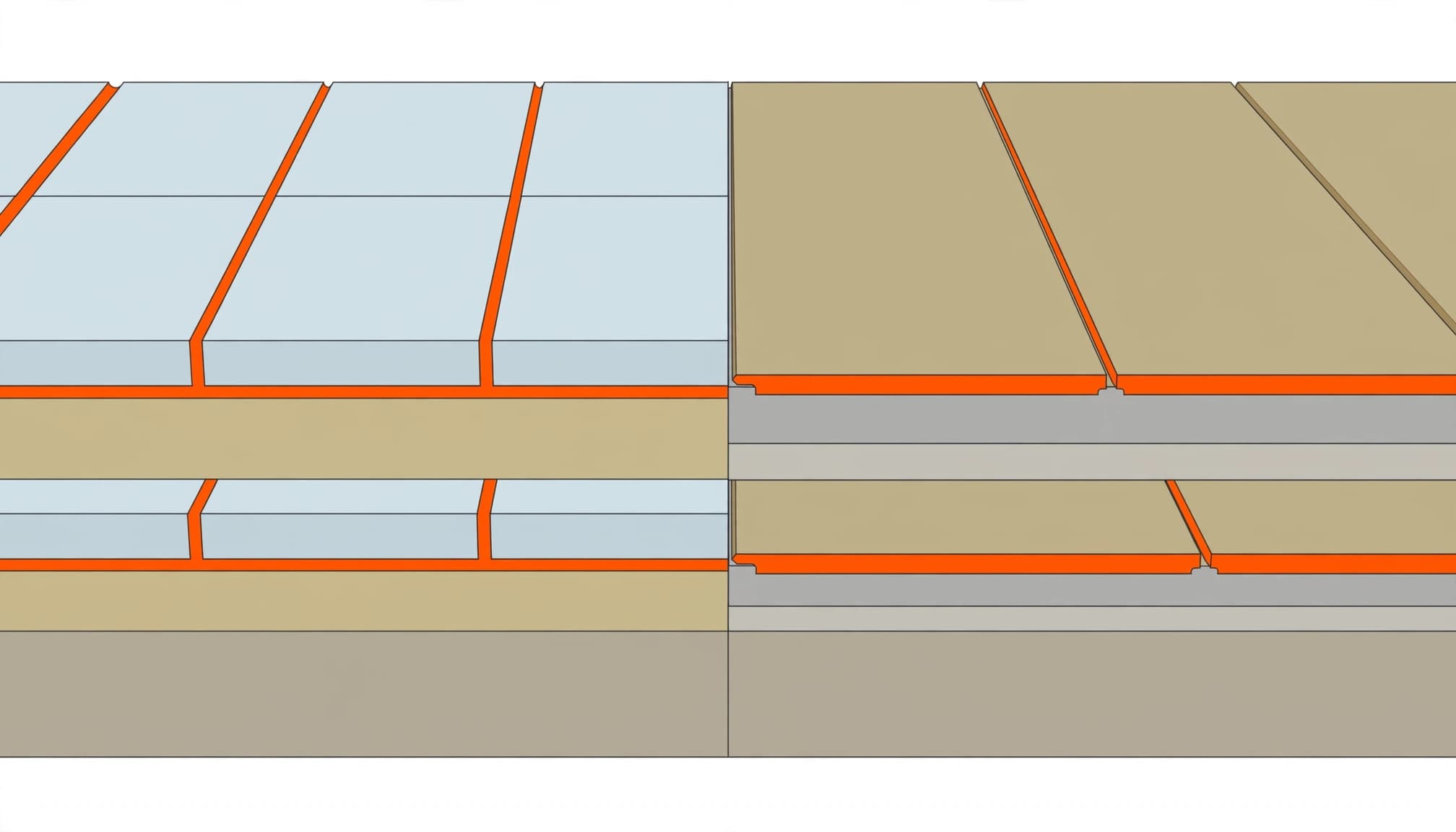
Porcelain absorbs very little water and provides outstanding surface water resistance, but tile joints don’t create a waterproof floor assembly. Showers need a properly designed waterproofing system beneath the tile.
Likewise, waterproof vinyl claims don’t automatically cover flooding, subfloor moisture, or water entering around the perimeter. Standing water can penetrate seams and cause adhesive failure or bubbling in susceptible products.
Curbio describes neither option as fully waterproof. We make the distinction more precise: the surface material and the complete installed assembly have different limitations.
Waterproof flooring doesn’t make the slab, walls, or adjoining cabinets floodproof.
Florida Humidity Needs Its Own Plan
We recommend moisture testing concrete before installation and addressing leaks or drainage problems before covering the slab. A new finish won’t correct moisture entering the home.
The EPA’s home moisture-control guidance recommends indoor humidity below 60%, ideally between 30% and 50% where practical.
That matters during vacancies, too. Keep dependable cooling and humidity control operating rather than switching the system off for extended periods. Persistent dampness or musty odors need attention at the moisture source.
Lifespan, Damage, and Resale Value
Service Life Isn’t a Warranty Term
When assessing flooring longevity, published lifespan estimates vary considerably. Vinyl Flooring Direct gives vinyl 10 to 20 years and tile 20 to 50 years. Magnolia gives LVT up to 15 years and ceramic 20 or more. Curbio estimates about 10 years for bathroom LVT versus 40 for ceramic.
Treat these as broad expectations, not guaranteed replacement dates.
Product warranties tell a different story. Shaw’s specified Floorte 20-mil products carry lifetime limited residential coverage and 10-year light-commercial coverage. That doesn’t promise a scratch-free floor or coverage for flooding. Installation quality and actual use still affect service life.
Different Materials Sustain Different Damage
A heavy dropped object can chip or crack ceramic. Vinyl resists chipping better, but furniture, sharp objects, and dragged appliances can dent or gouge it.
Tile generally reads as the higher-end finish that protects long-term resale value, especially when the installation remains attractive and intact. However, there’s no universal dollar premium.
For investors, we weigh replacement disruption alongside purchase price. Saving initially may offer less value if a damaged floor needs replacement between tenants.
Installation and Product Specifications Matter
Vinyl Usually Installs Faster
Luxury vinyl includes click-lock, glue-down, and some self-adhesive formats. It needs no grout, which reduces installation steps. However, self-adhesive tile isn’t representative of every luxury vinyl product.
Ceramic needs a suitable substrate, leveling where necessary, setting mortar, cutting tools, and time for mortar and joint filler to cure. Cement-based patching or leveling may be part of that preparation.
The Certified Flooring Installers’ ceramic installation workbook details why substrate preparation matters. We consider click-lock vinyl the more approachable DIY option, but uneven floors still require correction.
Buy Performance, Not Thickness Alone
A vinyl plank’s total thickness and wear layer measure different things. Shaw Apex products provide a concrete example: 5 mm overall thickness with a 20-mil wear layer.
We favor comparing wear layers, intended use, and warranty exclusions together. For busy households, a 20-mil wear layer is a practical starting point for everyday scratch resistance, although it doesn’t prevent gouges.
For tile, select floor-rated products with suitable traction. Porcelain’s low absorption doesn’t establish slip resistance. Also, coordinate grout, mortar, and waterproofing as a complete tile installation system, rather than choosing each component independently.
Maintenance: Grout Makes the Difference
Routine maintenance for vinyl usually needs sweeping or vacuuming, followed by damp mopping with a mild, compatible cleaner. Avoid abrasive pads and excessive water. Steam cleaning isn’t suitable unless the product permits it.
Tile surfaces are straightforward to clean, but cement grout is porous. Dirt and spills can stain it, while persistent moisture supports mildew.
We recommend removing loose grit first, then using a pH-neutral cleaner and a nylon bristle brush. Remove the dirty cleaning solution and dry the surface. Manufacturer hard-surface care guidance separates tile cleaning from grout care because their maintenance requirements differ.
Cement grout may need periodic sealing. Epoxy and many ready-to-use grouts don’t require it. There’s no universal annual sealing interval, and sealer doesn’t turn grout into waterproofing.
For rental properties, a midtone grout color can make everyday discoloration less noticeable.
Which Flooring Suits Each Room?
We recommend choosing by exposure and daily use rather than forcing one material throughout the home.
| Room or Location | Practical Recommendation |
|---|---|
| Shower floor | Suitable tile over a complete waterproofing system; no ordinary LVT |
| Busy kitchen | Porcelain for durability; LVT for comfort and lower upfront cost |
| Bathroom outside the shower | Porcelain for frequent wetting; approved LVT for controlled splashes |
| Bedrooms and living areas | Luxury vinyl for a warmer, softer surface |
| Sunny lanai or exterior area | Exterior-rated, slip-appropriate tile rather than indoor vinyl |
The tile vs luxury vinyl choice can vary within one floor plan. However, transitions need coordinated finished heights so adjoining rooms don’t create awkward edges.
Frequently Asked Questions
Can Luxury Vinyl Cover Existing Ceramic Tile?
Sometimes. Existing tile must be firmly bonded, clean, and flat enough for the selected flooring system. Deep grout joints may need filling because they can telegraph through thinner products. Added height also affects doors, appliances, and transitions.
Which Flooring Works With Underfloor Heating?
Tile conducts heat well and suits properly designed radiant systems. Vinyl can work with approved heating systems, but its surface-temperature limit and underlay requirements depend on the product. Excessive heat can damage vinyl, so heating compatibility is part of the installation specification.
Can Renters Replace Flooring?
Renters need written permission before replacing or covering installed flooring. Even a floating floor can affect doors, trim, moisture behavior, and the original finish. The lease and owner’s approval should define responsibility for installation and later removal.
Choose Flooring Around Long-Term Value
We favor porcelain where water exposure, sunlight, and long service life drive the decision. Luxury vinyl is a practical choice when comfort and upfront affordability matter most.
The strongest value comes from proper preparation, suitable materials, and clear installation specifications. Those decisions protect either investment.
If you’re planning a new home in Lee, Charlotte, or Highlands County, discuss your construction project with our team before finalizing flooring selections.